
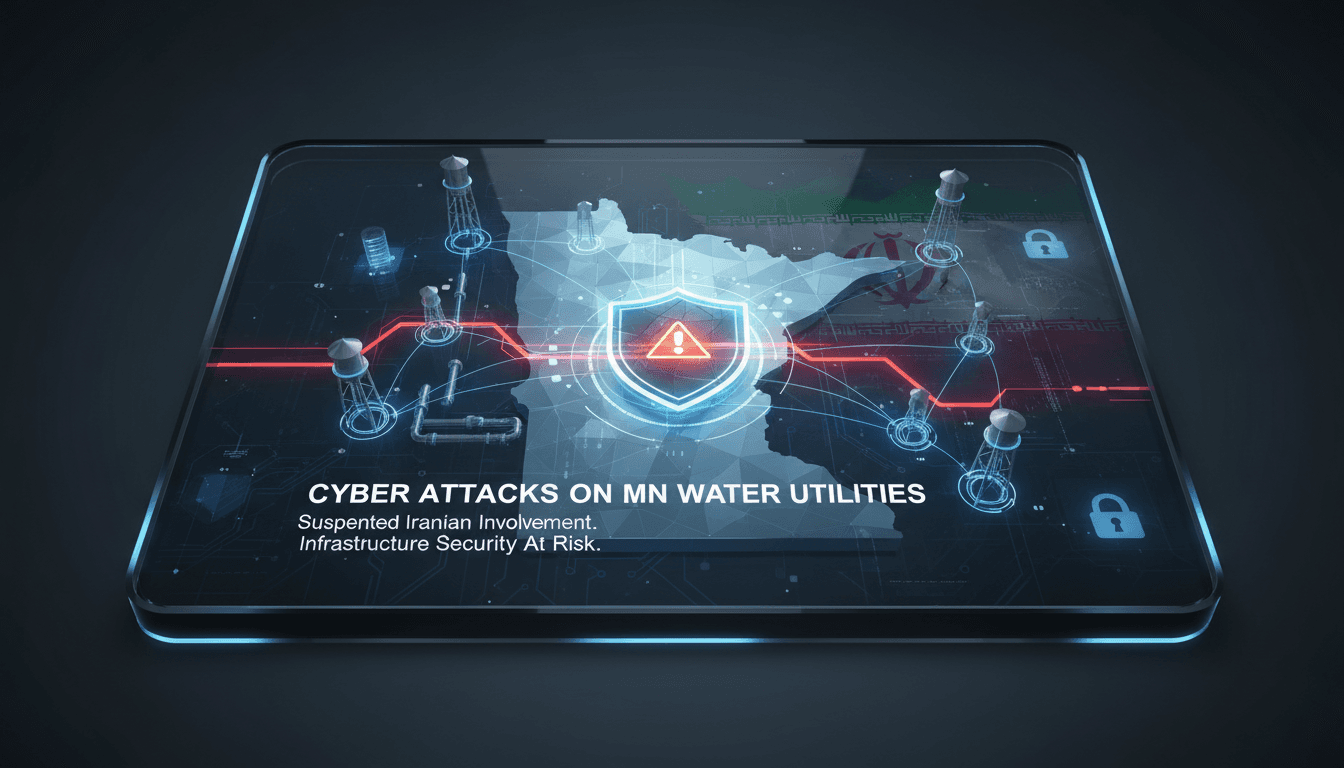
Cyberattacks on Minnesota Water Utilities Raise Security Concerns Amid Suspected Iranian Involvement
What happened
More than 30 water utilities in Minnesota have been targeted by coordinated cyberattacks, raising alarms about the security of critical infrastructure. Federal authorities suspect that Iranian hackers are behind these attacks, which have resulted in operational disruptions but no contamination of drinking water. The incident has prompted warnings about similar threats to water and wastewater facilities in at least 12 states.
Despite the disruptions, no agency has formally accused Iran of direct involvement, although leaked memos suggest a connection. The attacks have led to issues such as low water pressure and boil-water notices, highlighting the potential risks to public health.
The Context
The cyberattacks on Minnesota's water utilities come amid increasing concerns about the security of essential services across the United States. Federal authorities have issued warnings about ongoing threats to water facilities, indicating that malicious cyber actors are actively targeting critical infrastructure. This incident not only affects Minnesota but also serves as a reminder of the vulnerabilities faced by utilities nationwide.
As investigations unfold, the focus will be on understanding the full scope of the attacks and the potential for similar incidents in other states. The situation emphasizes the need for robust cybersecurity measures to protect public utilities from future threats.
Takeaway
The recent cyberattacks highlight the urgent need for enhanced cybersecurity protocols across public utilities. As investigations continue, stakeholders should monitor developments regarding the investigation and potential responses from federal and state officials. The situation serves as a critical reminder of the vulnerabilities inherent in critical infrastructure and the necessity for proactive measures to safeguard against cyber threats.
Looking ahead, it will be essential to observe how authorities respond to these incidents and what steps are taken to bolster security in the face of evolving cyber threats.
Curated tech headlines including AI stories.
"Influential aggregator surfacing the day’s top tech/AI links."
— A47 Editor
Sources: possible cyberattacks targeting water and wastewater utilities have now been reported in at least 12 US states, and Iran is the prime suspect (ABC News)
Recent reports indicate that possible cyberattacks targeting water and wastewater utilities have been identified in at least 12 U.S. states, with Iran being named as the primary suspect. So far, these attacks have not led to widespread disruptions in...
UK and international business news, economics, and corporate coverage.
"The Guardian’s business section covers finance and markets with a progressive editorial tone."
— A47 Editor
US water facilities targeted by ‘malicious cyber actors’ – who’s to blame?
Federal authorities have issued warnings about cyberattacks targeting water and wastewater facilities in at least seven U.S. states, with Minnesota experiencing significant disruptions affecting 30 of its water systems. These attacks have led to low ...
Tech culture, product news, and critical takes on the tech industry's social impact.
"The Guardian's tech coverage blends mainstream news, critical analysis, and cultural commentary on emerging technologies and digital trends."
— A47 Editor
US water facilities targeted by ‘malicious cyber actors’ – who’s to blame?
Federal authorities have issued warnings about cyberattacks targeting water and wastewater facilities in at least seven U.S. states, with Minnesota experiencing significant disruptions affecting 30 of its water systems. These attacks have led to low ...
Breaking news, politics, business, and entertainment from the U.S. and around the world.
"The New York Post is a tabloid-format newspaper known for its sensationalist headlines and conservative-leaning editorial tone."
— A47 Editor
Iran-backed hackers likely behind attack that shut down Minnesota water plant — and they’re not done yet
A series of cyberattacks targeting over 30 water systems in Minnesota has raised alarms, with experts suggesting that Iranian-backed hackers are likely responsible. The attacks have not been claimed by any group, leading to concerns about potential f...
Consumer tech news, reviews, and buying guides for gadgets and electronics.
"TechRadar is known for comprehensive buying advice, hardware reviews, and consumer tech news targeted at mainstream audiences."
— A47 Editor
Hackers are going after our water now — over 30 Minnesota utilities hit in coordinated cyberattack by apparent Iranian attackers
Over 30 water utilities in Minnesota experienced a coordinated cyberattack that compromised their control systems, resulting in at least one treatment plant being taken offline. A leaked memo suggests that Iranian cyber actors may be behind these att...