
U.S. Considers Ban on Chinese Optical Transceiver Imports Impacting Market Dynamics
What happened
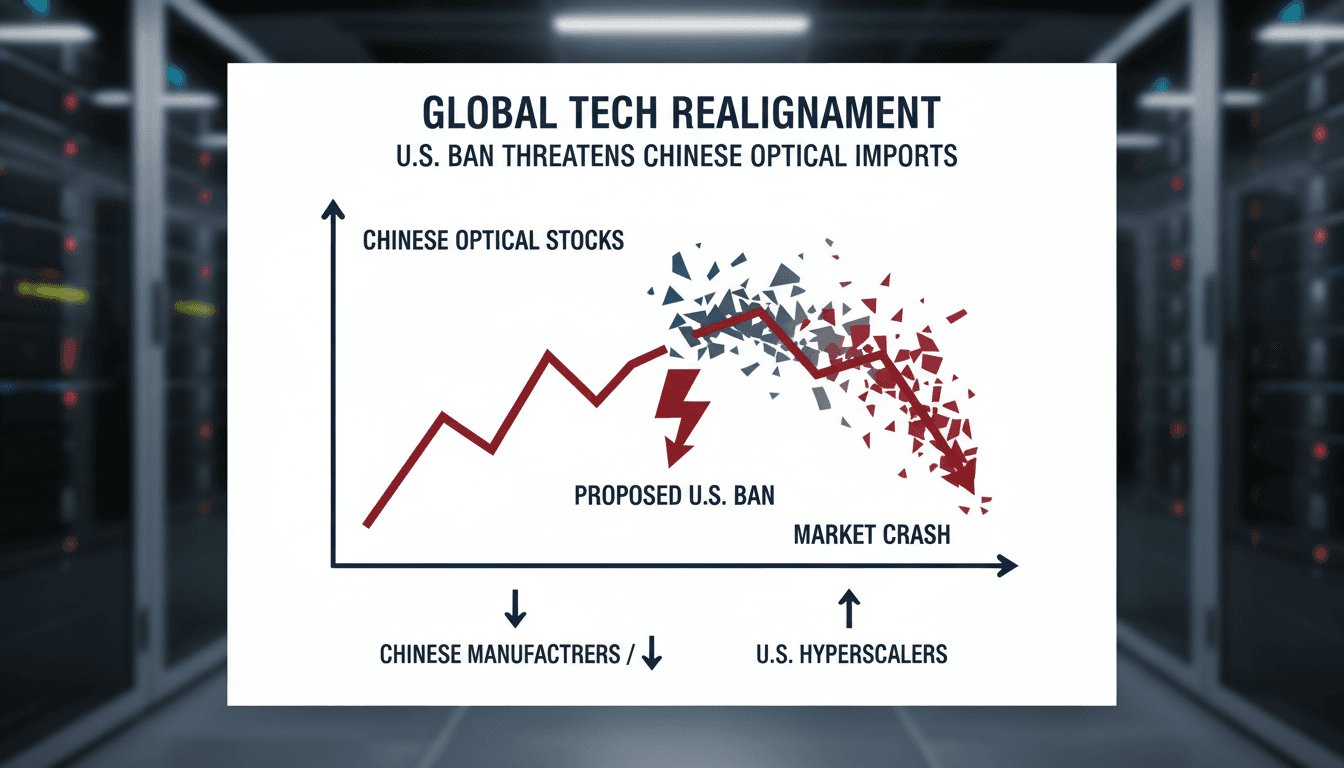
The U.S. government is contemplating a ban on imports of new optical transceiver modules from China, which has led to a sharp decline in Chinese optical stocks. Reports emerged on August 5, 2026, indicating that this decision is part of a broader strategy to enhance national security by restricting foreign-made components in data centers. The proposed ban has already impacted companies like Zhongji Innolight, which relies heavily on U.S. sales for its revenue.
As a result of the news, shares of U.S. optical-networking companies have risen, reflecting investor anticipation of increased demand for non-Chinese products. The Federal Communications Commission (FCC) is currently working on the proposed restrictions, aiming to publish them by the end of the year.
The Context
Zhongji Innolight, a major Chinese optical manufacturer, derives 62% of its revenue from the U.S. market, highlighting the potential financial impact of the proposed ban. The decision to consider such restrictions comes amid ongoing tensions between the U.S. and China, particularly in technology sectors deemed critical for national security. The implications of this move extend beyond immediate stock market reactions, as it could exacerbate existing supply chain bottlenecks.
The optical components market is already experiencing shifts, with U.S. companies poised to benefit from reduced competition from Chinese manufacturers. As the U.S. government continues to evaluate its technology policies, the landscape for optical transceivers may undergo significant changes.
Takeaway
The evolving U.S.-China trade dynamics could lead to substantial shifts in the global optical components market. Stakeholders should closely monitor potential adjustments to the proposed ban as negotiations continue between U.S. and Chinese officials. Market reactions from U.S. hyperscalers will also be critical as they adapt to potential supply chain disruptions.
As the situation develops, both U.S. and Chinese companies will need to navigate a new reality shaped by these restrictions. The long-term implications of this ban could redefine competitive strategies in the optical components sector.
English-language digital publication covering business, politics, technology, and current affairs.
"The Arabian Post mixes original and syndicated-style coverage with a broad regional and global business-news orientation."
— A47 Editor
US import threat jolts Chinese optical shares
Chinese optical-component shares experienced a significant decline following reports that the U.S. government is preparing to impose restrictions on imports of data-center equipment from China, raising concerns about access to the artificial intellig...
Technology business and AI-related headlines.
"Data-driven tech newsroom with global scope."
— A47 Editor
US Ban on Chinese Optical Parts Hurts Hyperscalers, Report Says
A potential ban on the import of Chinese optical transceiver modules into the US has been reported, which could significantly impact US hyperscalers, according to research firm Counterpoint. This measure is seen as a response to ongoing tensions betw...
Technology business news, market impacts, and innovation trends.
"Bloomberg is a premier financial and tech news provider, respected for its in-depth reporting and analytical rigor."
— A47 Editor
US Ban on Chinese Optical Parts Hurts Hyperscalers, Report Says
A potential ban on the import of Chinese optical transceiver modules into the US has been reported, which could significantly impact US hyperscalers, according to research firm Counterpoint. This measure is seen as a response to ongoing tensions betw...
Curated tech headlines including AI stories.
"Influential aggregator surfacing the day’s top tech/AI links."
— A47 Editor
Innolight falls after a report said the US plans to restrict imports of new Chinese data center optical transceivers; 62% of its Q1 revenue came from the US (Reuters)
Shares of Zhongji Innolight, a leading Chinese optical module manufacturer, fell sharply following a Reuters report indicating that the U.S. is planning to restrict imports of new Chinese data center optical transceivers. This move comes as the compa...
Market-moving headlines impacting equities, bonds, and related risk assets.
"Real-time catalysts and volatility drivers across indices and sectors."
— A47 Editor
China AI optical stocks fall on report U.S. weighs ban on data center components
China's AI optical stocks have experienced a decline following reports that the U.S. is considering a ban on data center components, particularly targeting optical transceivers. This potential ban is part of ongoing tensions between the two nations i...