
Record-low water levels in the Danube River expose World War II German warships
What happened
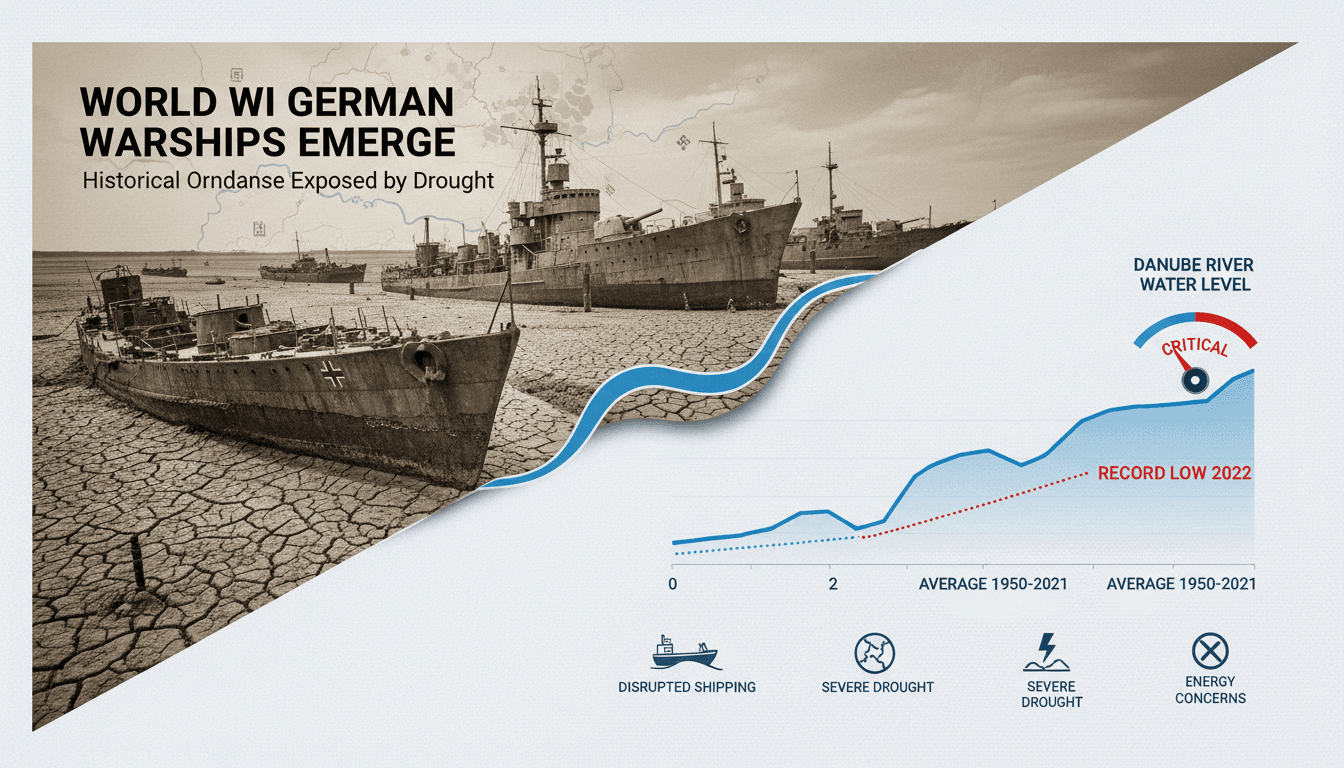
Record-low water levels in the Danube River have revealed the wreckage of numerous World War II German warships, which were scuttled during the war to impede Soviet advances. This unprecedented phenomenon is a direct result of severe drought conditions affecting Europe, leading to significant drops in water levels across the region. The sight of these vessels, some still laden with weapons, serves as a stark reminder of the past amidst current environmental challenges.
The German warships, estimated to number around 200, were deliberately sunk in 1944. Their emergence near the Serbian port of Prahovo, close to the Djerdap II dam, has raised concerns about the implications for shipping traffic and electricity generation in the area. As these historical remnants resurface, they draw attention to the ongoing impacts of climate change on both infrastructure and energy supply.
The Context
The Danube River, the second longest river in Europe, has long been a vital waterway for trade and transportation. The current drought, linked to global warming, has not only affected water levels but also electricity generation in the region, raising alarms about potential shortages. The historical significance of the site is underscored by the fact that up to 200 German warships were scuttled to slow Soviet advances during World War II, making this a poignant intersection of history and environmental issues.
As the situation unfolds, stakeholders including local governments, environmental agencies, and historians are likely to engage in discussions about the management of water resources and the preservation of historical sites. The visibility of these warships may serve as a catalyst for renewed interest in both climate action and the safeguarding of cultural heritage.
Takeaway
The emergence of these warships may prompt renewed discussions on the environmental impacts of climate change and the importance of historical preservation. Observers should monitor the ongoing effects of low water levels on shipping and electricity generation in Europe, as these factors could have significant economic implications. Additionally, potential archaeological efforts may arise to explore and preserve the sunken warships, further intertwining the narrative of history with contemporary environmental challenges.
As the situation develops, it will be crucial to assess how local and regional authorities respond to the dual challenges of managing water resources and protecting historical sites. The visibility of these wrecks serves as a reminder of the past while highlighting the urgent need for effective climate change strategies.
Corporate leadership, finance, technology, and market trends.
"Fortune covers financial trends, leadership, and innovation with a pragmatic editorial approach."
— A47 Editor
Danube River’s shrinking water levels expose dozens of World War II ships
The Danube River is experiencing record-low water levels, which have led to the emergence of numerous German ships that were sunk during World War II. This phenomenon has prompted various governments across Europe to prepare for potential electricity...
International news coverage curated for readers in the UAE and Gulf region.
"Emirates 24|7 world coverage presents global developments through a UAE-facing and Gulf-relevant editorial lens."
— A47 Editor
The Danube River's water is dropping so low that World War II ships are emerging
Water levels in the Danube River have dropped significantly due to drought, revealing the wrecks of World War II German battleships near Prahovo, Serbia. This phenomenon highlights the severe impact of climate conditions on the river, which is crucia...
Regional and international reporting focused on Middle Eastern politics, diplomacy, and economics.
"Asharq Al-Awsat is a Saudi-owned international newspaper reflecting mainstream Gulf political perspectives."
— A47 Editor
Danube River’s Water Is Dropping So Low That World War II Ships Are Emerging
The water levels of the Danube River have dropped significantly, revealing the wrecks of World War II ships, particularly German battleships near Prahovo, Serbia. This phenomenon is attributed to a prolonged drought affecting the region, leading to u...
Tech industry news, innovation, gadgets, and startups from a UK broadcaster.
"Sky News is often seen as a center-right outlet in the UK, known for its rolling coverage and breaking stories."
— A47 Editor
Sunken Nazi warships emerge from the Danube as water levels drop to record lows
Record low water levels in the Danube River, attributed to severe drought conditions in Europe, have caused the emergence of sunken Nazi warships, revealing historical artifacts from World War II. This phenomenon was notably observed near the Djerdap...
International news, politics, and culture.
"Sky News is a UK-based 24-hour channel known for fast-breaking news and political coverage."
— A47 Editor
Sunken Nazi warships emerge from the Danube as water levels drop to record lows
Record low water levels in the Danube River, attributed to severe drought conditions in Europe, have caused the emergence of sunken Nazi warships, revealing historical artifacts from World War II. This phenomenon was notably observed near the Djerdap...