
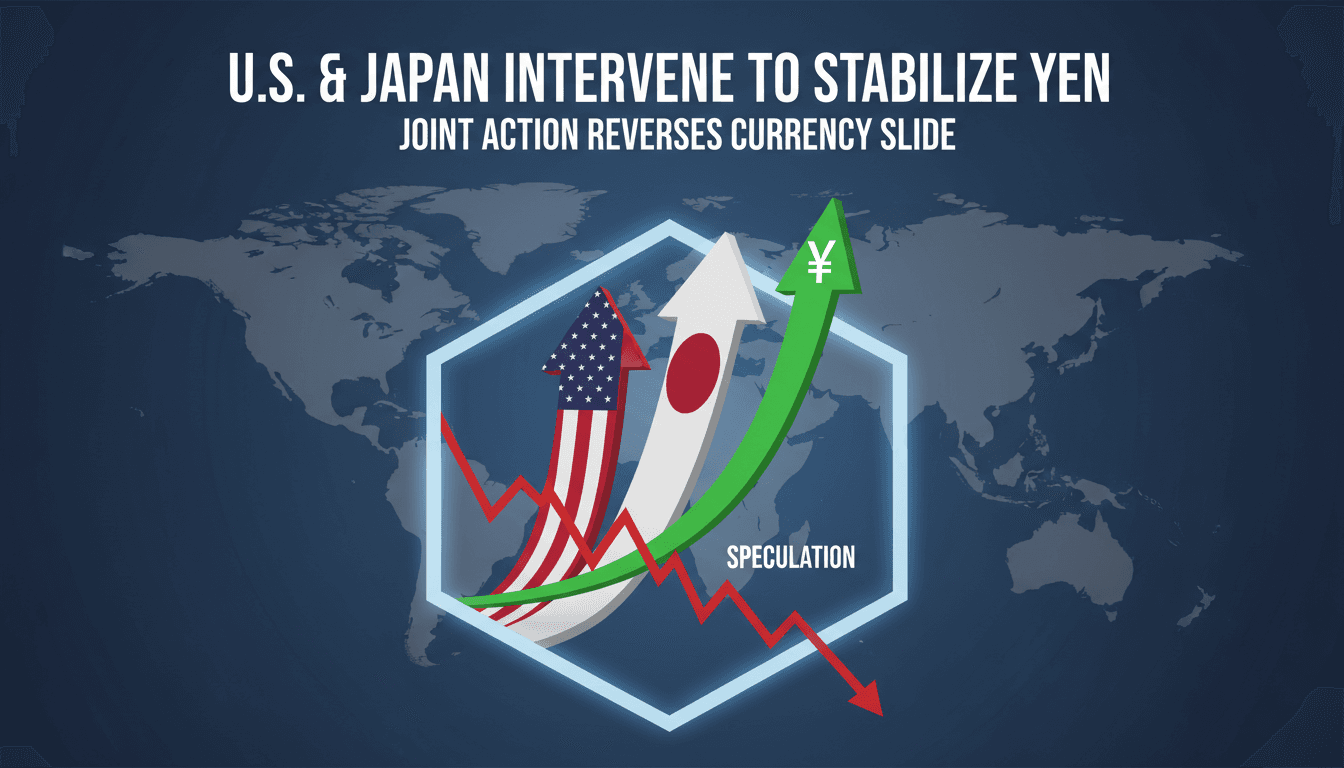
U.S. and Japan conduct joint intervention to stabilize yen
What happened
On August 3, 2026, the U.S. and Japan confirmed a historic joint intervention in currency markets aimed at supporting the yen. This coordinated action is a direct response to significant speculation against the currency, which has been under pressure due to various economic factors. The intervention marks a rare collaboration between the two nations in addressing currency market challenges.
The announcement highlights the urgency of stabilizing the yen amid increasing volatility. By working together, the U.S. and Japan are taking a strategic step to curb the negative impacts of speculation on their economies.
The Context
The joint intervention comes at a time when the yen has faced mounting pressure from various economic challenges, prompting the need for decisive action. Historically, the U.S. and Japan have collaborated on economic issues, but this intervention represents a notable moment in their partnership regarding currency stability. The timing of this intervention is crucial, as it reflects a growing concern over the yen's performance in the global market.
As speculation against the yen has intensified, both governments recognized the importance of a coordinated response. This collaboration underscores the significance of maintaining currency stability in a volatile economic environment, which is vital for both nations' economic health.
Takeaway
Looking ahead, the joint intervention may lead to increased stability for the yen, but ongoing monitoring of market conditions will be essential. Investors and policymakers should keep a close eye on the yen's performance in the coming weeks, as it will provide insights into the effectiveness of this intervention. Additionally, potential further interventions or policy changes from both governments could shape the future landscape of currency markets.
The collaboration between the U.S. and Japan may set a precedent for future interventions, emphasizing the need for coordinated efforts in addressing currency volatility. Stakeholders should remain alert to developments that could impact economic strategies and market dynamics.
Global political, business, and cultural coverage from WSJ international desks.
"The Wall Street Journal offers extensive international reporting with a reputation for financial insight and a center-right editorial stance."
— A47 Editor
Five Charts That Show Why the U.S. and Japan Teamed Up to Buy Yen
The United States and Japan have executed a rare joint intervention in the currency markets to stabilize the Japanese yen, which has recently fallen to a 40-year low against the U.S. dollar. This coordinated action was confirmed by both Tokyo and Was...
Macro commentary, policy analysis, growth/inflation themes, and global outlooks.
"Contextual macro coverage that complements day-to-day market headlines."
— A47 Editor
How a US-Japan pact to hit yen speculators came together
The United States and Japan have executed a rare joint intervention in the currency market to stabilize the Japanese yen, which has recently fallen to a 40-year low against the US dollar. This unprecedented action was confirmed by US Treasury Secreta...
Macro commentary, policy analysis, growth/inflation themes, and global outlooks.
"Contextual macro coverage that complements day-to-day market headlines."
— A47 Editor
Yen holds gains after Japan, US confirm joint intervention, signal more action
The Japanese yen has held its gains following a confirmed joint intervention by Japan and the United States, aimed at stabilizing the currency which recently fell to a 40-year low against the US dollar. This unprecedented action reflects a significan...
Macro commentary, policy analysis, growth/inflation themes, and global outlooks.
"Contextual macro coverage that complements day-to-day market headlines."
— A47 Editor
History of Japan’s intervention in currency markets
Japan has recently intervened in currency markets to stabilize the yen, which has fallen to a 40-year low against the US dollar. This intervention is part of a broader strategy to manage economic pressures and maintain currency stability.