
Child malnutrition crisis escalates in Afghanistan due to humanitarian aid cuts
What happened
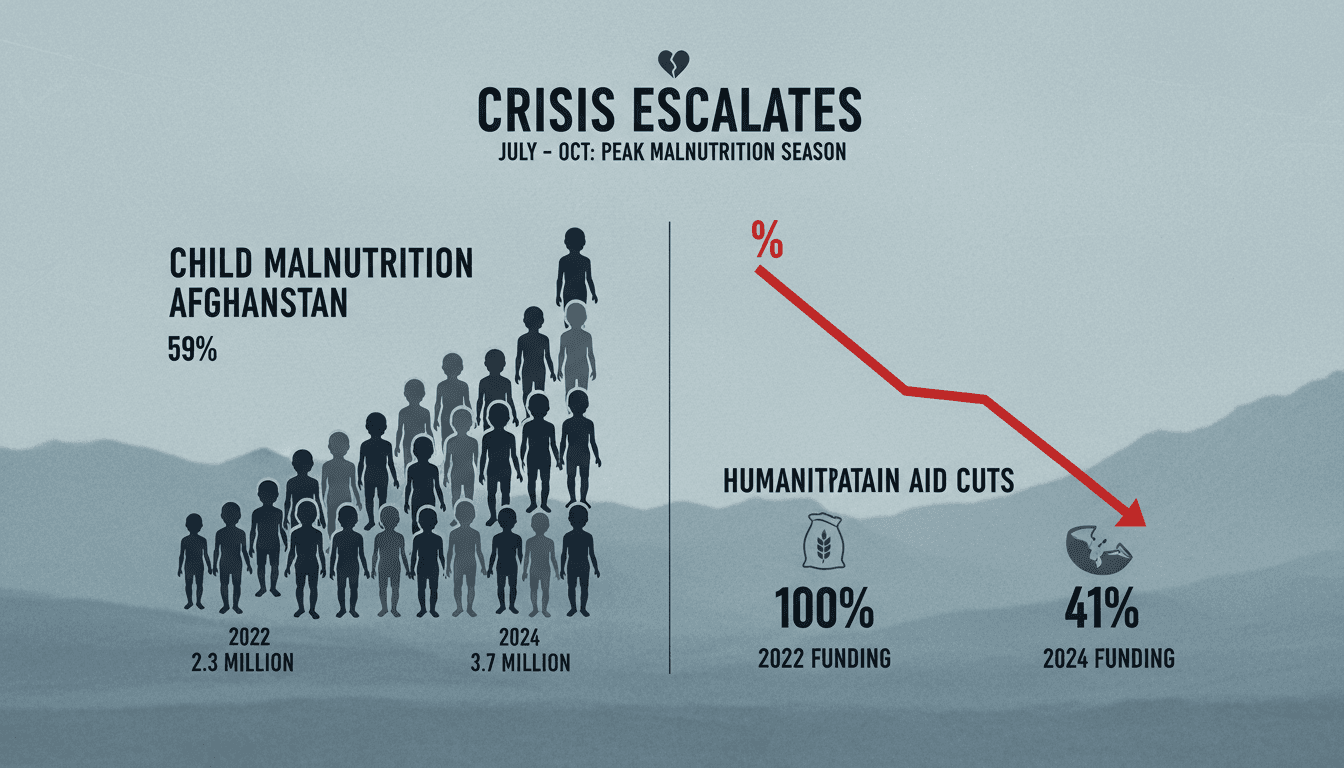
Child malnutrition in Afghanistan has reached alarming levels, particularly child wasting, which is now critical in a third of the provinces. This crisis is largely attributed to severe cuts in humanitarian aid, which have resulted in millions of children and mothers being denied access to essential health services. The UN World Food Programme has issued warnings that without immediate action, the situation will deteriorate further, especially during the peak malnutrition season from July to October.
Funding for food assistance has dropped by approximately 59% since 2022, exacerbating the plight of vulnerable populations. As a result, nearly 3.7 million Afghan children are projected to suffer from acute malnutrition this year, highlighting the scale of the crisis.
The Context
The malnutrition crisis in Afghanistan is unfolding against a backdrop of significant humanitarian challenges. The closure of 142 health centers in 2025 due to aid reductions has severely impacted access to nutrition treatment for those in need. The UN humanitarian appeal for Afghanistan is currently only 26% funded, raising alarms as malnutrition indicators worsen.
This situation is particularly dire for children and pregnant women, who are the most vulnerable to the effects of malnutrition. As the peak season for malnutrition approaches, the urgency for international support becomes increasingly critical to prevent further deterioration of child health.
Takeaway
Immediate humanitarian intervention is essential to mitigate the escalating malnutrition crisis in Afghanistan. Stakeholders should closely monitor funding responses from international donors to the humanitarian appeal, as well as the impact of seasonal changes on malnutrition rates in the coming months. Without significant increases in funding and support, the crisis is likely to escalate, leading to increased child mortality and long-term health consequences for affected populations.
The international community must act swiftly to address this urgent humanitarian need and prevent a catastrophic outcome for millions of children.
Global news coverage with extensive reporting on Middle Eastern conflicts and geopolitics.
"Al Jazeera is a Qatar-based broadcaster known for wide regional coverage and alternative perspectives."
— A47 Editor
Deadliest form of malnutrition has reached critical levels in Afghanistan
Child wasting, the deadliest form of malnutrition, has reached critical levels in one-third of Afghanistan's provinces, posing a severe threat to the health and survival of children in the region. This alarming situation highlights the urgent need fo...
Comprehensive coverage of Middle Eastern and global issues.
"Al Jazeera is a prominent voice from the Global South, especially the Middle East, with an emphasis on underreported stories."
— A47 Editor
Deadliest form of malnutrition has reached critical levels in Afghanistan
Child wasting, the deadliest form of malnutrition, has reached critical levels in one-third of Afghanistan's provinces, posing a severe threat to the health and survival of children in the region. This alarming situation highlights the urgent need fo...
English-language reporting on Saudi politics, policy, and society.
"Saudi Gazette reflects mainstream Saudi institutional perspectives."
— A47 Editor
Afghanistan child malnutrition hits critical levels amid aid cuts, WFP says
Child malnutrition in Afghanistan has reached critical levels in a third of the provinces, with nearly 3.7 million children and 1.2 million pregnant and breastfeeding women projected to suffer from acute malnutrition this year, according to the UN Wo...
Pan-Arab news coverage spanning politics, business, sports, and regional affairs.
"Asharq Al-Awsat reflects a broad Arab editorial perspective with strong attention to regional geopolitics."
— A47 Editor
«الأغذية العالمي»: سوء تغذية الأطفال يبلغ مستويات حرجة في أفغانستان
The United Nations warned on Tuesday that child malnutrition has reached critical levels in Afghanistan, driven by severe cuts in aid. This alarming situation highlights the dire humanitarian crisis affecting the country's youngest and most vulnerabl...
Regional coverage and analysis focused on politics, diplomacy, and business across the Middle East.
"Al-Monitor is known for analytical reporting on Middle East politics and policy developments."
— A47 Editor
Afghan child malnutrition surges as aid cuts force clinics to turn families away, WFP says
Child malnutrition in Afghanistan has reached alarming levels, with the U.N. World Food Programme reporting that aid shortages are forcing health workers to turn away millions of children and mothers, impacting six out of seven families in need. The ...