
Negotiations to reopen the Strait of Hormuz show progress amid regional tensions
What happened
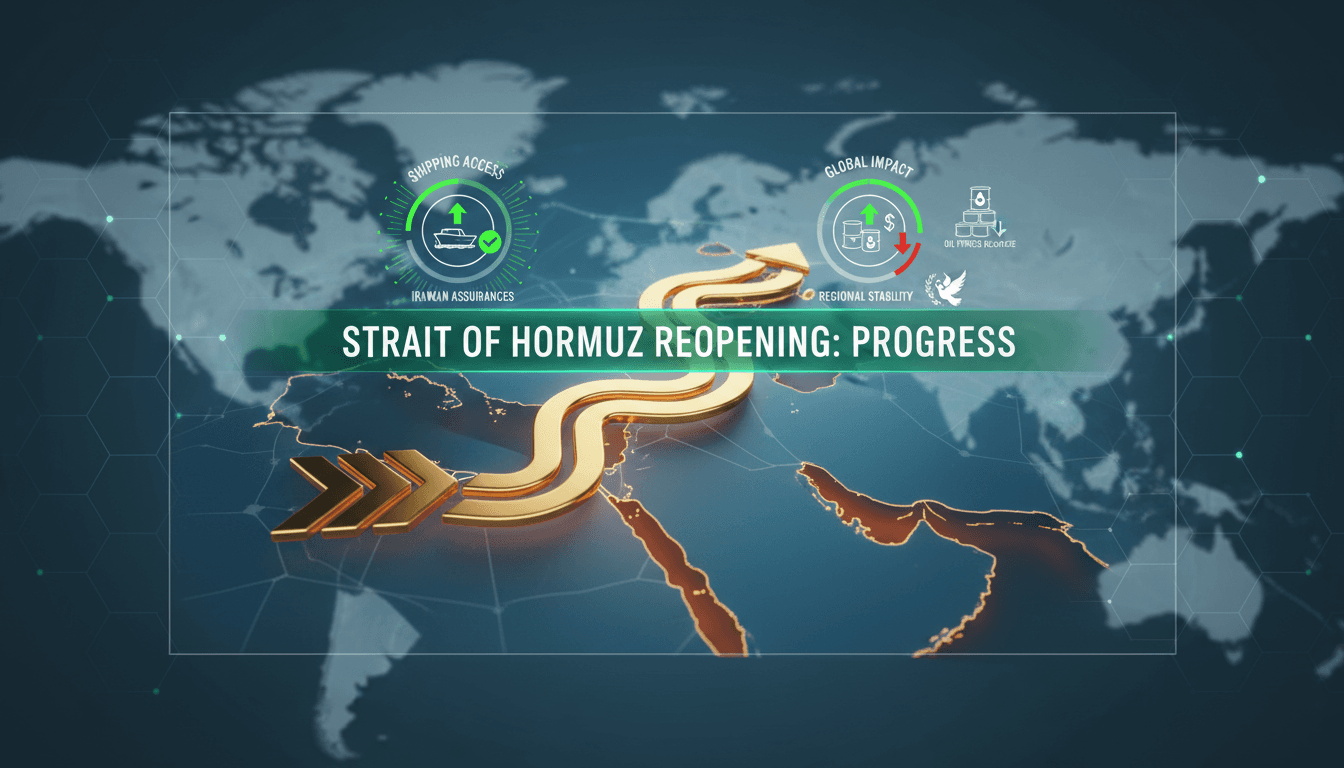
Negotiations to reopen the Strait of Hormuz are reportedly making progress amid heightened tensions in the Middle East. Efforts are intensifying, with expectations of a potential agreement in the coming days. Iran's demand for assurances regarding ship access is a key factor in these discussions, reflecting the complexities involved in reaching a consensus.
The Strait of Hormuz has seen a significant halt in ship traffic due to escalating U.S.-Iran tensions, which has raised concerns about the stability of this critical maritime route. The outcome of these negotiations could have a profound impact on both regional stability and global oil prices.
The Context
The Strait of Hormuz is a vital maritime route for global oil shipments, making its stability essential for international markets. Recent months have witnessed a marked decrease in ship traffic, primarily due to the ongoing conflict between the U.S. and Iran. Iran's insistence on controlling ship access adds another layer of complexity to the negotiations, as it seeks assurances before any reopening can occur.
Public sentiment in the U.S. indicates that many Americans expect the chaos in the Middle East to escalate, despite the progress reported in negotiations. This disconnect between public perception and diplomatic efforts highlights the challenges negotiators face in restoring confidence in the region's stability.
Takeaway
The coming days will be critical as negotiators aim to finalize an agreement that could ease tensions and restore vital shipping routes. The outcome of these discussions will not only affect regional dynamics but also influence global oil prices. As public anxiety regarding Middle East stability persists, it may shape political responses in the U.S., potentially complicating the negotiation process.
Stakeholders should remain vigilant and monitor developments in U.S.-Iran negotiations, as shifts in public sentiment could impact the overall effectiveness of any agreement reached.
Global business headlines with AI angles.
"General business outlet that frequently covers AI."
— A47 Editor
Talks To Reopen The Strait Of Hormuz Appear To Be Making Progress. But Most Americans Expect Chaos To Expand In The Middle East.
Recent polling indicates that while talks to reopen the Strait of Hormuz are reportedly making progress, a significant majority of Americans anticipate an escalation of chaos in the Middle East due to the ongoing conflict in Iran.
Pan-Arab news coverage spanning politics, business, sports, and regional affairs.
"Asharq Al-Awsat reflects a broad Arab editorial perspective with strong attention to regional geopolitics."
— A47 Editor
الوساطات تتحرك لإعادة فتح «هرمز»
Recent efforts by mediators have intensified to reopen the Strait of Hormuz, with U.S. officials suggesting that an agreement may be reached within a day or two. Tehran has insisted on a framework that allows it to control the entry of ships into the...
Corporate leadership, finance, technology, and market trends.
"Fortune covers financial trends, leadership, and innovation with a pragmatic editorial approach."
— A47 Editor
As confusion reigns over Hormuz talks, Fortune gets exclusive access to a UN-backed plan to reopen the strait
The Strait of Hormuz has become a focal point in the ongoing tensions between the U.S. and Iran, with vital shipping traffic severely disrupted in recent months. A UN-backed initiative aims to facilitate the reopening of this crucial maritime route, ...