
Drought in Europe Uncovers World War II Artifacts in Danube River
What happened
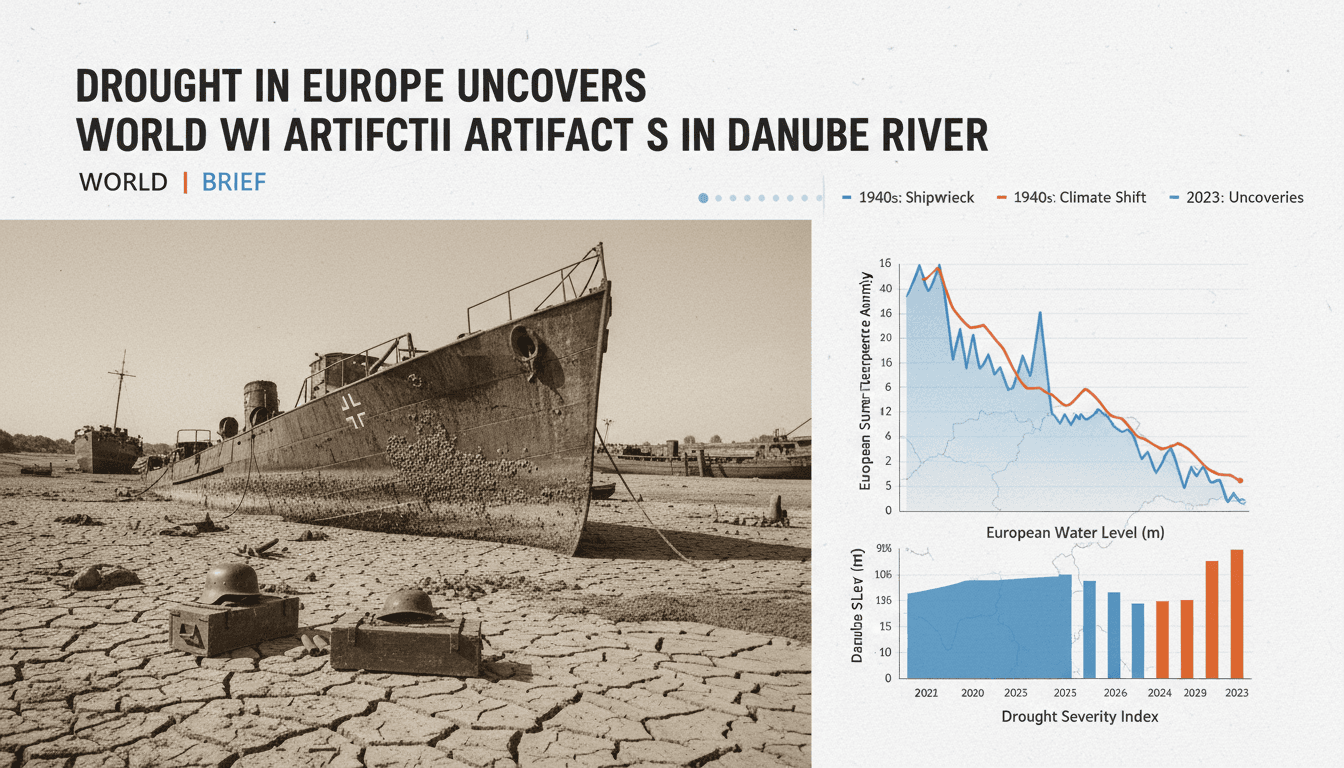
Drought conditions in Europe have led to record-low water levels in the Danube River, exposing numerous remnants from World War II. Among the artifacts revealed are Nazi shipwrecks, military equipment, and even human remains. This phenomenon is a direct result of extreme heat and drought affecting the region this summer.
Reports indicate that dozens of World War II ships have emerged from the riverbed, underscoring the scale of historical artifacts being uncovered. Notably, two Nazi soldiers' remains were found in Budapest as water levels dropped, alongside unexploded ordnance and military motorcycles. The ongoing drought has also stranded fishing boats near the banks of the Rhine, further illustrating the widespread impact of these conditions.
The Context
The Danube River, the second longest river in Europe, has a rich historical significance, particularly during World War II. The exposure of these artifacts not only sheds light on the region's past but also raises questions about the preservation of history in the face of climate change. Other European rivers, such as the Rhine and Loire, are also experiencing low water levels, indicating a broader environmental trend.
As these historical remnants come to light, they serve as a reminder of the human stories intertwined with the region's waterways. The discoveries may prompt increased archaeological interest and discussions about how to protect these sites from future climate-related impacts. The timing of these revelations coincides with a growing awareness of the need for sustainable practices in managing natural resources.
Takeaway
The ongoing drought conditions in Europe may continue to reveal more historical artifacts along the Danube and other rivers. This situation presents an opportunity for archaeological exploration and could lead to significant findings that enhance our understanding of World War II history. As these discoveries unfold, it will be essential to monitor the impact of climate change on European waterways and the implications for historical preservation.
Future developments in archaeological studies of the exposed artifacts will be crucial in determining how best to protect and interpret these findings. Stakeholders will need to engage in discussions about the balance between preserving history and addressing the challenges posed by a changing climate.
International coverage from The Guardian's global desks.
"The Guardian is known for its progressive editorial stance and in-depth analysis."
— A47 Editor
Nazi shipwrecks emerge from the depths as Europe’s Danube dries up
Record-low water levels in the Danube River have revealed several Nazi shipwrecks and military artifacts, including unexploded ordnance and a military motorcycle, as a result of severe drought conditions affecting Europe. These remnants of World War ...
RT is a Russian state-funded network covering global events from a Russian perspective.
"RT is widely criticized for promoting pro-Kremlin narratives and is considered by many to be a state propaganda outlet."
— A47 Editor
Low Danube reveals Nazi soldiers’ remains (PHOTOS)
Low water levels in the Danube River have revealed the remains of two Nazi soldiers and World War II military equipment in Budapest, highlighting the historical significance of the area. This phenomenon is attributed to a severe heatwave affecting Eu...
European current affairs, EU politics, and regional developments.
"France 24 is viewed as a globally focused outlet with balanced coverage and a European perspective."
— A47 Editor
In pictures: Drought exposes World War II ships, strands boats as Europe’s river levels plunge
Record low water levels in the Danube River, driven by severe drought and extreme heat, have exposed the hulls of numerous World War II German warships and revealed ancient mammoth remains in Romania. Fishing boats are stranded along the banks of the...