
University of Delaware Researchers Tag Sharks for Enhanced Hurricane Prediction
What happened
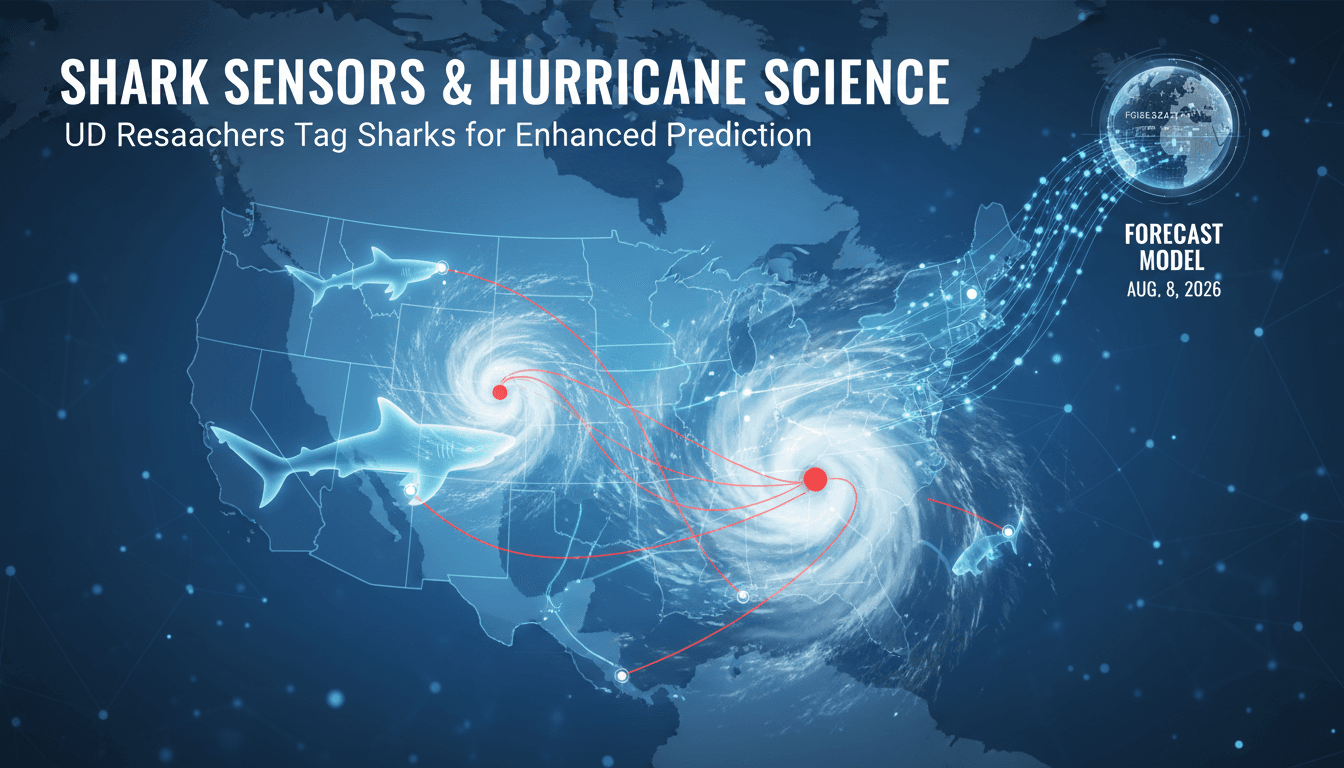
Researchers at the University of Delaware have initiated a project to tag sharks off the US East Coast, aiming to collect valuable data for hurricane prediction. This effort began on August 8, 2026, marking a significant advancement in marine research. The sharks will be equipped with small electronic devices that will allow scientists to track their movements and gather real-time data.
This data is expected to enhance the accuracy of hurricane forecasting models, providing critical information that can improve preparedness and response strategies during severe weather events. By leveraging the natural behaviors of these marine animals, researchers hope to create a more effective system for predicting hurricanes.
The Context
The project is part of a broader effort to integrate wildlife data into climate science, highlighting the interconnectedness of marine life and environmental monitoring. By using sharks as 'ocean sensors', researchers aim to fill gaps in current forecasting methods, which can often be limited in scope. The timing of this initiative is particularly relevant, as climate change continues to intensify the frequency and severity of hurricanes.
Improved hurricane predictions could lead to better preparedness and response strategies, ultimately benefiting communities vulnerable to these natural disasters. The collaboration between marine researchers and climate scientists underscores the importance of interdisciplinary approaches in tackling complex environmental challenges.
Takeaway
As this project progresses, it may pave the way for new methodologies in environmental monitoring and disaster preparedness. The effectiveness of shark data in hurricane prediction models will be closely monitored, providing insights into the potential for wildlife to contribute to climate science. Advancements in marine technology will also play a crucial role in enhancing our understanding of ocean dynamics and their impact on weather patterns.
This initiative could revolutionize how meteorologists predict hurricanes, potentially saving lives and resources in the process. Stakeholders in both marine research and climate science will be watching closely as the project unfolds.
Arabic-language coverage of international news and geopolitics.
"RT Arabic is a Russian state-funded outlet often criticized for promoting Kremlin-aligned narratives."
— A47 Editor
أسماك القرش تتحول إلى "مجسات بحرية" لتحسين التنبؤ بشدة الأعاصير
Researchers from the University of Delaware began using sharks as "marine sensors" on August 8 to collect data that could enhance the accuracy of hurricane intensity predictions. This innovative approach aims to leverage the natural behavior of shark...
Pan-Arab news coverage spanning politics, business, sports, and regional affairs.
"Asharq Al-Awsat reflects a broad Arab editorial perspective with strong attention to regional geopolitics."
— A47 Editor
علماء يستخدمون أسماك القرش لتحسين التنبؤ بالأعاصير
Scientists are utilizing sharks off the eastern coast of the United States to gather data that may enhance hurricane prediction capabilities. As these sharks navigate the waters, they contribute valuable information that can aid in forecasting severe...
24/7 international news from a French perspective in multiple languages.
"France 24 is viewed as a globally focused outlet with balanced coverage and a European perspective."
— A47 Editor
US scientists turn to sharks for help with hurricane prediction
Researchers at the University of Delaware are initiating a project to tag sharks along the US East Coast with small electronic devices. This effort aims to gather data that could enhance hurricane prediction capabilities.
Regional and international reporting focused on Middle Eastern politics, diplomacy, and economics.
"Asharq Al-Awsat is a Saudi-owned international newspaper reflecting mainstream Gulf political perspectives."
— A47 Editor
Scientists Turn to Sharks to Improve Hurricane Predictions
Scientists are exploring the behavior of sharks to enhance the accuracy of hurricane predictions. This innovative approach aims to leverage the unique sensory capabilities of sharks to better understand and forecast hurricane patterns.