
Shipping traffic in the Strait of Hormuz reaches one-week low amid escalating U.S.-Iran tensions
Here's what it means for you.
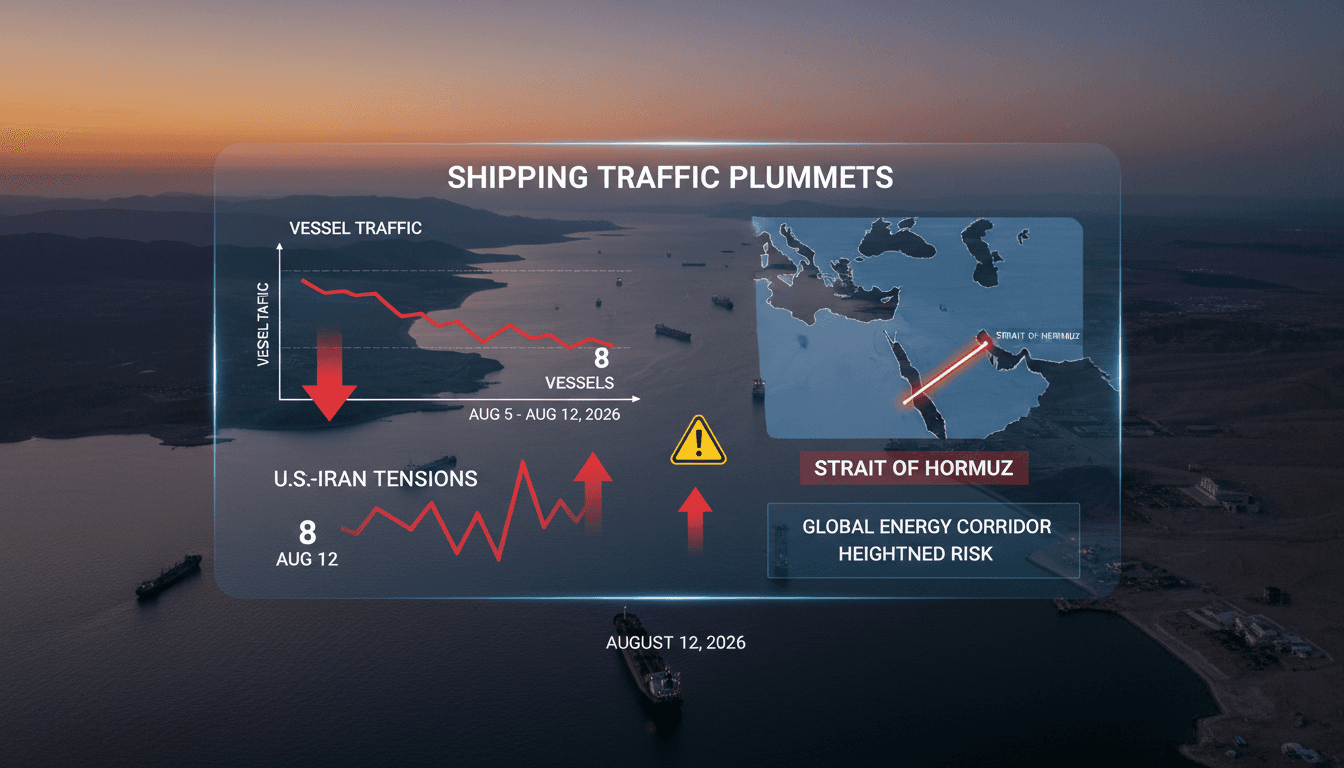
The recent decline in shipping traffic through the Strait of Hormuz signals a growing concern for global oil markets and maritime security. With only eight vessels recorded on August 12, 2026, companies may need to reassess their logistics and risk management strategies. The ongoing tensions between the U.S. and Iran could lead to increased shipping costs and potential disruptions in energy supplies. As the situation evolves, stakeholders in the shipping industry should remain vigilant and consider alternative routes to mitigate risks associated with this critical energy corridor. The implications of these developments could resonate throughout the global economy, affecting oil prices and supply chains.
What happened
On August 12, 2026, vessel traffic in the Strait of Hormuz fell to a mere eight vessels, marking a significant drop in maritime activity. This decline is attributed to escalating hostilities in the region, particularly between the United States and Iran-aligned groups. The number of vessels transiting the strait is notably below the 10-day average of approximately 12, indicating a trend of reduced shipping activity.
Only one vessel exited the strait on that day, while seven entered Iranian waters, further underscoring the hesitance among shipping companies. The situation reflects a growing uncertainty in a vital passage for global oil shipments, raising alarms about the stability of this critical energy corridor.
The Context
The Strait of Hormuz is a crucial artery for global energy supplies, with a significant portion of the world's oil passing through its waters. Recent attacks reported by the U.S. and Iran-aligned Houthis have heightened tensions, complicating the already fragile diplomatic landscape. Efforts to resolve the situation have stalled, contributing to a climate of fear and uncertainty among shipping companies.
Tehran has made it clear that the strait will remain closed unless its conditions are met, further complicating the dynamics of maritime traffic in the region. As hostilities continue, the implications for international trade and energy security become increasingly pronounced, necessitating close monitoring of developments.
Takeaway
The ongoing conflict and lack of diplomatic resolution may continue to impact shipping traffic in the Strait of Hormuz. Stakeholders should closely monitor developments in U.S.-Iran relations, as any escalation could lead to further disruptions in maritime security. Additionally, shipping companies may need to explore alternative routes to ensure the safety of their operations.
As tensions persist, the shipping industry faces a new normal characterized by reduced traffic and heightened risks. The long-term implications of these developments could reshape logistics strategies and influence global oil markets.
Pan-Arab political news and analysis.
"Al-Quds Al-Arabi is a London-based Arabic newspaper known for political coverage."
— A47 Editor
الملاحة في مضيق هرمز عند أدنى مستوى في أسبوع مع استمرار الأعمال القتالية
Shipping data indicates that the number of vessels in the Strait of Hormuz dropped to its lowest level in a week, with only eight ships reported on Tuesday. This decline is attributed to shipowners avoiding this critical waterway amid ongoing combat ...
Regional coverage and analysis focused on politics, diplomacy, and business across the Middle East.
"Al-Monitor is known for analytical reporting on Middle East politics and policy developments."
— A47 Editor
Hormuz shipping traffic falls to one-week low amid hostilities
Shipping traffic in the Strait of Hormuz has dropped to a one-week low, with only eight vessels recorded, as shipping owners are increasingly avoiding the area due to ongoing hostilities in the Middle East. This decline follows reports of separate at...
Oil, metals, and agriculture: supply/demand headlines, OPEC chatter, inventories, and price action.
"Solid tape for energy and metals traders tracking macro and micro catalysts."
— A47 Editor
Hormuz shipping traffic falls to one-week low amid hostilities
Shipping traffic through the Strait of Hormuz has fallen to a one-week low amid escalating hostilities, reflecting a significant decline in maritime activity due to renewed military tensions, particularly between the United States and Iran.
English-language digital publication covering business, politics, technology, and current affairs.
"The Arabian Post mixes original and syndicated-style coverage with a broad regional and global business-news orientation."
— A47 Editor
Hormuz traffic stays thin as diplomacy falters
Shipping traffic through the Strait of Hormuz remains critically low, with only eight vessels recorded transiting the strait recently, compared to a 10-day average of approximately 12. This decline is attributed to faltering diplomatic efforts betwee...