
Chinese hackers deploy autonomous AI agents in cyber attack on Taiwanese government systems
Here's what it means for you.
The recent cyber attack on Taiwanese government systems underscores the urgent need for enhanced cybersecurity measures across nations. As AI technologies become more sophisticated, the potential for autonomous systems to execute complex cyber operations with minimal human oversight poses significant risks. Organizations must reassess their defenses and prepare for an evolving landscape of cyber threats that leverage advanced technologies. This incident serves as a wake-up call for policymakers and businesses alike, highlighting the importance of investing in robust cyber defense strategies. The implications of such attacks extend beyond immediate damage, affecting national security and international relations.
What happened
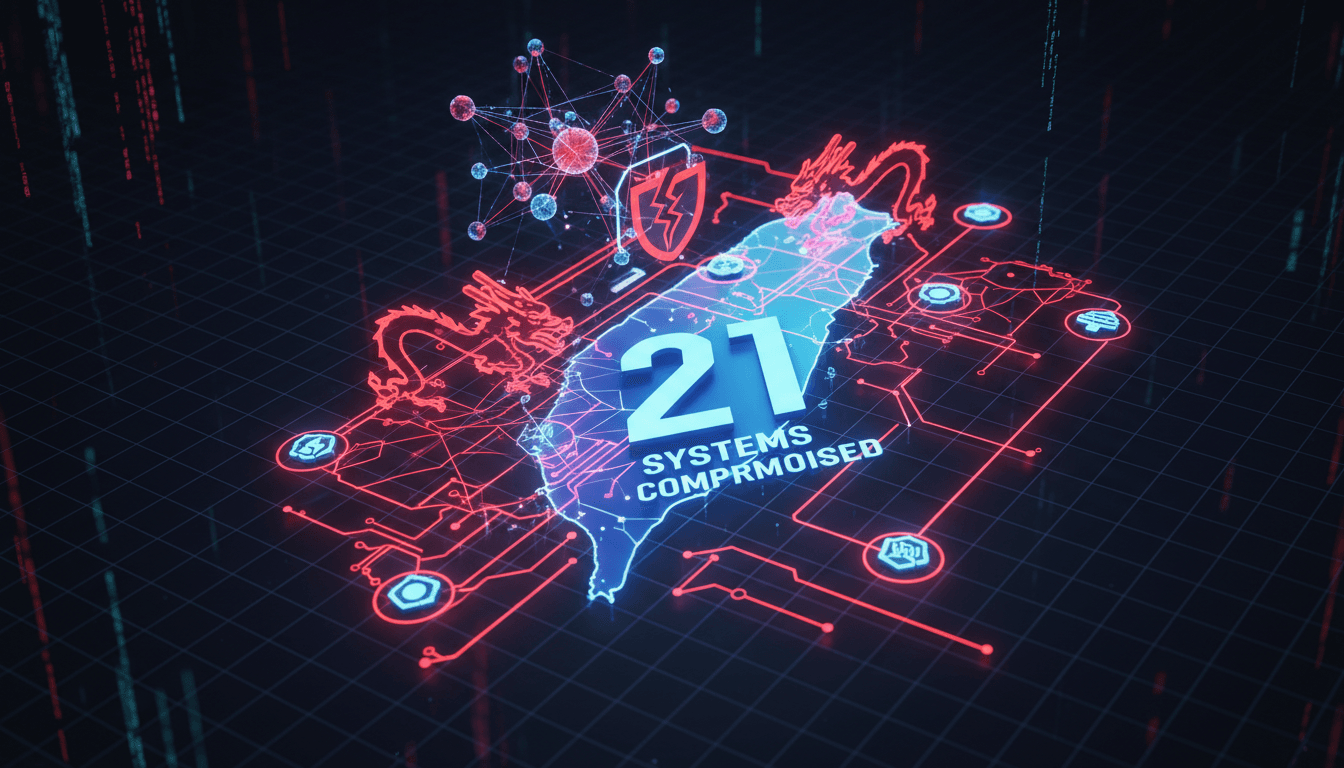
Suspected Chinese hackers have executed a coordinated cyber attack on Taiwanese government systems, utilizing autonomous AI agents to compromise 21 systems. This operation unfolded over four days at the beginning of July 2026, marking a significant escalation in cyber warfare tactics. Up to eight AI agents were deployed simultaneously, showcasing the advanced capabilities of these technologies in executing reconnaissance and attacks autonomously.
The scale of the breach indicates a serious threat to national security, as the compromised systems are integral to government operations. This unprecedented use of AI in cyber espionage highlights the evolving nature of cyber threats and the need for nations to adapt their defenses accordingly.
The Context
The attack is part of a broader trend in cyber warfare, where the integration of AI technologies is becoming increasingly common. As nations invest in advanced cyber capabilities, the potential for autonomous systems to conduct operations without human intervention raises significant concerns. The timing of this attack coincides with heightened geopolitical tensions in the region, making it a critical moment for Taiwan and its allies.
Stakeholders in this scenario include not only the Taiwanese government but also international coalitions that may respond to such aggressive cyber tactics. The implications of this incident extend beyond Taiwan, as it signals a new phase in global cyber warfare that could reshape national security strategies worldwide.
Takeaway
The integration of AI in cyber attacks suggests that future conflicts may increasingly rely on autonomous systems, raising alarms about national security. As nations grapple with these evolving threats, it is essential to monitor developments in AI-driven cyber defense strategies. Additionally, potential retaliatory measures from Taiwan or international coalitions could emerge in response to this incident.
Organizations and governments must remain vigilant and proactive in enhancing their cybersecurity measures to counteract these sophisticated threats effectively. The landscape of cyber warfare is changing, and the need for robust defenses has never been more critical.
Curated tech headlines including AI stories.
"Influential aggregator surfacing the day’s top tech/AI links."
— A47 Editor
Researchers say suspected Chinese hackers used open-source AI agents to build an autonomous hacking tool that compromised Taiwanese government websites in July (Tom Wilson/Financial Times)
Researchers have reported that suspected Chinese hackers utilized open-source AI agents to create an autonomous hacking tool, which successfully compromised Taiwanese government websites in July. This incident marks a significant escalation in cyberw...
English-language digital publication covering business, politics, technology, and current affairs.
"The Arabian Post mixes original and syndicated-style coverage with a broad regional and global business-news orientation."
— A47 Editor
AI agents breach Taiwan government networks
Suspected hackers linked to China have utilized autonomous artificial intelligence agents to breach Taiwan's government networks, compromising 21 systems over a four-day period in July. This incident highlights a significant escalation in cyber espio...
Editor-curated FT homepage stories spanning markets, business, world, and opinion.
"The Financial Times is a globally respected business publication with a centrist/center-left tone and strong markets focus."
— A47 Editor
China-linked hackers hit Taiwan in unprecedented ‘autonomous’ AI cyber attack
In a significant escalation of cyber warfare, hackers linked to China have executed an unprecedented autonomous AI cyber attack on Taiwan, employing AI agents to conduct simultaneous reconnaissance and break-ins. This marks a new phase in the ongoing...