
North Korean Operatives Infiltrate US Job Market Using AI and Stolen Identities
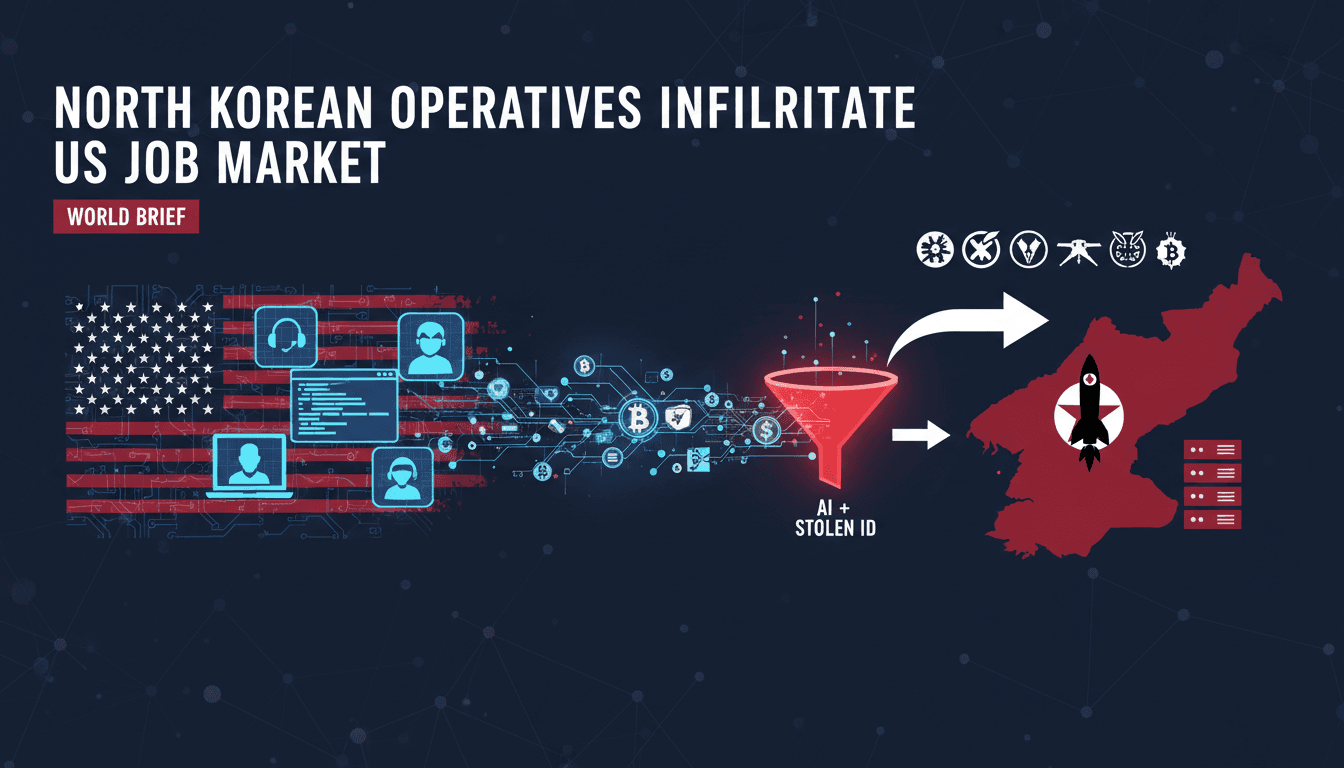
Here's what it means for you.
The infiltration of the U.S. job market by North Korean operatives poses a significant threat to corporate integrity and national security. Companies must reassess their hiring practices to prevent exploitation by foreign entities. This situation highlights the urgent need for enhanced identity verification measures in the tech industry. As remote work continues to expand, the vulnerabilities in hiring protocols could lead to broader implications for businesses and their stakeholders. Organizations must prioritize safeguarding their systems to maintain trust and security.
What happened
North Korean operatives have successfully infiltrated American businesses by using stolen identities and artificial intelligence to secure remote technology jobs. This operation has raised alarms about the vulnerabilities present in corporate hiring practices. A year-long investigation has revealed the extent of this infiltration, which not only allows these operatives to earn money but also funnels resources back to Kim Jong-un's regime.
The use of AI tools has enabled these individuals to create convincing professional profiles, further complicating the verification process for employers. As a result, the integrity of hiring systems is being undermined, posing a challenge to both corporate security and national interests.
The Context
This operation underscores significant weaknesses in corporate hiring systems that have been exposed over the past year. The ability of North Korean operatives to assume the identities of U.S. citizens highlights the need for improved safeguards in employment practices. The financial resources funneled to North Korea through these operations are estimated to be in the millions, raising concerns about the broader implications for national security.
As companies increasingly rely on remote work, the scrutiny of hiring practices and identity verification processes becomes paramount. The ongoing exploitation of the U.S. job market by these operatives emphasizes the urgency for organizations to adapt and strengthen their protocols.
Takeaway
Looking ahead, companies may face increased pressure to enhance their hiring protocols and implement stricter identity verification measures. Potential legislative responses could emerge to tighten hiring practices in tech companies, reflecting the growing awareness of these vulnerabilities. Increased scrutiny on remote work policies will likely follow as organizations seek to protect themselves from foreign exploitation.
As this situation develops, it will be crucial for businesses to remain vigilant and proactive in safeguarding their hiring processes against such infiltrations.
English-language digital publication covering business, politics, technology, and current affairs.
"The Arabian Post mixes original and syndicated-style coverage with a broad regional and global business-news orientation."
— A47 Editor
North Korean operatives exploit AI to secure US jobs
North Korean operatives have been found exploiting artificial intelligence and stolen identities to secure remote technology jobs at U.S. companies, revealing vulnerabilities in corporate hiring practices. This operation, which has been under investi...
Tech business coverage, major deals, product launches, and Silicon Valley trends.
"WSJ’s tech section offers authoritative reporting on the intersection of technology and business, including exclusive industry analysis."
— A47 Editor
North Koreans Use Stolen IDs, AI to Land U.S. Jobs—and Funnel Millions to Kim’s Regime
North Korean operatives have been utilizing stolen identities and artificial intelligence to secure jobs in the United States, subsequently diverting millions of dollars to support Kim Jong-un's regime. This alarming trend highlights the sophisticate...
Global political, business, and cultural coverage from WSJ international desks.
"The Wall Street Journal offers extensive international reporting with a reputation for financial insight and a center-right editorial stance."
— A47 Editor
North Koreans Use Stolen IDs, AI to Land U.S. Jobs—and Funnel Millions to Kim’s Regime
North Korean operatives are reportedly using stolen identities and artificial intelligence to secure jobs in the United States, generating significant financial resources for Kim Jong Un's regime. This alarming trend has been highlighted in a recent ...