
US-Iran peace talks stall amid heightened tensions in the Strait of Hormuz
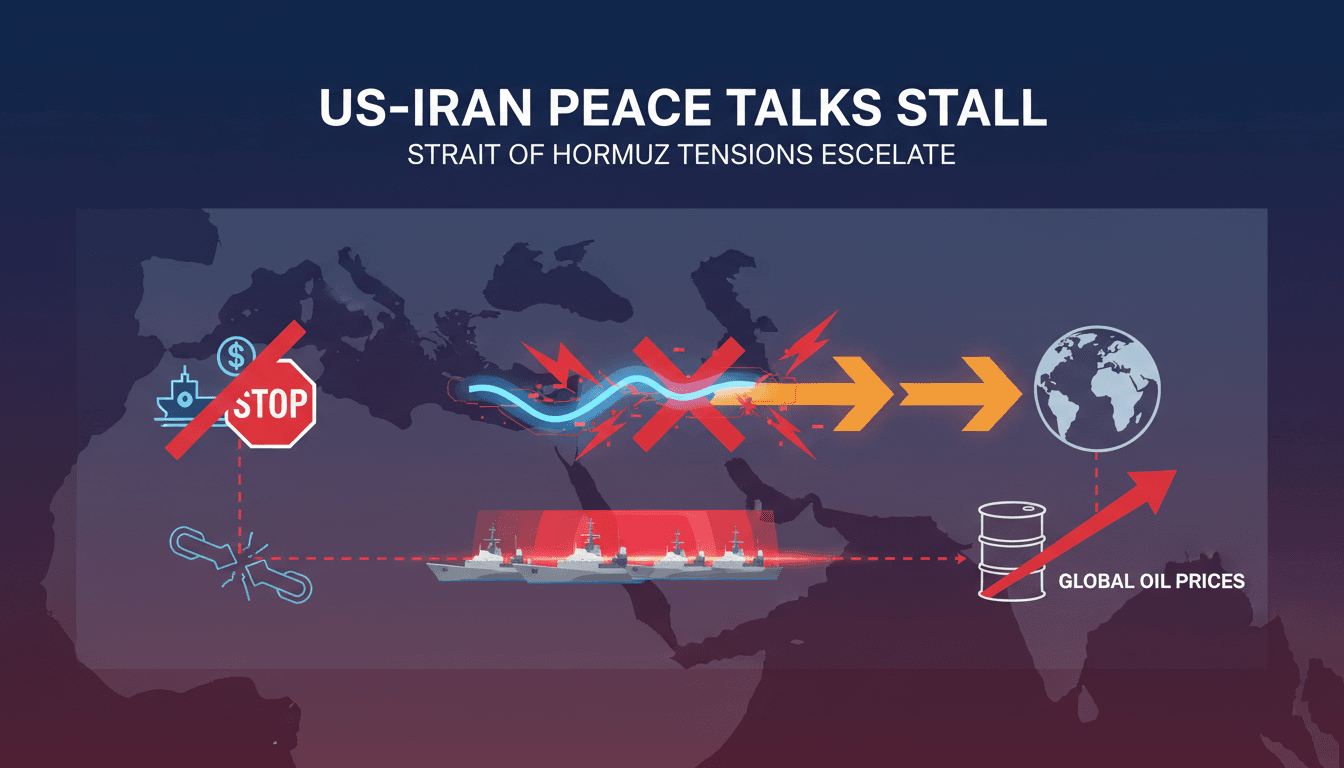
Here's what it means for you.
The stalling of US-Iran peace talks poses significant risks to global oil shipping routes, particularly through the vital Strait of Hormuz. As tensions escalate, stakeholders in the energy markets should prepare for potential disruptions and increased volatility. The ongoing military posturing could also lead to shifts in policy and economic sanctions that may impact regional stability and international relations.
What happened
Peace negotiations between the US and Iran have reached a stalemate, significantly impacting shipping traffic in the Strait of Hormuz. Recent attacks on vessels have heightened tensions, with Iran claiming that ships are transiting without permission. The situation has worsened as the US threatens to maintain a naval blockade against Iran indefinitely, further complicating the already fragile relationship.
Two ships were recently attacked in the Strait, underscoring the escalating conflict and its implications for maritime security. As a result, transit through the Strait of Hormuz has slowed to a near standstill, raising concerns about the flow of oil and other goods. The deadline for a US-Iran agreement has expired without resolution, leaving both parties at an impasse.
The Context
The Strait of Hormuz is a critical shipping route for global oil, making the current tensions particularly concerning for international markets. The US has taken a hardline stance, threatening a prolonged naval blockade, while Iran has resumed aggressive actions against vessels in the area. Despite these tensions, Gulf markets have shown resilience, climbing even amid the ongoing impasse.
The failure of negotiations reflects deeper geopolitical issues, with both nations holding firm on their positions. The timing of these developments is crucial, as they coincide with rising global energy demands and concerns over supply stability. Stakeholders must navigate this complex landscape, balancing economic interests with the potential for military escalation.
Takeaway
The ongoing impasse in US-Iran relations could lead to further disruptions in global oil shipping routes, with significant implications for energy markets. As tensions continue to rise, the potential for increased military presence by the US looms large, which could exacerbate the situation. Observers should monitor any developments in negotiations or military engagements closely, as these could influence both regional security and global oil supply.
The outlook remains precarious, with the possibility of economic sanctions or military actions that could reshape the dynamics in the region. Stakeholders must remain vigilant as the situation evolves, preparing for potential impacts on trade and energy prices.
Oil, metals, and agriculture: supply/demand headlines, OPEC chatter, inventories, and price action.
"Solid tape for energy and metals traders tracking macro and micro catalysts."
— A47 Editor
Oil treads water as US-Iran peace talks stall, Hormuz shipping slows
Oil prices are currently experiencing volatility as peace talks between the U.S. and Iran have stalled, leading to a slowdown in shipping traffic through the Strait of Hormuz, a vital route for global oil transport. This situation has raised concerns...
UAE-based English-language newspaper covering regional politics, economics, and global affairs.
"The National reflects Emirati policy perspectives while maintaining international editorial standards."
— A47 Editor
Stalemate on the strait as deadline for US-Iran agreement expires
The deadline for a potential agreement between the United States and Iran has expired, resulting in a stalemate regarding the ongoing tensions in the Strait of Hormuz. Both nations have reported no progress in negotiations aimed at reviving an interi...
UAE-based English-language newspaper covering regional politics, economics, and global affairs.
"The National reflects Emirati policy perspectives while maintaining international editorial standards."
— A47 Editor
Gulf markets climb despite Iran impasse and Hormuz disruption
Gulf markets have shown resilience, climbing despite ongoing geopolitical tensions involving Iran and the closure of the Strait of Hormuz. This situation has been exacerbated by stalled diplomatic negotiations between the U.S. and Iran, leading to in...
Regional coverage and analysis focused on politics, diplomacy, and business across the Middle East.
"Al-Monitor is known for analytical reporting on Middle East politics and policy developments."
— A47 Editor
Hormuz traffic slows further after US threatens more economic pressure on Iran
Transit through the Strait of Hormuz has come to a near standstill following the recent attacks on two ships and the United States' announcement of an indefinite naval blockade against Iran. A senior Iranian source indicated that negotiations to exte...