
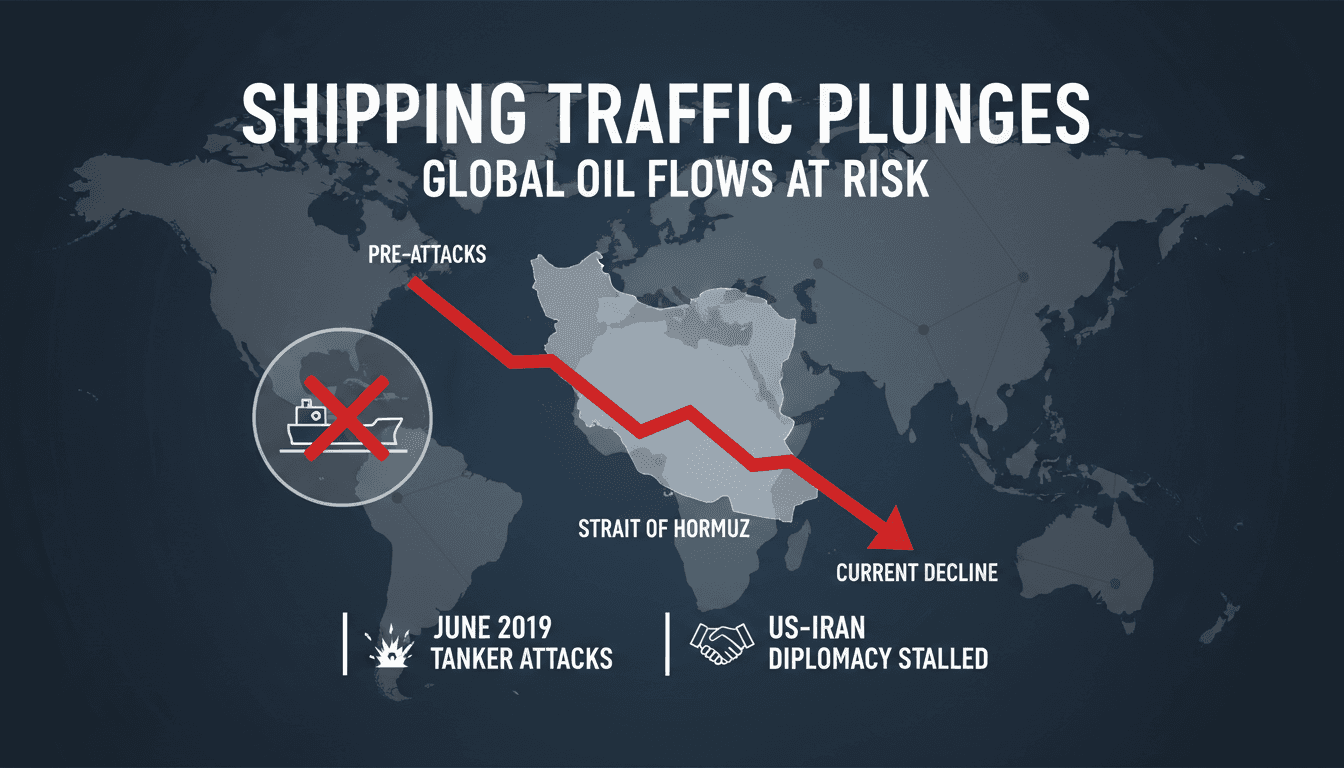
Shipping traffic through the Strait of Hormuz declines sharply amid heightened tensions
Here's what it means for you.
The significant drop in shipping traffic through the Strait of Hormuz signals rising security concerns that could impact global oil supply chains. With only five vessels reported crossing the strait on Saturday, the implications for maritime trade are profound. Stakeholders in the oil market should prepare for potential disruptions as diplomatic relations between the U.S. and Iran remain stalled. This situation could lead to increased volatility in oil prices, affecting both consumers and businesses reliant on stable energy supplies. As tensions escalate, the risk of military action adds another layer of uncertainty to an already fragile geopolitical landscape.
What happened
Shipping traffic through the Strait of Hormuz has drastically decreased due to heightened security concerns following recent attacks on oil tankers. Data from shipping tracking firm Kpler reveals that only five ships crossed the strait on Saturday, with no vessels reported on Sunday. This sharp decline in maritime activity underscores the growing apprehension among shipping companies regarding safety in the region.
The attacks on oil tankers have prompted significant caution among operators, leading to a notable reduction in vessel movements. As a critical maritime route for oil shipments, the Strait of Hormuz is now facing unprecedented challenges that could have far-reaching consequences.
The Context
Recent attacks on oil tankers have heightened tensions in the region, coinciding with stalled diplomatic efforts between the U.S. and Iran. Iran has threatened military action if diplomatic solutions fail, further complicating the situation. The Strait of Hormuz is a vital passage for global oil trade, making the current decline in shipping traffic particularly concerning for international markets.
The ongoing diplomatic stalemate raises fears of military escalation, which could destabilize the region further. Stakeholders must remain vigilant as developments unfold, given the strategic importance of this maritime route.
Takeaway
As tensions continue to rise, the situation in the Strait of Hormuz remains precarious, with potential implications for global oil supply and regional stability. Monitoring developments in U.S.-Iran diplomatic relations will be crucial in assessing future risks. Additionally, any military actions from Iran in response to the maritime situation could exacerbate the current instability.
The ongoing decline in shipping activity may lead to further disruptions in oil supply chains, impacting both prices and availability. Stakeholders should prepare for a volatile environment as the situation evolves.
Arabic-language reporting on global and regional news.
"BBC Arabic is part of the BBC, generally regarded for editorial standards and broad international coverage."
— A47 Editor
ترامب: الولايات المتحدة لا تسعى لتمديد مذكرة التفاهم مع إيران
A senior Iranian official has indicated that Tehran may launch a military attack to break the U.S. naval blockade if diplomatic efforts fail. This statement comes amid ongoing tensions between the United States and Iran regarding their agreements and...
Arabic-language coverage of Saudi, regional, and international affairs.
"Al Bilad offers mainstream Saudi newspaper coverage across domestic and broader Arab topics."
— A47 Editor
هبوط حاد بحركة الملاحة في مضيق هرمز
Maritime traffic through the Strait of Hormuz has significantly slowed down following attacks on oil tankers, coinciding with stalled negotiations between the United States and Iran aimed at resolving the ongoing conflict in the Middle East. Data fro...
Arabic-language coverage of international news and geopolitics.
"RT Arabic is a Russian state-funded outlet often criticized for promoting Kremlin-aligned narratives."
— A47 Editor
"كبلر": 5 سفن فقط عبرت هرمز السبت ولا سفن الأحد
Data from Kepler indicates a significant slowdown in maritime traffic through the Strait of Hormuz over the weekend, with only five vessels crossing on Saturday and none on Sunday, as reported by Reuters.
Jordanian news and regional updates.
"Roya News is a Jordanian outlet focused on breaking news and local affairs."
— A47 Editor
بيانات تتبع السفن الصادرة عن كبلر: تباطؤًا حادًا في حركة الشحن عبر مضيق هرمز
Data from ship tracking by Kepler reveals a significant slowdown in shipping traffic through the Strait of Hormuz, a critical maritime route for global oil shipments. This decline in movement indicates potential disruptions in supply chains and raise...