
Iraq and Syria Initiate $15 Billion Oil Pipeline Reconstruction Project
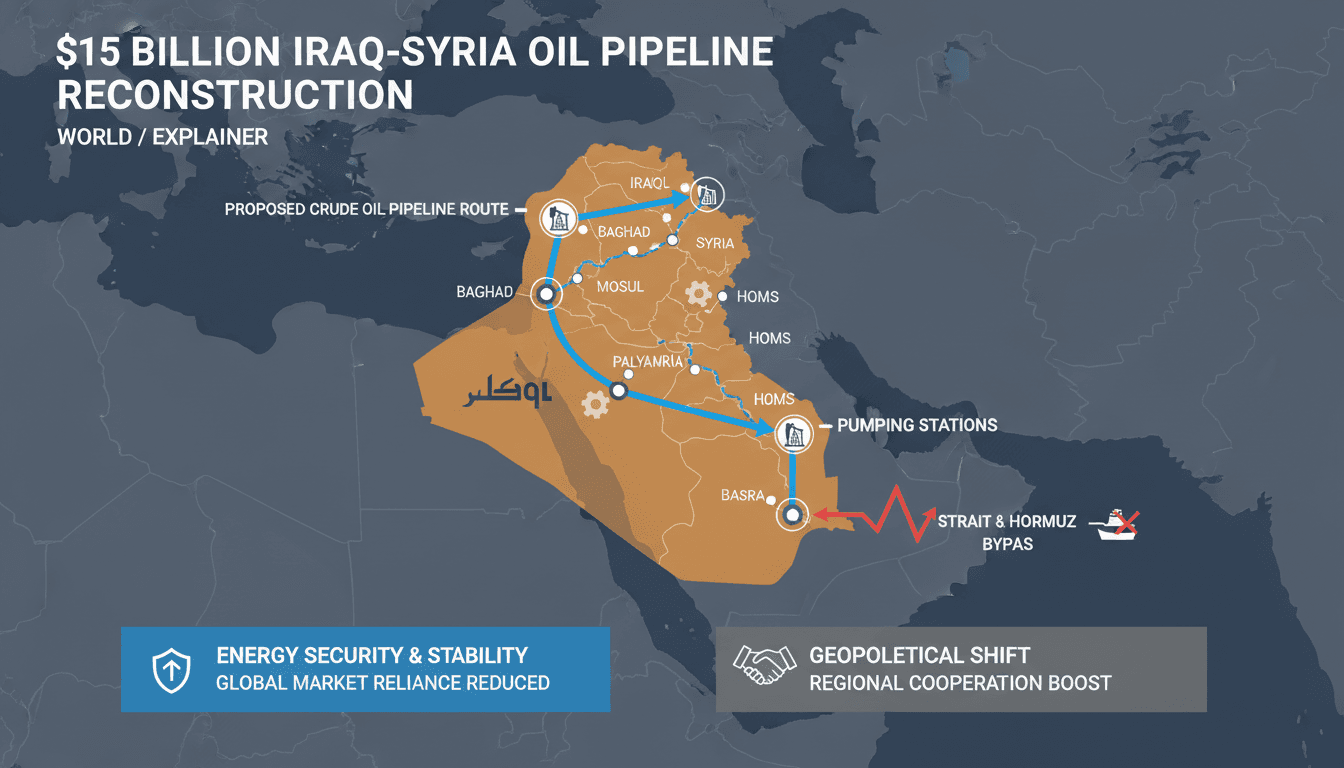
Why it matters
This reconstruction project aims to diversify oil export routes, reducing reliance on the volatile Strait of Hormuz.
What happened (in 30 seconds)
- Iraq announced plans to reconstruct a crude oil pipeline through Syria, projected to cost at least $15 billion and take four years.
- A U.S.-backed consortium led by Chevron is involved, focusing on integrating Iraq's northern and southern oil fields to the Mediterranean.
- The project responds to disruptions caused by the Iran conflict, which has significantly impacted Iraq's oil exports.
The context you actually need
- The Kirkuk-Banias pipeline, originally built in 1952, has not operated regularly since the 1980s due to conflicts and geopolitical issues.
- Previous revival attempts in the 2000s and 2010s failed, but renewed interest has emerged following the June 2025 Israel-Iran conflict, which led to shutdowns in the Strait of Hormuz.
- Iraq holds the world's fifth-largest proven oil reserves, primarily exporting through Gulf terminals, making this project crucial for its economy.
What's really happening
The Iraq-Syria oil pipeline reconstruction is a strategic response to the geopolitical instability affecting oil exports from the Gulf region. The original Kirkuk-Banias pipeline, with a capacity of around 300,000 barrels per day (bpd), has been largely inactive due to decades of conflict and damage. The renewed interest in this project stems from the disruptions caused by the Iran conflict, which has significantly impacted the Strait of Hormuz, a critical chokepoint for global oil transit.
In July 2026, Iraq and Syria signed memorandums of understanding with a Chevron-led consortium to conduct feasibility and technical studies for the pipeline's rehabilitation or reconstruction. The U.S. State Department has expressed support for this initiative, aiming for an initial capacity of 2 million bpd. However, recent reports indicate that the project will require entirely new infrastructure rather than simple rehabilitation of existing sections. This shift in understanding has extended the timeline to four years and increased the estimated cost to at least $15 billion.
The challenges are multifaceted. The old pipeline sections are incompatible with modern infrastructure, necessitating new construction. Additionally, securing land approvals in Syria and integrating the northern and southern Iraqi oil fields through a Haditha hub complicate the process. U.S. Treasury Secretary Scott Bessent has emphasized the need for rapid shifts in pipeline infrastructure to reduce reliance on the Strait of Hormuz, but the realities on the ground present significant hurdles.
As the project progresses, it is expected to influence global oil markets, particularly as Iraq seeks to stabilize its export routes. The anticipated increase in oil supply from this pipeline could help mitigate price volatility caused by geopolitical tensions. However, the actual impact will depend on the successful navigation of technical, political, and logistical challenges over the next four years.
Who feels it first (and how)
- Energy companies: Firms like Chevron and ConocoPhillips will be directly involved in the construction and operation of the pipeline.
- Iraqi and Syrian governments: Both nations stand to gain economically from increased oil exports and improved infrastructure.
- Global oil markets: Traders and consumers will feel the effects of potential price stabilization or volatility based on the project's success or delays.
- Residents of Dubai: Higher global oil prices due to disruptions have already impacted energy costs, with potential long-term benefits from diversified Iraqi exports.
What to watch next
- Completion of feasibility studies: The results will determine the project's viability and timeline, impacting investment decisions.
- Geopolitical developments: Any changes in the Iran conflict or regional stability could affect the pipeline's construction and operation.
- Oil price fluctuations: Monitor how the announcement and progress of this project influence global oil prices and market reactions.
The project will take at least four years and cost a minimum of $15 billion.
Increased oil supply from Iraq could stabilize global oil prices if the project proceeds as planned.
The extent to which geopolitical tensions will impact the project's timeline and feasibility.
Frequently Asked Questions
- Why it matters?
- This reconstruction project aims to diversify oil export routes, reducing reliance on the volatile Strait of Hormuz.
- What happened (in 30 seconds)?
- Iraq announced plans to reconstruct a crude oil pipeline through Syria, projected to cost at least $15 billion and take four years. A U.S.-backed consortium led by Chevron is involved, focusing on integrating Iraq's northern and southern oil fields to the Mediterranean. The project responds to disruptions caused by the Iran conflict, which has significantly impacted Iraq's oil exports.
- What's really happening?
- The Iraq-Syria oil pipeline reconstruction is a strategic response to the geopolitical instability affecting oil exports from the Gulf region. The original Kirkuk-Banias pipeline, with a capacity of around 300,000 barrels per day (bpd), has been largely inactive due to decades of conflict and damage. The renewed interest in this project stems from the disruptions caused by the Iran conflict, which has significantly impacted the Strait of Hormuz, a critical chokepoint for global oil transit. In
- Who feels it first (and how)?
- Energy companies: Firms like Chevron and ConocoPhillips will be directly involved in the construction and operation of the pipeline. Iraqi and Syrian governments: Both nations stand to gain economically from increased oil exports and improved infrastructure. Global oil markets: Traders and consumers will feel the effects of potential price stabilization or volatility based on the project's success or delays. Residents of Dubai: Higher global oil prices due to disruptions have already impac
- What to watch next?
- Completion of feasibility studies: The results will determine the project's viability and timeline, impacting investment decisions. Geopolitical developments: Any changes in the Iran conflict or regional stability could affect the pipeline's construction and operation. Oil price fluctuations: Monitor how the announcement and progress of this project influence global oil prices and market reactions.
Capitol Hill news, legislation, and policy insight.
"The Hill specializes in U.S. politics and policy, with a focus on Capitol Hill developments and a reputation for insider reporting."
— A47 Editor
Iraq oil pipeline plan would take years to build, cost billions: Report
An Iraqi initiative to construct a pipeline for oil exports through Syria, aimed at circumventing potential disruptions in the Strait of Hormuz, is projected to take four years and cost at least $15 billion, according to sources cited by Reuters.
Arabic-language coverage of international news and geopolitics.
"RT Arabic is a Russian state-funded outlet often criticized for promoting Kremlin-aligned narratives."
— A47 Editor
مصادر: مشروع تصدير النفط العراقي عبر سوريا يتطلب 4 سنوات و15 مليار دولار
Sources indicate that Iraq's plans to export oil through pipelines in Syria, aimed at circumventing the Strait of Hormuz, will likely require four years of construction and a minimum investment of $15 billion.
Regional and international reporting focused on Middle Eastern politics, diplomacy, and economics.
"Asharq Al-Awsat is a Saudi-owned international newspaper reflecting mainstream Gulf political perspectives."
— A47 Editor
Sources: New Syria-Iraq Crude Pipeline Still Years Away
Sources indicate that the new crude oil pipeline linking Syria and Iraq is still several years away from completion, despite ongoing discussions about energy cooperation between the two nations. This delay highlights the complexities involved in revi...
Oil, metals, and agriculture: supply/demand headlines, OPEC chatter, inventories, and price action.
"Solid tape for energy and metals traders tracking macro and micro catalysts."
— A47 Editor
New Syria-Iraq crude pipeline still years away, sources say
Sources indicate that the development of a new crude oil pipeline connecting Syria and Iraq is still several years away, despite ongoing discussions and geopolitical interests in the region. This pipeline aims to enhance oil transport capabilities an...