
Ukraine Intensifies Drone Strikes on Russian Economic Targets in August 2026
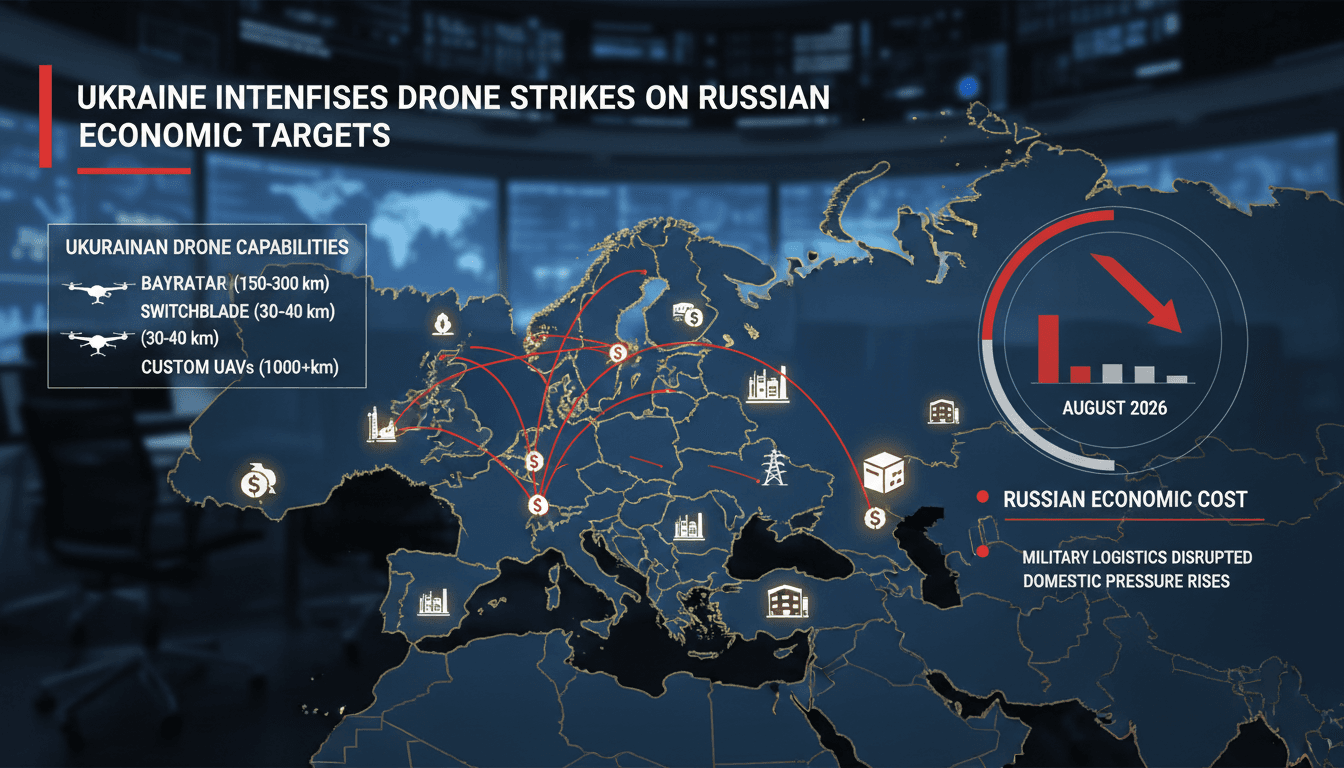
Why it matters
This escalation in drone warfare signifies a shift in Ukraine's strategy to target Russia's economic infrastructure, potentially affecting global energy markets.
What happened (in 30 seconds)
- Ukraine launched a significant drone assault on Russian targets, including the Wildberries retailer, in mid-August 2026.
- The strikes aimed to disrupt military logistics and impose economic costs on Russia, resulting in at least six fatalities.
- Russian air defenses struggled to intercept the barrage, highlighting vulnerabilities in their military response.
The context you actually need
- The Russia-Ukraine war has been ongoing since February 2022, with Ukraine progressively enhancing its drone capabilities.
- Ukraine's drones can now reach targets over 2,000 miles away, allowing strikes deep within Russian territory, including Siberian refineries.
- Prior to these strikes, Russia intensified its drone attacks on Ukraine, prompting Kyiv to retaliate by targeting economic and logistical assets.
What's really happening
In August 2026, Ukraine escalated its long-range drone campaign, marking one of the largest aerial assaults since the onset of the war. This operation involved hundreds of drones targeting key economic infrastructures, particularly those linked to the Wildberries retailer, which has been implicated in supplying military gear to Russian forces. The strikes were not merely tactical; they were a strategic move to disrupt Russian military logistics and impose economic costs on the civilian population, thereby bringing the war closer to ordinary Russians.
The Ukrainian government has framed these attacks as necessary responses to ongoing Russian aggression. By targeting civilian infrastructure, Ukraine aims to expose vulnerabilities within the Russian economy and military supply chains. Analysts suggest that this shift in strategy is designed to create a sense of urgency and discomfort among the Russian populace, potentially swaying public opinion against the war.
The scale of the drone assault was significant, with reports indicating that over 800 Ukrainian drones were intercepted in a single overnight attack. Despite the effectiveness of Russian air defenses, the strikes resulted in casualties and damage, underscoring the stretched capabilities of Russia's military response. This situation reflects a broader trend in modern warfare, where asymmetric tactics are employed to level the playing field against a traditionally stronger opponent.
As the conflict continues, the implications extend beyond the battlefield. Disruptions to Russian energy exports could lead to volatility in global oil prices, affecting markets worldwide. For countries reliant on Russian energy, this could mean increased costs and potential shortages. The ongoing drone campaign signifies a pivotal moment in the conflict, where economic warfare becomes as crucial as military engagements.
Who feels it first (and how)
- Energy sector professionals: Fluctuations in oil prices could impact profitability and operational costs.
- Logistics companies: Disruptions in supply chains may lead to delays and increased shipping costs.
- Consumers in energy-dependent regions: Rising fuel prices could affect household budgets and transportation costs.
What to watch next
- Russian retaliation: Watch for potential escalations in military responses or increased air defense measures.
- Global oil prices: Monitor fluctuations in energy markets as disruptions in Russian exports could lead to volatility.
- Public sentiment in Russia: Changes in public opinion regarding the war could influence future military and economic strategies.
Ukraine's drone capabilities have significantly improved, allowing for long-range strikes.
Continued escalation of drone warfare as both sides adapt to the changing dynamics of the conflict.
The long-term impact on Russian public opinion and its potential to influence government policy.
Frequently Asked Questions
- Why it matters?
- This escalation in drone warfare signifies a shift in Ukraine's strategy to target Russia's economic infrastructure, potentially affecting global energy markets.
- What happened (in 30 seconds)?
- Ukraine launched a significant drone assault on Russian targets, including the Wildberries retailer, in mid-August 2026. The strikes aimed to disrupt military logistics and impose economic costs on Russia, resulting in at least six fatalities. Russian air defenses struggled to intercept the barrage, highlighting vulnerabilities in their military response.
- What's really happening?
- In August 2026, Ukraine escalated its long-range drone campaign, marking one of the largest aerial assaults since the onset of the war. This operation involved hundreds of drones targeting key economic infrastructures, particularly those linked to the Wildberries retailer, which has been implicated in supplying military gear to Russian forces. The strikes were not merely tactical; they were a strategic move to disrupt Russian military logistics and impose economic costs on the civilian populatio
- Who feels it first (and how)?
- Energy sector professionals: Fluctuations in oil prices could impact profitability and operational costs. Logistics companies: Disruptions in supply chains may lead to delays and increased shipping costs. Consumers in energy-dependent regions: Rising fuel prices could affect household budgets and transportation costs.
- What to watch next?
- Russian retaliation: Watch for potential escalations in military responses or increased air defense measures. Global oil prices: Monitor fluctuations in energy markets as disruptions in Russian exports could lead to volatility. Public sentiment in Russia: Changes in public opinion regarding the war could influence future military and economic strategies.
Global political, business, and cultural coverage from WSJ international desks.
"The Wall Street Journal offers extensive international reporting with a reputation for financial insight and a center-right editorial stance."
— A47 Editor
Why Ukraine Is Ramping Up Its Aerial War Against Russia
Ukraine is intensifying its aerial campaign against Russia, focusing on strategic targets such as retail and energy hubs, which exposes the war's hidden economic costs. This escalation follows a series of retaliatory strikes, including significant dr...
International coverage of politics, culture, and current affairs.
"BBC News is widely regarded as a reputable international news organization, known for its impartial tone and public service mandate."
— A47 Editor
Russia and Ukraine trade more deadly strikes
In the latest escalation of the ongoing conflict, Russia reported nine fatalities from strikes in the past 24 hours, while Ukraine confirmed four deaths, highlighting the continued violence between the two nations.
Global business headlines with AI angles.
"General business outlet that frequently covers AI."
— A47 Editor
Ukraine Pounds Russia And Vice Versa. Kyiv's Blitz Signals A Strategic Shift
Ukraine has intensified its military offensive against Russia by targeting key energy infrastructure, including gas processing plants and oil refineries, as part of a strategy to undermine Russia's war capabilities and impact its economy. This marks ...