
UN OCHA Reports 186 Humanitarian Workers Killed in Gaza in 2025
Here's what it means for you.
The alarming rise in humanitarian worker fatalities in Gaza could impact global aid operations and international relations, affecting various sectors.
Why it matters
This report highlights the extreme risks faced by humanitarian workers, which could lead to reduced aid availability and increased geopolitical tensions.
What happened (in 30 seconds)
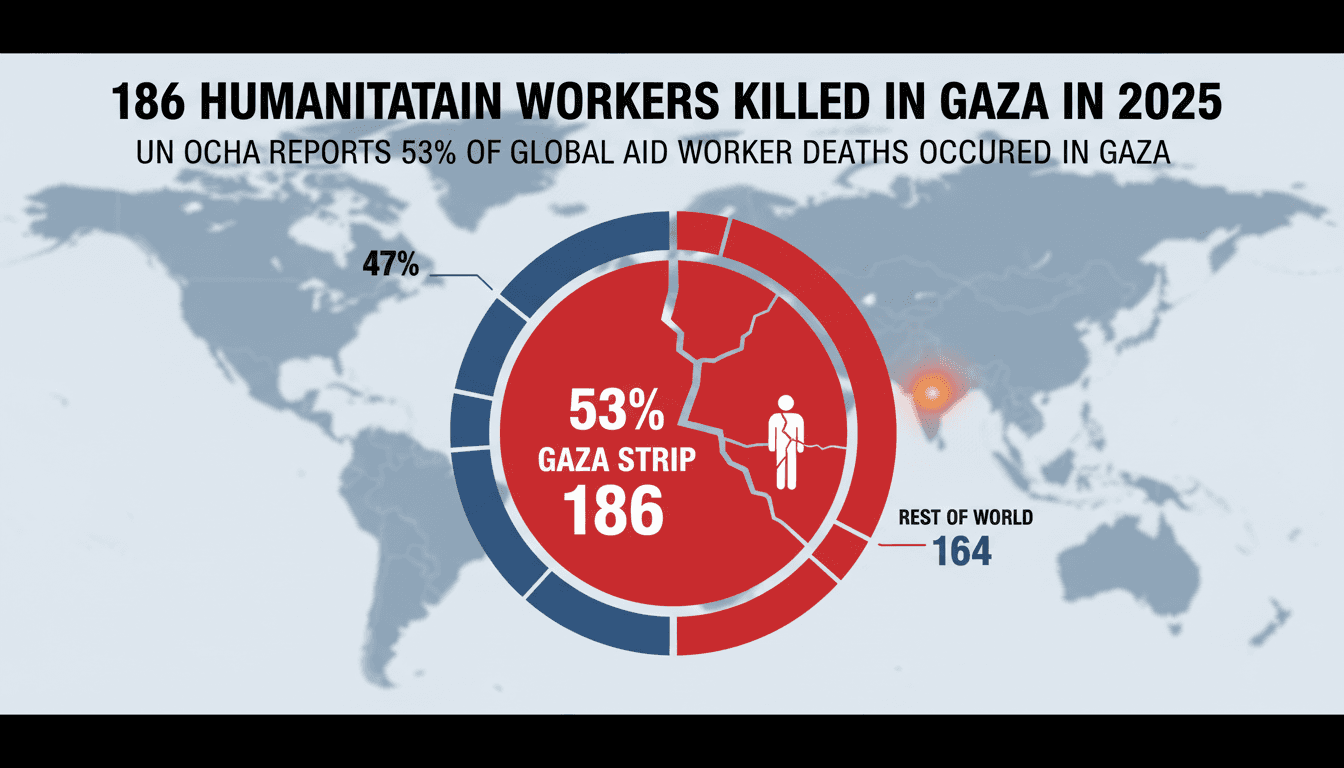
- 186 humanitarian workers were killed in Gaza in 2025, accounting for over 53% of global fatalities among aid personnel.
- 350 total deaths of humanitarian workers were reported worldwide, with Gaza surpassing other conflict zones like Sudan.
- International calls for accountability and enhanced protection protocols for aid workers have intensified following the report's release.
The context you actually need
- The Gaza conflict began in October 2023, creating a perilous environment for humanitarian access and operations.
- International humanitarian law mandates the protection of aid workers, yet violations have been rampant, with over 1,000 attacks on health facilities documented.
- OCHA's report reflects a troubling trend of direct targeting of medical teams and relief convoys, severely limiting operational capacity in conflict zones.
What's really happening
The United Nations Office for the Coordination of Humanitarian Affairs (OCHA) recently released a report detailing the fatalities of humanitarian workers in 2025, revealing that Gaza has become the deadliest region for aid personnel. The report indicates that 186 out of 350 humanitarian worker deaths occurred in Gaza, representing more than 53% of the global total. This stark statistic underscores the escalating dangers faced by aid workers in conflict zones, particularly in Gaza, where ongoing violence has created a hostile environment for humanitarian operations.
The Gaza conflict, which escalated following Hamas attacks and subsequent Israeli military responses, has led to a significant increase in risks for humanitarian access. Despite the protections afforded to aid workers under international humanitarian law, the reality on the ground has been grim. Reports of direct attacks on medical teams, civil defense units, and relief convoys have become alarmingly common. OCHA's data highlights a pattern of violence that not only endangers the lives of aid workers but also hampers the delivery of essential services to those in need.
The implications of this report extend beyond the immediate context of Gaza. As humanitarian organizations grapple with the increasing risks, there may be a shift in how aid is delivered globally. Organizations might prioritize safety over accessibility, potentially leading to reduced aid in high-risk areas. This could exacerbate humanitarian crises in regions already facing dire conditions, as fewer resources are allocated to areas deemed too dangerous for aid workers.
Moreover, the international community's response to these findings will be crucial. UN officials have condemned the attacks on aid workers, calling for greater accountability and adherence to international humanitarian law. However, without tangible actions to enhance protections for aid personnel, the cycle of violence may continue, further endangering lives and undermining humanitarian efforts.
The report also raises questions about the future of humanitarian operations in conflict zones. As the risks increase, organizations may need to rethink their strategies, potentially leading to a reallocation of resources and a focus on safer regions. This could have far-reaching consequences for those who rely on humanitarian assistance, as well as for the organizations that provide it.
Who feels it first (and how)
- Humanitarian organizations: Increased operational challenges and potential resource reallocations.
- Aid workers: Heightened risks and potential changes in deployment strategies.
- Conflict-affected populations: Possible reductions in aid availability and support.
- International community: Pressure to respond to humanitarian crises and ensure worker safety.
What to watch next
- Increased international scrutiny: Watch for global reactions and potential policy changes aimed at protecting humanitarian workers.
- Shifts in aid strategies: Monitor how humanitarian organizations adapt their operations in response to rising risks in conflict zones.
- Emerging conflict zones: Keep an eye on other regions that may see increased violence against aid workers as global attention shifts.
Gaza is currently the deadliest region for humanitarian workers.
Humanitarian organizations will reassess their operational strategies in high-risk areas.
The long-term impact on global humanitarian aid distribution remains uncertain.
Frequently Asked Questions
- Why it matters?
- This report highlights the extreme risks faced by humanitarian workers, which could lead to reduced aid availability and increased geopolitical tensions.
- What happened (in 30 seconds)?
- 186 humanitarian workers were killed in Gaza in 2025, accounting for over 53% of global fatalities among aid personnel. 350 total deaths of humanitarian workers were reported worldwide, with Gaza surpassing other conflict zones like Sudan. International calls for accountability and enhanced protection protocols for aid workers have intensified following the report's release.
- What's really happening?
- The United Nations Office for the Coordination of Humanitarian Affairs (OCHA) recently released a report detailing the fatalities of humanitarian workers in 2025, revealing that Gaza has become the deadliest region for aid personnel. The report indicates that 186 out of 350 humanitarian worker deaths occurred in Gaza, representing more than 53% of the global total. This stark statistic underscores the escalating dangers faced by aid workers in conflict zones, particularly in Gaza, where ongoing
- Who feels it first (and how)?
- Humanitarian organizations: Increased operational challenges and potential resource reallocations. Aid workers: Heightened risks and potential changes in deployment strategies. Conflict-affected populations: Possible reductions in aid availability and support. International community: Pressure to respond to humanitarian crises and ensure worker safety.
- What to watch next?
- Increased international scrutiny: Watch for global reactions and potential policy changes aimed at protecting humanitarian workers. Shifts in aid strategies: Monitor how humanitarian organizations adapt their operations in response to rising risks in conflict zones. Emerging conflict zones: Keep an eye on other regions that may see increased violence against aid workers as global attention shifts.
Arabic-language coverage of international news and geopolitics.
"RT Arabic is a Russian state-funded outlet often criticized for promoting Kremlin-aligned narratives."
— A47 Editor
تقرير أممي: أكثر من نصف ضحايا العاملين في المجال الإنساني عالميا سقطوا في قطاع غزة العام الماضي
A report from the United Nations Office for the Coordination of Humanitarian Affairs (OCHA) revealed that over half of the global casualties among humanitarian workers occurred in Gaza last year. This alarming statistic highlights the severe risks fa...
Arabic-language coverage of political affairs and current events.
"Okaz political coverage typically follows mainstream Saudi framing on national and regional affairs."
— A47 Editor
907 ضحايا في عام.. الأمم المتحدة تدق ناقوس الخطر: العنف يهدد عمال الإغاثة
The United Nations Office for the Coordination of Humanitarian Affairs (OCHA) reported that 907 humanitarian workers were killed, injured, or kidnapped in 2025, marking a tragic record for violence against aid workers. The data indicates a slight dec...
Regional coverage and analysis focused on politics, diplomacy, and business across the Middle East.
"Al-Monitor is known for analytical reporting on Middle East politics and policy developments."
— A47 Editor
UN laments 'unacceptable' toll of 350 aid workers killed in 2025
The United Nations reported that 350 aid workers were killed globally in 2025, with the highest fatalities occurring in Gaza and Sudan, labeling these attacks as 'unacceptable.' This figure, while slightly lower than the 377 deaths recorded in 2024, ...