
Shipping Traffic Declines in Strait of Hormuz Amid Ongoing Blockade Uncertainty
Here's what it means for you.
If you're in the energy sector or rely on oil imports, the slowdown in vessel transits through the Strait of Hormuz could impact your costs and supply chains.
Why it matters
The Strait of Hormuz is a critical chokepoint for global oil and LNG shipments, and disruptions here can lead to significant market volatility.
What happened (in 30 seconds)
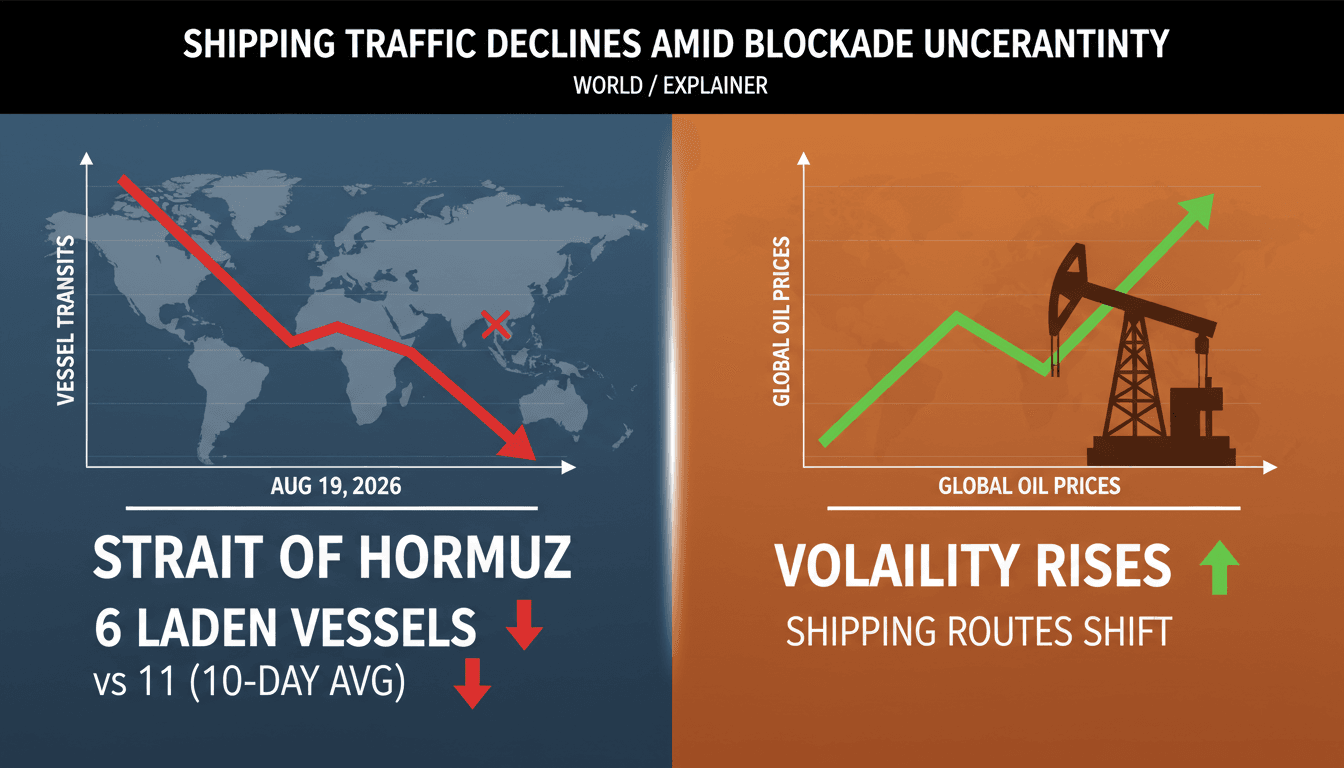
- Data shows a reduction in vessel transits through the Strait of Hormuz, with only six laden vessels recorded on August 16, 2026.
- Shipowners are avoiding the strait due to uncertainty following Iran's wartime blockade, despite conflicting statements from U.S. and Iranian officials.
- Insurance rates have surged as major shipping firms reroute tankers away from the strait, impacting global supply chains.
The context you actually need
- The Strait of Hormuz handles about 20% of the world's crude oil and LNG shipments, making it vital for global energy security.
- The 2026 Iran conflict has led to heightened tensions, with Iranian authorities declaring the strait closed while U.S. officials assert it remains open.
- Shipping data from Bab el-Mandeb indicates a contrasting trend, with 30 laden vessels transiting, suggesting regional rerouting strategies are in play.
What's really happening
The recent slowdown in vessel transits through the Strait of Hormuz is a direct consequence of the ongoing geopolitical tensions stemming from the 2026 Iran conflict. Following declarations from the Iranian Revolutionary Guard Corps that the strait was closed to shipping, shipowners have become increasingly cautious. The data from Kepler analytics indicates a significant drop in traffic, with only six laden vessels transiting on August 16, compared to a 10-day average of 11. This decline is not merely a statistical anomaly; it reflects a broader trend of avoidance by shipping companies due to the perceived risks associated with navigating through this critical waterway.
The conflicting narratives from U.S. President Donald Trump and Iranian officials exacerbate the uncertainty. While Trump maintains that the strait is open and no negotiations are underway, Iranian authorities tie the reopening of the strait to sanctions relief. This lack of clarity creates a precarious environment for vessel operators, who are now facing elevated insurance rates and potential rerouting costs. Major Chinese shipping firms have already begun to reroute tankers away from Hormuz and Bab el-Mandeb since late July 2026, further complicating the logistics of global oil supply.
The implications of this slowdown extend beyond immediate shipping concerns. As vessel transits decrease, global oil price volatility is likely to rise, affecting energy costs across the UAE and beyond. Dubai-based traders are closely monitoring these developments, as rerouting impacts supply chains from Gulf producers. The ripple effects of this situation could lead to increased prices for consumers and businesses reliant on oil imports, as well as potential disruptions in energy supply.
Moreover, the ongoing enforcement of blockades by U.S. naval forces, coupled with stalled negotiations, suggests that the current state of reduced vessel transits may persist. With no immediate resolution in sight, the market is bracing for continued volatility, which could have lasting effects on energy prices and availability.
Who feels it first (and how)
- Shipping companies: Facing increased operational costs and insurance premiums.
- Energy traders: Monitoring price fluctuations and supply chain disruptions.
- Consumers: Potentially facing higher energy costs as oil prices rise.
- Regional economies: Particularly those reliant on oil exports, like the UAE and Saudi Arabia.
What to watch next
- Insurance rates: Rising costs could indicate increased risk perception among shipping firms, affecting transit decisions.
- U.S.-Iran negotiations: Any developments could signal changes in blockade enforcement and impact vessel traffic.
- Global oil prices: Fluctuations in response to transit reductions will affect energy costs and market stability.
Vessel transits through the Strait of Hormuz have decreased significantly.
Continued volatility in global oil prices as a result of reduced shipping activity.
The timeline for resolution of the blockade and its impact on shipping routes.
Frequently Asked Questions
- Why it matters?
- The Strait of Hormuz is a critical chokepoint for global oil and LNG shipments, and disruptions here can lead to significant market volatility.
- What happened (in 30 seconds)?
- Data shows a reduction in vessel transits through the Strait of Hormuz, with only six laden vessels recorded on August 16, 2026. Shipowners are avoiding the strait due to uncertainty following Iran's wartime blockade, despite conflicting statements from U.S. and Iranian officials. Insurance rates have surged as major shipping firms reroute tankers away from the strait, impacting global supply chains.
- What's really happening?
- The recent slowdown in vessel transits through the Strait of Hormuz is a direct consequence of the ongoing geopolitical tensions stemming from the 2026 Iran conflict. Following declarations from the Iranian Revolutionary Guard Corps that the strait was closed to shipping, shipowners have become increasingly cautious. The data from Kepler analytics indicates a significant drop in traffic, with only six laden vessels transiting on August 16, compared to a 10-day average of 11. This decline is not
- Who feels it first (and how)?
- Shipping companies: Facing increased operational costs and insurance premiums. Energy traders: Monitoring price fluctuations and supply chain disruptions. Consumers: Potentially facing higher energy costs as oil prices rise. Regional economies: Particularly those reliant on oil exports, like the UAE and Saudi Arabia.
- What to watch next?
- Insurance rates: Rising costs could indicate increased risk perception among shipping firms, affecting transit decisions. U.S.-Iran negotiations: Any developments could signal changes in blockade enforcement and impact vessel traffic. Global oil prices: Fluctuations in response to transit reductions will affect energy costs and market stability.
Pan-Arab political news and analysis.
"Al-Quds Al-Arabi is a London-based Arabic newspaper known for political coverage."
— A47 Editor
بيانات: تباطؤ حركة الملاحة في مضيق هرمز
Recent data indicates a slowdown in maritime traffic through the Strait of Hormuz, as most shipowners are avoiding this vital waterway due to a lack of clear signals regarding its reopening following a blockade during the Iran War. As of 02:58 GMT, d...
Pan-Arab political news and analysis.
"Al-Quds Al-Arabi is a London-based Arabic newspaper known for political coverage."
— A47 Editor
ارتفاع طفيف في عبور السفن من مضيق هرمز مقارنة بمطلع الأسبوع
Preliminary shipping data indicated a slight increase in the number of vessels crossing the Strait of Hormuz on Monday, with six ships carrying primary goods reported to have passed through, compared to the beginning of the week. This comes amid stal...
Arabic-language coverage of Saudi, regional, and international affairs.
"Al Bilad offers mainstream Saudi newspaper coverage across domestic and broader Arab topics."
— A47 Editor
هبوط حاد بحركة الملاحة في مضيق هرمز
Maritime traffic through the Strait of Hormuz has significantly slowed down following attacks on oil tankers, coinciding with stalled negotiations between the United States and Iran aimed at resolving the ongoing conflict in the Middle East. Data fro...