
Strait of Hormuz Shipping Traffic Declines to Six Vessels Amid Ongoing Uncertainty After Iran Conflict Blockade
Here's what it means for you.
If you're in Dubai, expect rising energy costs and potential supply chain disruptions as shipping traffic through the Strait of Hormuz slows.
Why it matters
The Strait of Hormuz is a critical chokepoint for global oil and LNG shipments, and disruptions here can ripple through energy markets worldwide.
What happened (in 30 seconds)
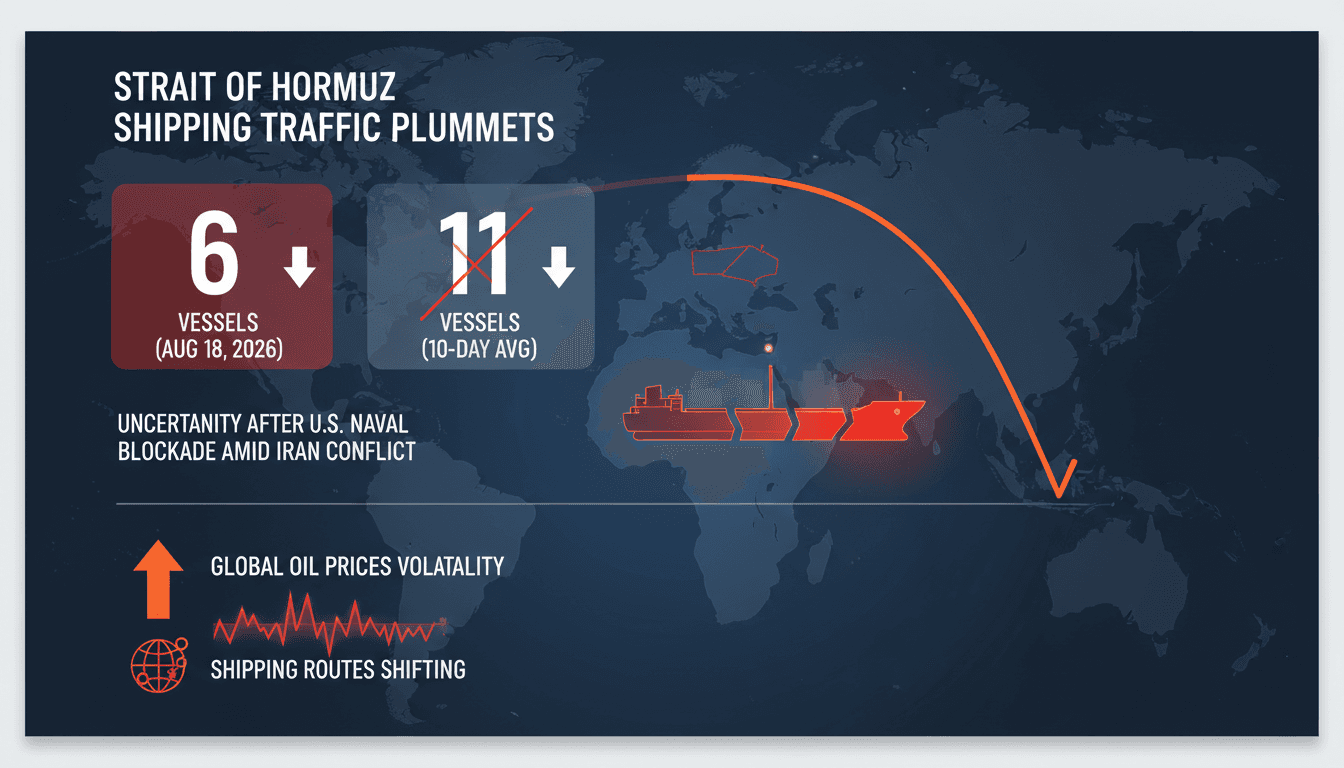
- Traffic declined significantly: Only six vessels transited the Strait of Hormuz on August 18, 2026, down from a daily average of 11.
- Conflicting signals: U.S. President Trump stated the strait remains open, while Iranian officials assert control and closure.
- Market reactions: Oil prices are under upward pressure due to supply concerns, with Chinese importers avoiding Middle Eastern routes.
The context you actually need
- Historical significance: The Strait of Hormuz previously handled one-fifth of global crude oil and LNG shipments, making it vital for energy security.
- Ongoing conflict: The 2026 Iran war, marked by U.S. and Israeli airstrikes, has led to a U.S. naval blockade and heightened tensions in the region.
- Shipping avoidance: Chinese shipping firms have been steering clear of the strait since late July, further exacerbating the decline in traffic.
What's really happening
The recent decline in shipping traffic through the Strait of Hormuz is a direct consequence of the ongoing geopolitical tensions stemming from the 2026 Iran war. Following U.S. and Israeli airstrikes on Iranian sites, the U.S. imposed a naval blockade in April 2026, which has been intermittently lifted and reimposed amid escalating hostilities. This blockade has created a climate of uncertainty for shipping operators, who are now weighing the risks of navigating this critical waterway.
As of August 18, 2026, Kpler data indicates that only six vessels crossed the strait, a stark contrast to the 10-day average of 11. This decline is not merely a statistical anomaly; it reflects a broader trend of avoidance among shipping firms, particularly those based in China, which have opted for alternative routes since late July. The implications of this slowdown are significant, as the Strait of Hormuz is a vital artery for global energy supplies, accounting for a substantial portion of the world's crude oil and liquefied natural gas shipments.
The conflicting narratives from U.S. and Iranian officials further complicate the situation. While President Trump asserts that the strait remains open for navigation, Iranian officials continue to claim control over the waterway, leading to confusion and hesitation among shipping operators. This uncertainty is likely to persist until a clearer resolution is reached, which could take time given the entrenched positions of both sides.
The immediate aftermath has seen oil markets react with upward pressure due to concerns over supply disruptions. As shipping firms continue to avoid the strait, the potential for increased freight rates and elevated energy costs becomes more pronounced. This situation is particularly relevant for regions like Dubai, where reliance on imported goods and energy makes the local economy vulnerable to fluctuations in global shipping and oil prices.
Who feels it first (and how)
- Shipping operators: Facing increased costs and risks, leading to route changes.
- Energy consumers in Dubai: Experiencing rising energy prices and potential supply chain delays.
- Commodity traders: Adjusting strategies due to market volatility and uncertainty in supply.
- Chinese importers: Shifting away from Middle Eastern routes, impacting trade dynamics.
What to watch next
- Shipping traffic trends: Monitor daily vessel transits through the Strait of Hormuz to gauge the ongoing impact of geopolitical tensions.
- Oil price fluctuations: Keep an eye on global oil prices, as any significant changes could indicate shifts in supply and demand dynamics.
- U.S.-Iran negotiations: Watch for any developments in diplomatic talks that could lead to a resolution of the blockade and restore confidence in maritime navigation.
The Strait of Hormuz is critical for global oil and LNG shipments.
Continued uncertainty will lead to elevated energy costs and supply chain disruptions.
The timeline for resolution of the blockade and its impact on shipping traffic.
Frequently Asked Questions
- Why it matters?
- The Strait of Hormuz is a critical chokepoint for global oil and LNG shipments, and disruptions here can ripple through energy markets worldwide.
- What happened (in 30 seconds)?
- Traffic declined significantly: Only six vessels transited the Strait of Hormuz on August 18, 2026, down from a daily average of 11. Conflicting signals: U.S. President Trump stated the strait remains open, while Iranian officials assert control and closure. Market reactions: Oil prices are under upward pressure due to supply concerns, with Chinese importers avoiding Middle Eastern routes.
- What's really happening?
- The recent decline in shipping traffic through the Strait of Hormuz is a direct consequence of the ongoing geopolitical tensions stemming from the 2026 Iran war. Following U.S. and Israeli airstrikes on Iranian sites, the U.S. imposed a naval blockade in April 2026, which has been intermittently lifted and reimposed amid escalating hostilities. This blockade has created a climate of uncertainty for shipping operators, who are now weighing the risks of navigating this critical waterway. As of Au
- Who feels it first (and how)?
- Shipping operators: Facing increased costs and risks, leading to route changes. Energy consumers in Dubai: Experiencing rising energy prices and potential supply chain delays. Commodity traders: Adjusting strategies due to market volatility and uncertainty in supply. Chinese importers: Shifting away from Middle Eastern routes, impacting trade dynamics.
- What to watch next?
- Shipping traffic trends: Monitor daily vessel transits through the Strait of Hormuz to gauge the ongoing impact of geopolitical tensions. Oil price fluctuations: Keep an eye on global oil prices, as any significant changes could indicate shifts in supply and demand dynamics. U.S.-Iran negotiations: Watch for any developments in diplomatic talks that could lead to a resolution of the blockade and restore confidence in maritime navigation.
Regional coverage and analysis focused on politics, diplomacy, and business across the Middle East.
"Al-Monitor is known for analytical reporting on Middle East politics and policy developments."
— A47 Editor
Hormuz traffic slows as uncertainty over waterway persists
Shipping traffic through the Strait of Hormuz has significantly slowed, with only six vessels crossing on Tuesday, down from nine the previous day and below the 10-day average of 11, as uncertainty persists regarding the waterway's reopening followin...
Pan-Arab news coverage spanning politics, business, sports, and regional affairs.
"Asharq Al-Awsat reflects a broad Arab editorial perspective with strong attention to regional geopolitics."
— A47 Editor
«هرمز» شبه متوقف... تراجع حاد في عبور السفن بعد هجمات الناقلات
Maritime traffic through the Strait of Hormuz has significantly slowed down over the weekend, following attacks targeting tankers, according to data released on Monday. This decline in vessel crossings raises concerns about the safety and security of...
Pan-Arab political news and analysis.
"Al-Quds Al-Arabi is a London-based Arabic newspaper known for political coverage."
— A47 Editor
تباطؤ حركة الشحن عبر مضيق هرمز عقب هجمات على ناقلات النفط
Shipping traffic through the Strait of Hormuz has slowed down following attacks on oil tankers, coinciding with stalled negotiations between the United States and Iran aimed at resolving the Middle Eastern conflict. Data from ship tracking company Ke...
Oil, metals, and agriculture: supply/demand headlines, OPEC chatter, inventories, and price action.
"Solid tape for energy and metals traders tracking macro and micro catalysts."
— A47 Editor
Shipping slows through Strait of Hormuz after tanker attacks, data shows
Shipping activity through the Strait of Hormuz has significantly slowed following recent tanker attacks, reflecting a broader decline in maritime traffic in this crucial oil transit route. This downturn is attributed to escalating military tensions b...