
Shipping Traffic in Strait of Hormuz Limited to Six Vessels Amid US-Iran Tensions
Here's what it means for you.
If you rely on global trade or energy markets, the ongoing restrictions in the Strait of Hormuz could lead to increased costs and supply chain disruptions.
Why it matters
The Strait of Hormuz is a vital maritime corridor for global oil and gas shipments, and disruptions here can ripple through international markets.
What happened (in 30 seconds)
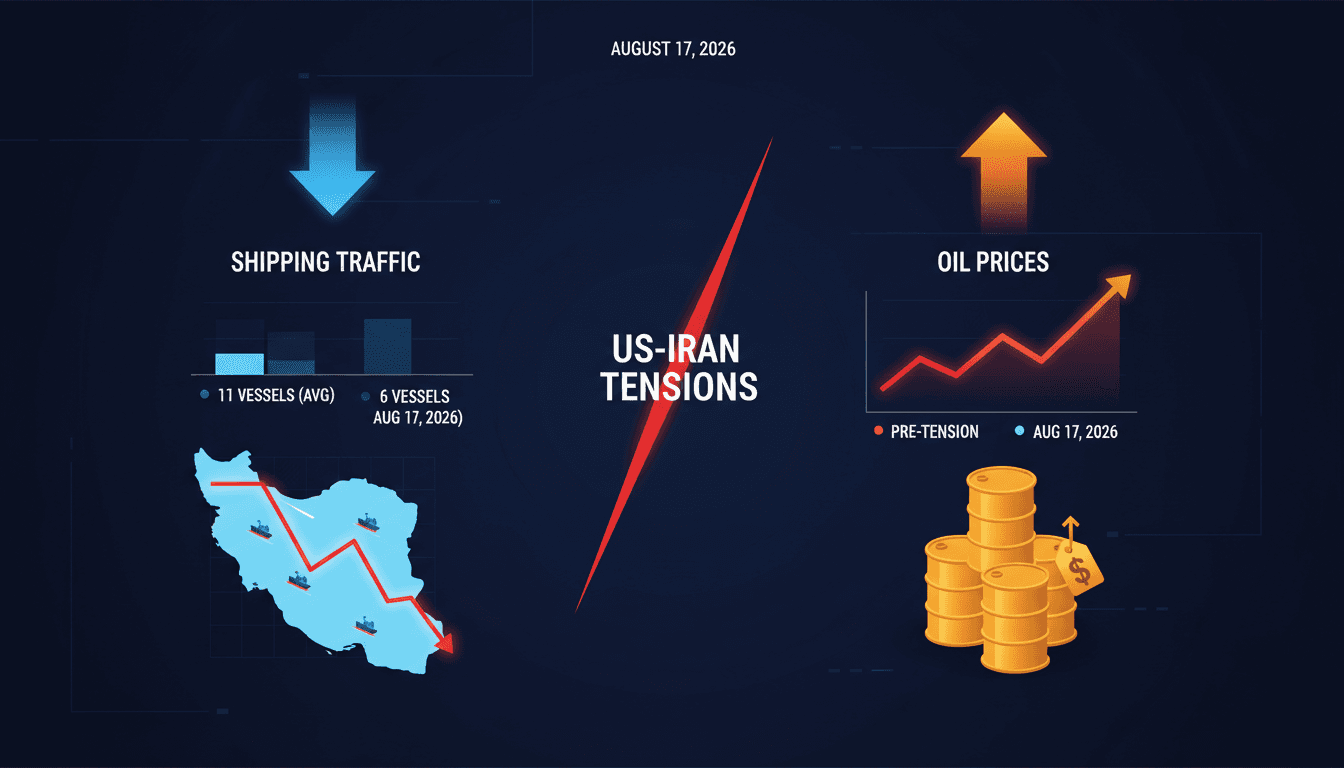
- Only six commercial vessels transited the Strait of Hormuz on August 17, 2026, significantly below the average.
- No very large crude carriers (VLCCs) or LNG tankers were observed, indicating severe restrictions.
- Stalled US-Iran peace talks continue to exacerbate tensions, impacting shipping operations.
The context you actually need
- The 2026 Strait of Hormuz crisis began in March 2026, following escalated conflicts involving Iran, the US, and Israel, leading to drastic reductions in shipping traffic.
- Pre-war levels saw approximately 100 vessels daily; current transits are a fraction of that, with only six recorded recently.
- Shipping operators are avoiding the strait due to heightened risks and prohibitive war-risk insurance costs, despite some partial reopenings.
What's really happening
The Strait of Hormuz, a narrow waterway between Iran and Oman, is crucial for global energy supplies, with about 20% of the world's oil passing through it. The recent decline in shipping traffic to just six vessels on August 17, 2026, is emblematic of the ongoing geopolitical tensions stemming from the Iran conflict and stalled peace negotiations between the US and Iran.
The crisis began in early March 2026 when Iran's Islamic Revolutionary Guard Corps (IRGC) imposed restrictions on the strait in retaliation for military strikes. This led to a dramatic drop in commercial traffic, which plummeted from pre-war levels of around 100 vessels per day to a mere trickle. The current situation reflects a complex interplay of direct threats, vessel attacks, and prohibitive war-risk premiums that have made shipping through the strait increasingly untenable for commercial operators.
Despite some limited access via Omani routes, the overall traffic remains significantly below normal levels. On August 17, Kpler data indicated that only three vessels entered and three exited the Persian Gulf, a stark contrast to the 10-day average of 11 transits. Notably, no VLCCs or LNG carriers were observed, which are critical for transporting large volumes of oil and gas. The vessels that did transit included an LPG carrier and medium-range product tankers, indicating a shift in the types of cargo being moved.
The ongoing diplomatic impasse between the US and Iran complicates the situation further. Iranian officials have stated that the strait will remain closed until the US meets certain commitments, while US President Donald Trump maintains that the strait is operational, albeit under a cloud of military presence and blockades. This contradictory messaging creates uncertainty in the market, leading to increased oil prices and volatility.
As a result, shipping operators are opting to avoid the strait altogether, leading to a significant reduction in maritime traffic. The implications of this are far-reaching, affecting not only oil prices but also regional trade logistics and supply chains. For Dubai, a major hub adjacent to the strait, the elevated oil import costs and potential supply chain delays could have a direct impact on economic activity.
Who feels it first (and how)
- Shipping companies: Facing increased operational costs and risks, leading to potential losses.
- Energy markets: Higher oil prices due to restricted flows can impact global fuel costs.
- Businesses in Dubai: Elevated import costs and disrupted logistics can affect local economies and consumer prices.
- Consumers: Increased fuel prices may lead to higher costs for goods and services.
What to watch next
- US-Iran negotiations: Any breakthroughs or setbacks in peace talks could directly influence shipping traffic and oil prices.
- Shipping insurance rates: Changes in war-risk premiums could either encourage or deter shipping through the strait.
- Market reactions: Monitor oil price fluctuations as they may signal broader economic impacts stemming from the situation.
The Strait of Hormuz is currently experiencing severely limited shipping traffic.
Continued geopolitical tensions will keep shipping volumes low and oil prices high.
The timeline for any resolution in US-Iran negotiations remains uncertain.
Frequently Asked Questions
- Why it matters?
- The Strait of Hormuz is a vital maritime corridor for global oil and gas shipments, and disruptions here can ripple through international markets.
- What happened (in 30 seconds)?
- Only six commercial vessels transited the Strait of Hormuz on August 17, 2026, significantly below the average. No very large crude carriers (VLCCs) or LNG tankers were observed, indicating severe restrictions. Stalled US-Iran peace talks continue to exacerbate tensions, impacting shipping operations.
- What's really happening?
- The Strait of Hormuz, a narrow waterway between Iran and Oman, is crucial for global energy supplies, with about 20% of the world's oil passing through it. The recent decline in shipping traffic to just six vessels on August 17, 2026, is emblematic of the ongoing geopolitical tensions stemming from the Iran conflict and stalled peace negotiations between the US and Iran. The crisis began in early March 2026 when Iran's Islamic Revolutionary Guard Corps (IRGC) imposed restrictions on the strait
- Who feels it first (and how)?
- Shipping companies: Facing increased operational costs and risks, leading to potential losses. Energy markets: Higher oil prices due to restricted flows can impact global fuel costs. Businesses in Dubai: Elevated import costs and disrupted logistics can affect local economies and consumer prices. Consumers: Increased fuel prices may lead to higher costs for goods and services.
- What to watch next?
- US-Iran negotiations: Any breakthroughs or setbacks in peace talks could directly influence shipping traffic and oil prices. Shipping insurance rates: Changes in war-risk premiums could either encourage or deter shipping through the strait. Market reactions: Monitor oil price fluctuations as they may signal broader economic impacts stemming from the situation.
Pan-Arab news coverage spanning politics, business, sports, and regional affairs.
"Asharq Al-Awsat reflects a broad Arab editorial perspective with strong attention to regional geopolitics."
— A47 Editor
«هرمز» يظل شبه مغلق... 6 سفن فقط تعبر المضيق
The number of ships crossing the Strait of Hormuz has seen a slight increase compared to the weekend, yet it remains limited, with only six vessels passing through on Monday. This indicates ongoing restrictions in maritime traffic in this crucial wat...
Jordanian news and regional updates.
"Roya News is a Jordanian outlet focused on breaking news and local affairs."
— A47 Editor
عبور 6 سفن عبر مضيق هرمز ومخاوف الشحن تبطئ حركة الناقلات العالمية
On Monday, the movement of shipping through the Strait of Hormuz saw a slight increase, with six vessels reported to have crossed the strait. This uptick comes amid ongoing concerns regarding shipping safety in the region, which has been a focal poin...
Regional coverage and analysis focused on politics, diplomacy, and business across the Middle East.
"Al-Monitor is known for analytical reporting on Middle East politics and policy developments."
— A47 Editor
Hormuz crossings rise slightly from weekend, remain in single digits, data shows
Ship crossings through the Strait of Hormuz have seen a slight increase, with six vessels transiting the waterway on Monday, up from three on Saturday and two on Sunday. However, this remains below the 10-day average of 11 ships, reflecting ongoing t...
Arabic-language coverage of international news and geopolitics.
"RT Arabic is a Russian state-funded outlet often criticized for promoting Kremlin-aligned narratives."
— A47 Editor
"كبلر": 5 سفن فقط عبرت هرمز السبت ولا سفن الأحد
Data from Kepler indicates a significant slowdown in maritime traffic through the Strait of Hormuz over the weekend, with only five vessels crossing on Saturday and none on Sunday, as reported by Reuters.
Jordanian news and regional updates.
"Roya News is a Jordanian outlet focused on breaking news and local affairs."
— A47 Editor
بيانات تتبع السفن الصادرة عن كبلر: تباطؤًا حادًا في حركة الشحن عبر مضيق هرمز
Data from ship tracking by Kepler reveals a significant slowdown in shipping traffic through the Strait of Hormuz, a critical maritime route for global oil shipments. This decline in movement indicates potential disruptions in supply chains and raise...