
Syria Initiates IAEA Investigation into Nuclear Program Following Assad's Ouster
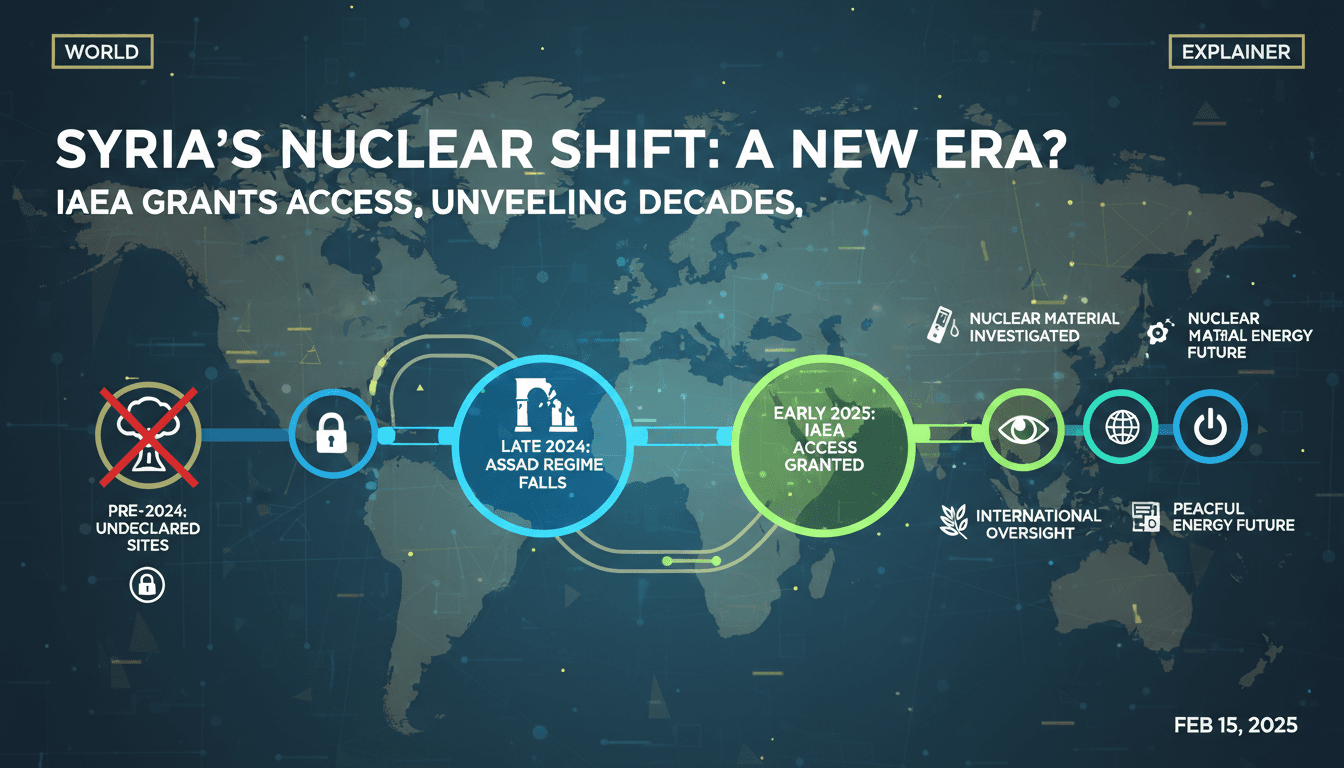
Here's what it means for you.
The opening of Syria's nuclear program to international scrutiny could reshape regional stability and energy dynamics.
Why it matters
This investigation addresses long-standing concerns about nuclear proliferation in the Middle East, impacting global non-proliferation efforts.
What happened (in 30 seconds)
- On August 18, 2026, Syria allowed the IAEA to investigate its nuclear program, revealing several tonnes of nuclear material.
- The new Syrian government, formed after the fall of Bashar al-Assad in late 2024, is cooperating with international authorities to resolve past nuclear activities.
- IAEA Director General Rafael Grossi praised Syria's transparency, emphasizing the importance of safeguarding the disclosed materials.
The context you actually need
- Syria's nuclear legacy includes a clandestine program that previously led to the construction of the Al-Kibar reactor, destroyed by Israel in 2007.
- The IAEA has documented undeclared nuclear materials and activities at multiple sites in Syria, raising concerns about potential proliferation.
- The current investigation aims to ensure that the nuclear material remains under international safeguards and is used solely for peaceful purposes.
What's really happening
The recent cooperation between Syria and the International Atomic Energy Agency (IAEA) marks a significant shift in the country's approach to its nuclear legacy. Following the ousting of Bashar al-Assad, the new Syrian government has committed to transparency and accountability regarding its nuclear activities. This decision to open its nuclear program to international scrutiny is a response to years of international pressure and concern over the potential for nuclear proliferation in the region.
The IAEA's investigation is crucial for several reasons. First, it addresses the historical context of Syria's nuclear ambitions, which included the construction of the Al-Kibar reactor, a project that was shrouded in secrecy and ultimately destroyed by an Israeli airstrike in 2007. The fallout from that incident has lingered, with the international community wary of Syria's nuclear capabilities. By cooperating with the IAEA, Syria aims to rebuild trust and demonstrate its commitment to peaceful nuclear energy applications.
The IAEA's findings, which include several tonnes of nuclear material at undeclared sites in Damascus and Deir ez-Zor, highlight the ongoing risks associated with nuclear proliferation. Director General Rafael Grossi's visit to Syria and his characterization of the disclosure as a "courageous decision" underscores the importance of this moment in the broader context of global nuclear governance. The IAEA's role is to ensure that the materials are safeguarded and that they do not pose a risk of being diverted for military purposes.
Moreover, this development could have implications beyond Syria. The broader regional context includes ongoing tensions and conflicts, and any progress in nuclear oversight can contribute to stability in the Middle East. The commitment to transparency may also encourage other nations in the region to adhere to non-proliferation norms, fostering a more secure environment for energy development and international relations.
As the IAEA continues its inspections and verification activities, the outcomes will be closely monitored by global powers and regional stakeholders. The findings will be submitted to the IAEA's Board of Governors, which will play a critical role in determining the next steps in Syria's nuclear oversight.
Who feels it first (and how)
- International policymakers: They will assess the implications for regional security and non-proliferation efforts.
- Energy sector stakeholders: Companies and investors in the Middle East may adjust their strategies based on perceived stability and regulatory environments.
- Regional governments: Neighboring countries will closely watch Syria's compliance and transparency, influencing their own nuclear policies.
What to watch next
- IAEA findings: The results of ongoing inspections will clarify the extent of Syria's nuclear capabilities and compliance with international standards.
- Regional diplomatic responses: Reactions from neighboring countries and global powers will indicate shifts in geopolitical dynamics.
- Energy market trends: Any changes in Syria's nuclear policy could impact energy investments and stability in the broader Middle East.
Syria has disclosed several tonnes of nuclear material to the IAEA.
The IAEA will continue its inspections and submit findings to its Board of Governors.
The long-term impact on regional stability and energy markets remains to be seen.
Frequently Asked Questions
- Why it matters?
- This investigation addresses long-standing concerns about nuclear proliferation in the Middle East, impacting global non-proliferation efforts.
- What happened (in 30 seconds)?
- On August 18, 2026, Syria allowed the IAEA to investigate its nuclear program, revealing several tonnes of nuclear material. The new Syrian government, formed after the fall of Bashar al-Assad in late 2024, is cooperating with international authorities to resolve past nuclear activities. IAEA Director General Rafael Grossi praised Syria's transparency, emphasizing the importance of safeguarding the disclosed materials.
- What's really happening?
- The recent cooperation between Syria and the International Atomic Energy Agency (IAEA) marks a significant shift in the country's approach to its nuclear legacy. Following the ousting of Bashar al-Assad, the new Syrian government has committed to transparency and accountability regarding its nuclear activities. This decision to open its nuclear program to international scrutiny is a response to years of international pressure and concern over the potential for nuclear proliferation in the region
- Who feels it first (and how)?
- International policymakers: They will assess the implications for regional security and non-proliferation efforts. Energy sector stakeholders: Companies and investors in the Middle East may adjust their strategies based on perceived stability and regulatory environments. Regional governments: Neighboring countries will closely watch Syria's compliance and transparency, influencing their own nuclear policies.
- What to watch next?
- IAEA findings: The results of ongoing inspections will clarify the extent of Syria's nuclear capabilities and compliance with international standards. Regional diplomatic responses: Reactions from neighboring countries and global powers will indicate shifts in geopolitical dynamics. Energy market trends: Any changes in Syria's nuclear policy could impact energy investments and stability in the broader Middle East.
Global news coverage with extensive reporting on Middle Eastern conflicts and geopolitics.
"Al Jazeera is a Qatar-based broadcaster known for wide regional coverage and alternative perspectives."
— A47 Editor
Syria opens Assad-era nuclear programme to UN probe
Syria has opened its nuclear program from the Assad era to a United Nations investigation, following reports from the UN watchdog that identified significant amounts of nuclear material at undisclosed sites in the country. This move marks a significa...
Comprehensive coverage of Middle Eastern and global issues.
"Al Jazeera is a prominent voice from the Global South, especially the Middle East, with an emphasis on underreported stories."
— A47 Editor
Syria opens Assad-era nuclear programme to UN probe
The International Atomic Energy Agency (IAEA) has reported the discovery of large amounts of nuclear material at undisclosed sites in Syria, prompting the country to open its nuclear program from the Assad era to a UN investigation. This development ...
Regional coverage and analysis focused on politics, diplomacy, and business across the Middle East.
"Al-Monitor is known for analytical reporting on Middle East politics and policy developments."
— A47 Editor
UN atomic watchdog says found tons of nuclear material at Syria site
The head of the UN's nuclear watchdog announced the discovery of several tons of nuclear material at a site in Syria, specifically in Deir Ezzor, which was reported to the agency by Damascus last month. This finding follows inspections conducted by t...
Global political, business, and cultural coverage from WSJ international desks.
"The Wall Street Journal offers extensive international reporting with a reputation for financial insight and a center-right editorial stance."
— A47 Editor
Syria Takes Major Step to Come Clean on Past Nuclear Program
Syria has granted international inspectors access to a recently disclosed site containing nuclear material from its past nuclear program, which dates back to the Assad era. This move is seen as a significant step towards transparency regarding the co...
UAE-based English-language newspaper covering regional politics, economics, and global affairs.
"The National reflects Emirati policy perspectives while maintaining international editorial standards."
— A47 Editor
IAEA and Syria hail progress on resolving Assad's nuclear secrets
The International Atomic Energy Agency (IAEA) and Syria have announced significant progress in addressing concerns related to the nuclear materials left by the Assad regime. This development follows a recent visit by an IAEA delegation to assess Syri...
24/7 international news from a French perspective in multiple languages.
"France 24 is viewed as a globally focused outlet with balanced coverage and a European perspective."
— A47 Editor
'Tons' of nuclear material found at undisclosed Syrian site, IAEA chief says
The head of the International Atomic Energy Agency (IAEA), Rafael Mariano Grossi, announced the discovery of several tons of nuclear materials at a previously undeclared site in Syria, dating back to the era of the country's previous authorities. Syr...
European coverage of Middle East politics and security issues.
"France 24 offers international reporting with a European editorial perspective."
— A47 Editor
'Tons' of nuclear material found at undisclosed Syrian site, IAEA chief says
The International Atomic Energy Agency (IAEA) has reported the discovery of several tons of nuclear materials at a previously undeclared site in Syria, dating back to the previous regime. Syrian Foreign Minister Asaad al-Shaibani asserted that the ma...