
Trump Threatens Economic Sanctions Against Iran as Oil Prices Surge
Here's what it means for you.
If you rely on oil for your business or daily commute, expect rising costs as Brent crude prices surge.
Why it matters
This escalation in U.S.-Iran tensions directly impacts global oil supply and prices, affecting economies worldwide.
What happened (in 30 seconds)
- Trump announced an 'economic D-Day' against Iran on August 19, 2026, threatening severe sanctions on nations aiding Tehran.
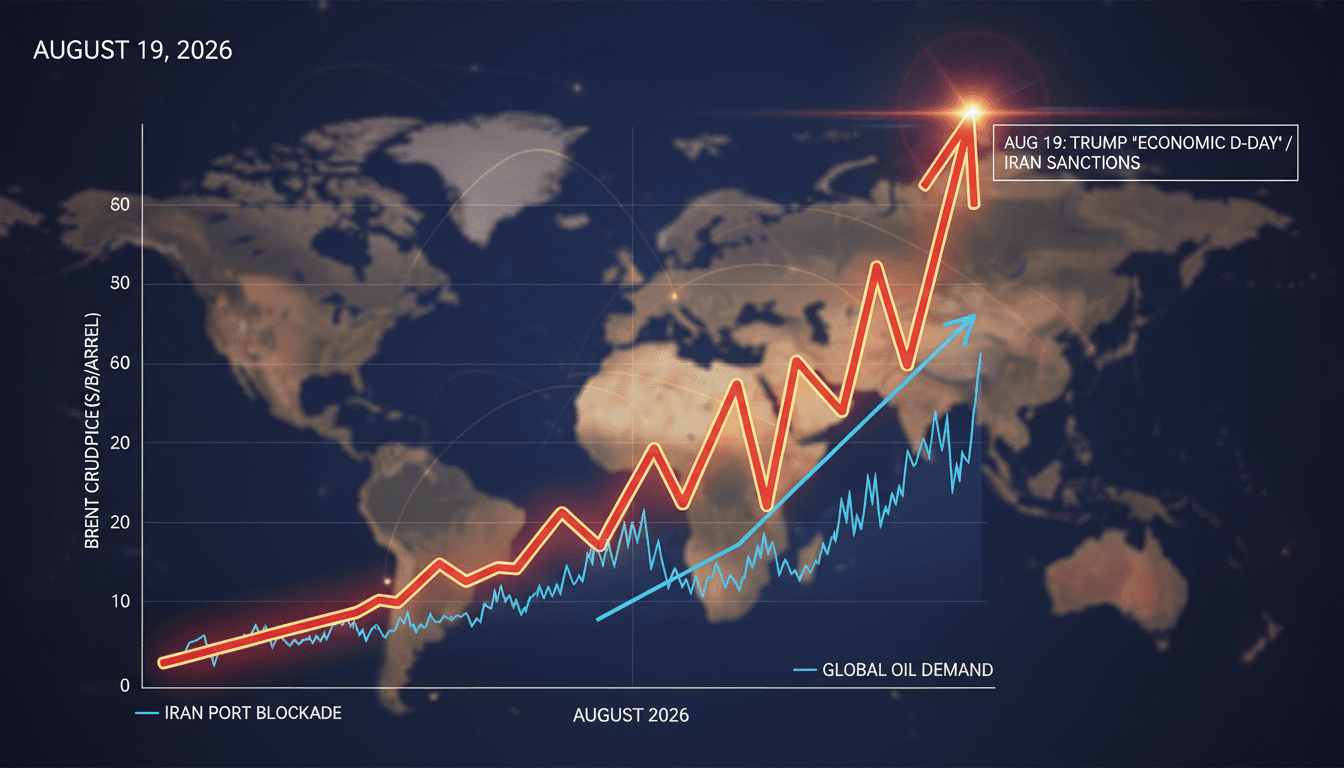
- Brent crude prices spiked over 3% to $94.67 per barrel following the announcement, marking a significant market reaction.
- The UAE severed trade ties with Iran, further complicating the geopolitical landscape and oil supply dynamics.
The context you actually need
- Iran's economy is already strained, suffering from prolonged sanctions and infrastructure damage estimated at $270 billion.
- The U.S. and Iran have been in a standoff over nuclear ambitions and regional conflicts, with recent ceasefires failing to yield lasting peace.
- China is a key player, purchasing over 80% of Iran's oil exports, complicating the U.S. strategy as it seeks to isolate Tehran economically.
What's really happening
On August 19, 2026, President Donald Trump took to Truth Social to announce a sweeping economic offensive against Iran, labeling it an 'economic D-Day.' This declaration was not merely rhetoric; it was a strategic move aimed at crippling Iran's economy by targeting any nation or entity that provided financial support to Tehran. The announcement came amid stalled negotiations over Iran's nuclear program and ongoing tensions in the Strait of Hormuz, a critical chokepoint for global oil shipments.
The immediate market reaction was palpable. Brent crude oil prices surged over 3% to reach $94.67 per barrel, reflecting heightened concerns about supply disruptions. This spike is significant, as oil prices are sensitive to geopolitical tensions, particularly in the Middle East. The U.S. has long sought to limit Iran's oil exports, which had seen a temporary rebound earlier in June 2026, when exports reached approximately 1.76 million barrels per day. However, Trump's renewed blockade on Iranian ports, reinstated on July 14, 2026, effectively halted these exports, pushing Iran's economy further into turmoil.
Iran's Foreign Minister, Abbas Araghchi, dismissed Trump's threats as a distraction from domestic issues in the U.S., but the reality is that the Iranian economy is already reeling from years of sanctions, with inflation soaring to 87.9% and the rial at record lows. The UAE's decision to sever trade ties with Iran following missile threats and U.S. pressure adds another layer of complexity to the situation. The UAE has historically been a conduit for Iranian oil, and this severance will likely disrupt financial flows that have previously benefited both nations.
China, which accounts for a significant portion of Iran's oil exports, has rejected unilateral sanctions and called for diplomatic solutions. This stance complicates the U.S. strategy, as it seeks to isolate Iran while maintaining its relationships with key allies. The interplay of these geopolitical dynamics will continue to shape the global oil market, with sustained upward pressure on prices likely as tensions escalate.
Who feels it first (and how)
- Oil consumers: Higher prices at the pump and increased costs for businesses reliant on oil.
- Energy sector investors: Increased volatility in oil stocks and potential profit opportunities amid rising prices.
- Geopolitical analysts: Heightened focus on Middle Eastern stability and its implications for global markets.
What to watch next
- Oil price trends: Monitor Brent and WTI prices for signs of sustained volatility or stabilization.
- Diplomatic negotiations: Watch for any shifts in U.S.-Iran talks or responses from China regarding sanctions.
- UAE's economic policies: Observe how the UAE's severance of ties with Iran affects its own economy and regional trade dynamics.
Oil prices are likely to remain volatile due to geopolitical tensions.
Further diplomatic efforts may emerge, particularly from China, to mediate the situation.
The long-term impact on Iran's economy and its ability to sustain oil exports under renewed sanctions.
Frequently Asked Questions
- Why it matters?
- This escalation in U.S.-Iran tensions directly impacts global oil supply and prices, affecting economies worldwide.
- What happened (in 30 seconds)?
- Trump announced an 'economic D-Day' against Iran on August 19, 2026, threatening severe sanctions on nations aiding Tehran. Brent crude prices spiked over 3% to $94.67 per barrel following the announcement, marking a significant market reaction. The UAE severed trade ties with Iran, further complicating the geopolitical landscape and oil supply dynamics.
- What's really happening?
- On August 19, 2026, President Donald Trump took to Truth Social to announce a sweeping economic offensive against Iran, labeling it an 'economic D-Day.' This declaration was not merely rhetoric; it was a strategic move aimed at crippling Iran's economy by targeting any nation or entity that provided financial support to Tehran. The announcement came amid stalled negotiations over Iran's nuclear program and ongoing tensions in the Strait of Hormuz, a critical chokepoint for global oil shipments.
- Who feels it first (and how)?
- Oil consumers: Higher prices at the pump and increased costs for businesses reliant on oil. Energy sector investors: Increased volatility in oil stocks and potential profit opportunities amid rising prices. Geopolitical analysts: Heightened focus on Middle Eastern stability and its implications for global markets.
- What to watch next?
- Oil price trends: Monitor Brent and WTI prices for signs of sustained volatility or stabilization. Diplomatic negotiations: Watch for any shifts in U.S.-Iran talks or responses from China regarding sanctions. UAE's economic policies: Observe how the UAE's severance of ties with Iran affects its own economy and regional trade dynamics.
Regional coverage and analysis focused on politics, diplomacy, and business across the Middle East.
"Al-Monitor is known for analytical reporting on Middle East politics and policy developments."
— A47 Editor
Trump’s Iran ‘economic D-Day’ threat sends oil prices above $94
Former President Donald Trump has issued a stark warning on Truth Social, threatening severe economic consequences for any country that provides financial support to Iran, which has led to a surge in oil prices above $94. This declaration is part of ...
Global business headlines with AI angles.
"General business outlet that frequently covers AI."
— A47 Editor
Trump Announces Increased Economic Pressure Against Iran. Oil Prices Jump.
President Donald Trump has announced an increase in economic pressure against Iran, leading to a rise in oil prices, with Brent crude and West Texas Intermediate both climbing approximately 3%. This move is part of a broader strategy to isolate Iran ...
English-language digital publication covering business, politics, technology, and current affairs.
"The Arabian Post mixes original and syndicated-style coverage with a broad regional and global business-news orientation."
— A47 Editor
Oil prices climb as Iran tensions deepen
Oil prices have risen as tensions surrounding Iran escalate, with Brent crude reaching $91.28 a barrel and US West Texas Intermediate at $85.31. The increase is attributed to diminishing prospects for a resolution in the Iran conflict, particularly a...
Global markets, investing, and macroeconomics from a premier financial newsroom.
"Bloomberg is respected for in-depth financial reporting and data-driven analysis."
— A47 Editor
Latest Oil Market News and Analysis for Aug. 19
Oil prices have increased for a fourth consecutive day, reflecting ongoing tensions in the US-Iran conflict, which has shown no signs of resolution after nearly six months of hostilities. This rise in oil prices is indicative of market reactions to g...
Regional coverage and analysis focused on politics, diplomacy, and business across the Middle East.
"Al-Monitor is known for analytical reporting on Middle East politics and policy developments."
— A47 Editor
Oil nears $92 on UAE missile alert as Trump claims Iran talks stuck
Brent crude oil prices have surged to nearly $92 a barrel, marking the highest level this month, amid heightened tensions following missile alerts from the UAE regarding alleged Iranian attacks. This escalation has led to significant geopolitical con...
UK and international business news, economics, and corporate coverage.
"The Guardian’s business section covers finance and markets with a progressive editorial tone."
— A47 Editor
Oil prices jump after US-Iran ceasefire expires and Trump threatens Oman
Oil prices surged above $90 a barrel for the first time since July 30, following the expiration of a ceasefire between the US and Iran, with President Trump demanding Tehran's surrender. Iran has indicated a more aggressive stance if negotiations fai...
Market-moving headlines impacting equities, bonds, and related risk assets.
"Real-time catalysts and volatility drivers across indices and sectors."
— A47 Editor
Bonds, stocks jolted as Middle East tensions shatter market calm
Recent tensions in the Middle East have significantly disrupted financial markets, causing bonds and stocks to experience sharp declines. The escalation of hostilities, particularly between the U.S. and Iran, has shattered the previous market calm, l...
Sports reporting with a focus on Saudi and regional competitions.
"Okaz sports coverage is broad and audience-friendly, with strong attention to Saudi teams and leagues."
— A47 Editor
صعود عقود «برنت».. النفط صوب 92 دولاراً
Oil prices increased today as the likelihood of a resolution to the Middle East conflict diminished, following Iran's announcement of a more aggressive stance and the U.S. ruling out an extension of the ceasefire agreement. Brent crude futures rose b...
Business, markets, economy, and corporate news with strong UAE and regional relevance.
"Emirates 24|7 business coverage tends to center UAE markets, property, regulation, and regional economic developments."
— A47 Editor
Oil climbs as fading US-Iran peace hopes raise supply risks
Oil prices increased for a third consecutive session as hopes for a peace deal between the U.S. and Iran diminished, with Iran announcing a shift to a more aggressive military stance and the U.S. rejecting an extension of the ceasefire agreement. Bre...
International coverage from The Guardian's global desks.
"The Guardian is known for its progressive editorial stance and in-depth analysis."
— A47 Editor
Oil prices jump after US-Iran ceasefire expires and Trump threatens Oman
Oil prices surged above $90 a barrel for the first time since July 30, following the expiration of a ceasefire in the US-Israel conflict with Iran. President Trump has demanded Iran's surrender, while Tehran has signaled a more aggressive stance if n...
News from the United States including domestic politics, society, and culture.
"The Guardian is known for its progressive editorial stance and in-depth analysis, often advocating for social justice, environmental issues, and liberal values."
— A47 Editor
Oil prices jump after US-Iran ceasefire expires and Trump threatens Oman
Oil prices surged above $90 a barrel for the first time since July 30, following the expiration of a ceasefire in the US-Israel conflict with Iran. President Trump has demanded Iran's surrender, while Tehran has signaled a more aggressive stance if n...