
Strait of Hormuz Sees Lowest Vessel Transits Amid Ongoing Regional Conflict
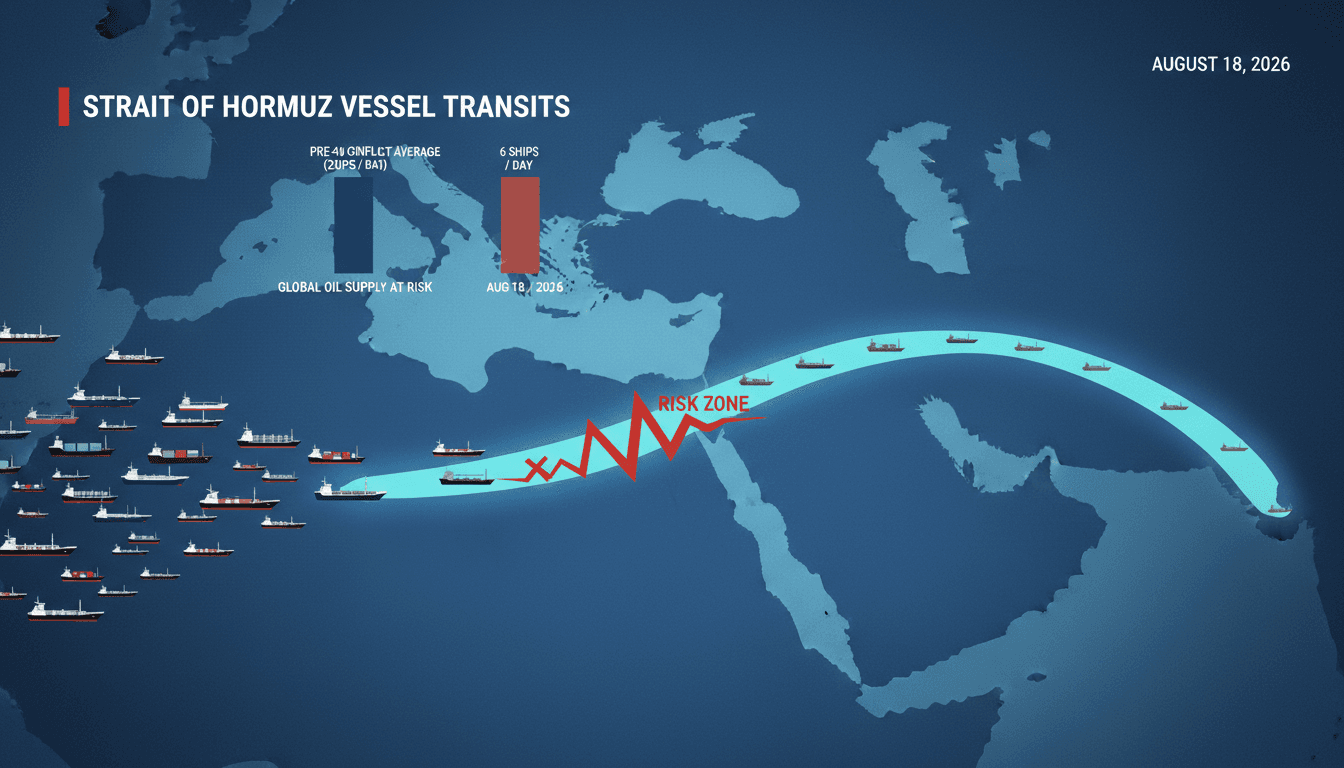
Here's what it means for you.
If you rely on global oil and gas markets, the ongoing disruptions in the Strait of Hormuz could impact prices and availability.
Why it matters
The Strait of Hormuz is a critical chokepoint for global energy supplies, with one-fifth of the world's crude oil and LNG transiting through it.
What happened (in 30 seconds)
- Six vessels transited the Strait of Hormuz on August 18, 2026, marking the lowest daily rate in weeks.
- Shipping analytics from Kpler show a decline from a 10-day average of 11 vessels, driven by security risks and avoidance by major carriers.
- Ongoing regional conflict and stalled peace talks between the U.S. and Iran continue to exacerbate the situation.
The context you actually need
- The 2026 U.S.-Iran conflict began in February, leading to Iranian restrictions and attacks on vessels, which have heightened security concerns.
- Pre-war norms saw daily transits of 130-140 vessels, but post-conflict traffic has collapsed due to fears of attacks and elevated war-risk insurance.
- Chinese shipping firms have suspended routes since late July, further contributing to the decline in vessel transits.
What's really happening
The Strait of Hormuz has become a focal point of geopolitical tension, particularly since the onset of the U.S.-Iran conflict in early 2026. The recent data from Kpler indicates a significant drop in maritime traffic, with only six vessels transiting on August 18, down from a recent average of 11. This decline is not merely a statistical anomaly; it reflects a broader trend of heightened security risks and operational challenges faced by shipping companies in the region.
The ongoing conflict has led to Iranian authorities imposing restrictions and conducting attacks on vessels, which has raised alarm among shipping operators. As a result, major carriers, including those from China, have opted to avoid the strait altogether, leading to a significant reduction in traffic. The implications of this are profound, as the Strait of Hormuz is responsible for transporting approximately 20% of the world's crude oil and liquefied natural gas (LNG).
The situation is compounded by stalled diplomatic efforts aimed at de-escalating tensions between the U.S. and Iran. With no clear signals of relief from the effective blockades, shipping companies are left with little choice but to maintain avoidance patterns. This has resulted in a ripple effect throughout the global oil markets, where sustained volatility is now the norm. The reduced flow of oil through the strait has already begun to impact prices, and as carriers continue to steer clear of the region, the potential for further disruptions looms large.
Moreover, the aftermath of these developments has seen U.S. officials reiterating their claims of control over the situation while considering additional economic measures against Iran. Conversely, Iranian responses have emphasized their sovereignty and control over the strait, further entrenching the standoff. The lack of resolution has left many in the shipping industry on edge, as they navigate the complexities of operating in a high-risk environment.
As the situation evolves, the implications for global energy markets and shipping logistics will continue to unfold, making it essential for stakeholders to stay informed and agile in their operations.
Who feels it first (and how)
- Shipping companies: Facing increased operational risks and higher insurance costs.
- Oil and gas producers: Experiencing disruptions in exports and potential revenue losses.
- Consumers: Likely to see fluctuations in fuel prices due to reduced supply.
- Regional economies: Particularly those reliant on oil exports, facing economic instability.
What to watch next
- Diplomatic developments: Any progress in U.S.-Iran negotiations could signal a shift in shipping patterns and market stability.
- Shipping insurance rates: Rising costs could indicate ongoing risks and further impact shipping decisions.
- Oil price fluctuations: Watch for volatility in global oil prices as the situation evolves, affecting consumer costs.
The Strait of Hormuz is critical for global oil and LNG shipments.
Continued low vessel transits until security concerns are addressed.
The timeline for diplomatic resolutions and their impact on shipping traffic.
Frequently Asked Questions
- Why it matters?
- The Strait of Hormuz is a critical chokepoint for global energy supplies, with one-fifth of the world's crude oil and LNG transiting through it.
- What happened (in 30 seconds)?
- Six vessels transited the Strait of Hormuz on August 18, 2026, marking the lowest daily rate in weeks. Shipping analytics from Kpler show a decline from a 10-day average of 11 vessels, driven by security risks and avoidance by major carriers. Ongoing regional conflict and stalled peace talks between the U.S. and Iran continue to exacerbate the situation.
- What's really happening?
- The Strait of Hormuz has become a focal point of geopolitical tension, particularly since the onset of the U.S.-Iran conflict in early 2026. The recent data from Kpler indicates a significant drop in maritime traffic, with only six vessels transiting on August 18, down from a recent average of 11. This decline is not merely a statistical anomaly; it reflects a broader trend of heightened security risks and operational challenges faced by shipping companies in the region. The ongoing conflict ha
- Who feels it first (and how)?
- Shipping companies: Facing increased operational risks and higher insurance costs. Oil and gas producers: Experiencing disruptions in exports and potential revenue losses. Consumers: Likely to see fluctuations in fuel prices due to reduced supply. Regional economies: Particularly those reliant on oil exports, facing economic instability.
- What to watch next?
- Diplomatic developments: Any progress in U.S.-Iran negotiations could signal a shift in shipping patterns and market stability. Shipping insurance rates: Rising costs could indicate ongoing risks and further impact shipping decisions. Oil price fluctuations: Watch for volatility in global oil prices as the situation evolves, affecting consumer costs.
Arabic-language coverage of international news and geopolitics.
"RT Arabic is a Russian state-funded outlet often criticized for promoting Kremlin-aligned narratives."
— A47 Editor
عبور 6 سفن مضيق هرمز اليوم الماضي في أدنى معدل منذ أسابيع
Statistics from maritime monitoring companies indicate that only six vessels transited the Strait of Hormuz yesterday, marking the lowest number in several weeks. This decline highlights a significant reduction in maritime traffic through this critic...
Pan-Arab news coverage spanning politics, business, sports, and regional affairs.
"Asharq Al-Awsat reflects a broad Arab editorial perspective with strong attention to regional geopolitics."
— A47 Editor
«هرمز» يظل شبه مغلق... 6 سفن فقط تعبر المضيق
The number of ships crossing the Strait of Hormuz has seen a slight increase compared to the weekend, yet it remains limited, with only six vessels passing through on Monday. This indicates ongoing restrictions in maritime traffic in this crucial wat...
Regional coverage and analysis focused on politics, diplomacy, and business across the Middle East.
"Al-Monitor is known for analytical reporting on Middle East politics and policy developments."
— A47 Editor
Hormuz crossings rise slightly from weekend, remain in single digits, data shows
Ship crossings through the Strait of Hormuz have seen a slight increase, with six vessels transiting the waterway on Monday, up from three on Saturday and two on Sunday. However, this remains below the 10-day average of 11 ships, reflecting ongoing t...