
Strait of Hormuz Sees Lowest Vessel Transits in Weeks Amid Ongoing Iran Conflict
Why it matters
The Strait of Hormuz is a critical chokepoint for global oil and LNG shipments, and reduced transits can impact energy prices worldwide.
What happened (in 30 seconds)
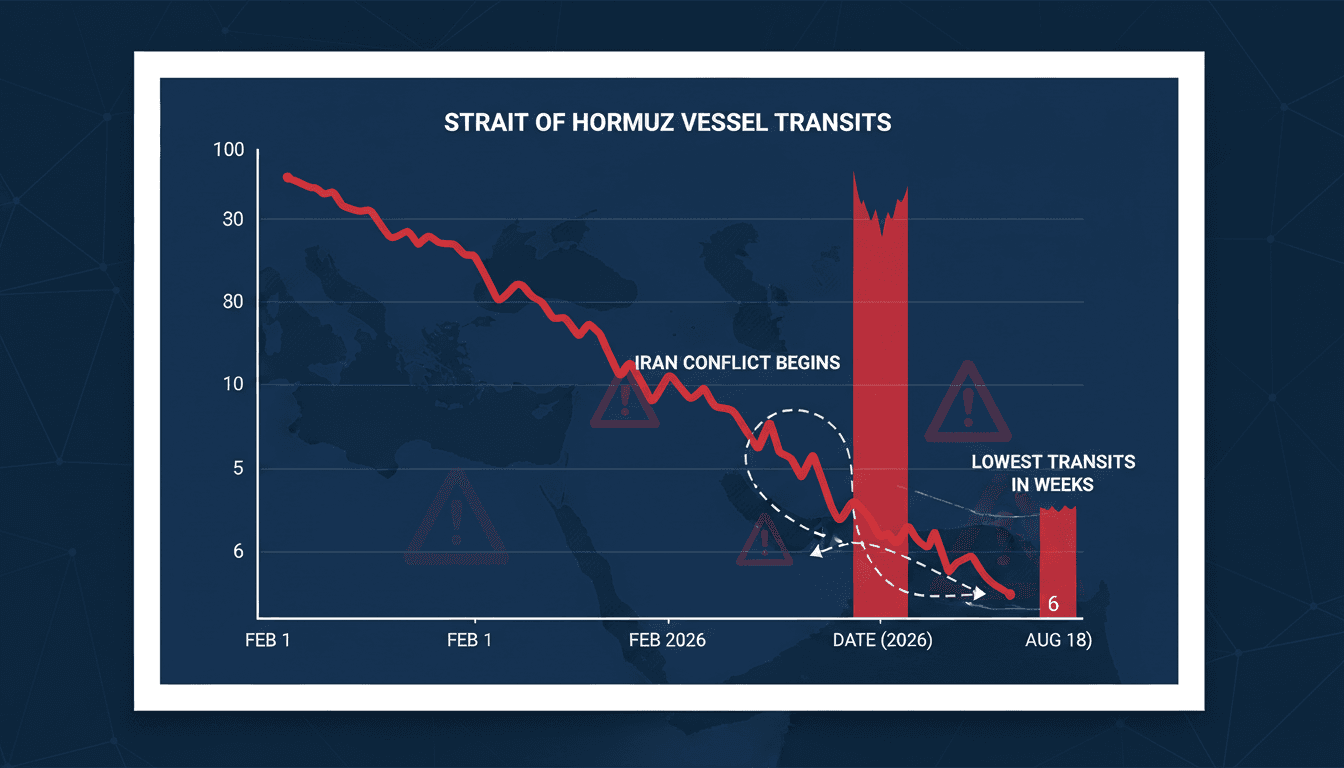
- Only six vessels transited the Strait of Hormuz on August 18, 2026, marking the lowest daily rate in weeks.
- This decline follows a drop from nine transits the previous day and an average of 11 per day over the prior ten days.
- The ongoing Iran-United States conflict has heightened security risks, leading to effective blockades and avoidance by major shipping companies.
The context you actually need
- Pre-war averages for vessel transits through the Strait of Hormuz were around 130-138 per day, indicating a significant drop in activity.
- Chinese shipping firms have rerouted vessels away from the strait since late July due to increased risks and reduced oil shipments to China.
- The Bab el-Mandeb strait has seen increased shipping activity, suggesting a shift in maritime routes as operators seek safer alternatives.
What's really happening
On August 18, 2026, maritime tracking data from Kpler revealed a stark decline in vessel transits through the Strait of Hormuz, with only six cargo ships making the journey. This figure represents a significant drop from the nine vessels that transited the day before and is well below the recent average of 11 per day. The decline is symptomatic of the ongoing conflict between Iran and the United States, which began in late February 2026. The conflict has led to heightened security risks in the region, prompting shipping companies to reconsider their routes and operations.
The Strait of Hormuz is a vital maritime corridor, responsible for transporting approximately one-fifth of the world's oil and liquefied natural gas (LNG shipments). The current situation reflects a broader trend of avoidance by commercial operators, particularly major carriers like Chinese shipping firms, which have maintained their vessels outside the strait since late July. This shift is largely due to the Iranian-imposed restrictions and the increased risk of attacks on shipping, which have made the strait a less attractive route for energy transport.
The implications of this decline in vessel transits are significant. With fewer ships navigating the strait, there is a potential for increased oil prices globally, as supply chains become strained. The ongoing conflict has already led to a reduction in oil shipments to China, which has further exacerbated the situation. As shipping companies reroute their vessels to avoid the strait, the Bab el-Mandeb strait has seen a rise in activity, indicating a shift in maritime logistics as operators seek safer alternatives.
The lack of clear signals regarding the lifting of blockades and the resolution of the conflict means that this trend may continue. The absence of immediate governmental statements from UAE or regional authorities in response to the August 18 figures suggests a cautious approach to the evolving situation. As the conflict persists, the maritime landscape in the region is likely to remain volatile, with ongoing implications for global energy markets.
Who feels it first (and how)
- Shipping companies: Facing increased operational risks and potential rerouting costs.
- Energy consumers: Likely to experience rising prices due to supply chain disruptions.
- Chinese importers: Affected by reduced oil shipments and increased costs.
- UAE businesses: Potentially impacted by fluctuations in energy prices and supply chain issues.
What to watch next
- Vessel transit rates: Monitoring daily transits through the Strait of Hormuz will provide insight into the conflict's impact on shipping.
- Oil prices: Fluctuations in Brent crude prices will indicate market reactions to ongoing tensions and supply chain disruptions.
- Geopolitical developments: Any shifts in U.S. or Iranian military posture could influence shipping routes and security in the region.
Vessel transits through the Strait of Hormuz have significantly decreased.
Continued avoidance of the strait by major shipping companies until security risks are mitigated.
The timeline for resolution of the Iran-United States conflict and its impact on maritime operations.
Frequently Asked Questions
- Why it matters?
- The Strait of Hormuz is a critical chokepoint for global oil and LNG shipments, and reduced transits can impact energy prices worldwide.
- What happened (in 30 seconds)?
- Only six vessels transited the Strait of Hormuz on August 18, 2026, marking the lowest daily rate in weeks. This decline follows a drop from nine transits the previous day and an average of 11 per day over the prior ten days. The ongoing Iran-United States conflict has heightened security risks, leading to effective blockades and avoidance by major shipping companies.
- What's really happening?
- On August 18, 2026, maritime tracking data from Kpler revealed a stark decline in vessel transits through the Strait of Hormuz, with only six cargo ships making the journey. This figure represents a significant drop from the nine vessels that transited the day before and is well below the recent average of 11 per day. The decline is symptomatic of the ongoing conflict between Iran and the United States, which began in late February 2026. The conflict has led to heightened security risks in the r
- Who feels it first (and how)?
- Shipping companies: Facing increased operational risks and potential rerouting costs. Energy consumers: Likely to experience rising prices due to supply chain disruptions. Chinese importers: Affected by reduced oil shipments and increased costs. UAE businesses: Potentially impacted by fluctuations in energy prices and supply chain issues.
- What to watch next?
- Vessel transit rates: Monitoring daily transits through the Strait of Hormuz will provide insight into the conflict's impact on shipping. Oil prices: Fluctuations in Brent crude prices will indicate market reactions to ongoing tensions and supply chain disruptions. Geopolitical developments: Any shifts in U.S. or Iranian military posture could influence shipping routes and security in the region.
Arabic-language coverage of international news and geopolitics.
"RT Arabic is a Russian state-funded outlet often criticized for promoting Kremlin-aligned narratives."
— A47 Editor
عبور 6 سفن مضيق هرمز اليوم الماضي في أدنى معدل منذ أسابيع
Statistics from maritime monitoring companies indicate that only six vessels transited the Strait of Hormuz yesterday, marking the lowest number in several weeks. This decline highlights a significant reduction in maritime traffic through this critic...
Pan-Arab news coverage spanning politics, business, sports, and regional affairs.
"Asharq Al-Awsat reflects a broad Arab editorial perspective with strong attention to regional geopolitics."
— A47 Editor
«هرمز» يظل شبه مغلق... 6 سفن فقط تعبر المضيق
The number of ships crossing the Strait of Hormuz has seen a slight increase compared to the weekend, yet it remains limited, with only six vessels passing through on Monday. This indicates ongoing restrictions in maritime traffic in this crucial wat...
Regional coverage and analysis focused on politics, diplomacy, and business across the Middle East.
"Al-Monitor is known for analytical reporting on Middle East politics and policy developments."
— A47 Editor
Hormuz crossings rise slightly from weekend, remain in single digits, data shows
Ship crossings through the Strait of Hormuz have seen a slight increase, with six vessels transiting the waterway on Monday, up from three on Saturday and two on Sunday. However, this remains below the 10-day average of 11 ships, reflecting ongoing t...