
Somali Pirates Revive Threat to Red Sea Shipping with Seamull Tanker Hijacking
Why it matters
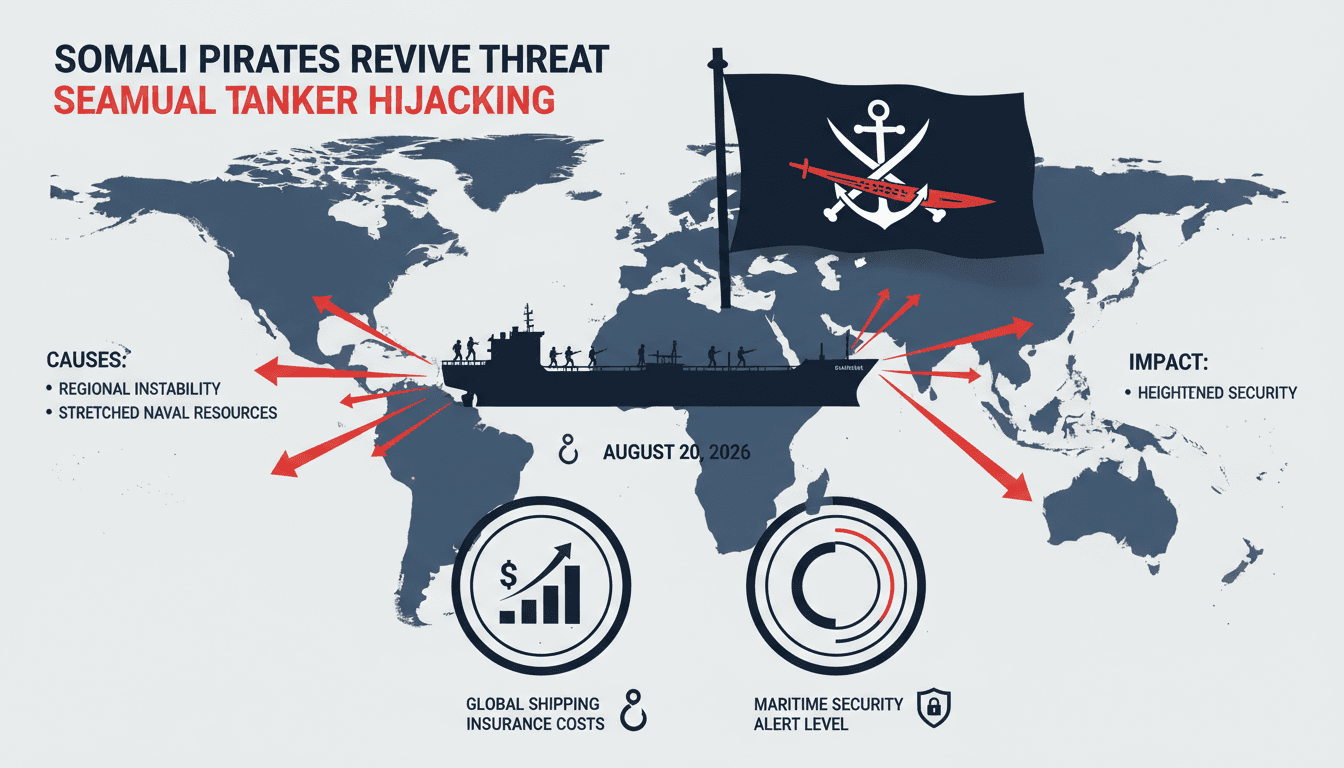
The resurgence of Somali piracy threatens a critical maritime corridor that handles 12-15% of global trade by value.
What happened (in 30 seconds)
- On August 20, 2026, six armed gunmen hijacked the Seamull tanker off Yemen's coast, redirecting it toward Somalia.
- This incident is part of a worrying trend, with at least five vessels currently held by pirates in the region since April 2026.
- UK Maritime Trade Operations (UKMTO) issued advisories for vessels to exercise caution in the Gulf of Aden.
The context you actually need
- Somali piracy peaked in 2011, with over 1,000 attacks generating approximately $400 million in ransoms before international efforts curtailed it.
- A resurgence began in April 2026, driven by instability in Somalia and naval forces diverted by conflicts in the Red Sea and near the Strait of Hormuz.
- Recent hijackings, including the Asana tanker in July 2026, indicate a troubling pattern of increased piracy activity in the Gulf of Aden.
What's really happening
The hijacking of the Seamull tanker is not an isolated incident but part of a broader resurgence of Somali piracy that has been gaining momentum since April 2026. This revival is fueled by a combination of factors, including the ongoing instability in Somalia, which has created an environment conducive to piracy. The Somali government remains weak, and the lack of effective law enforcement allows armed groups to operate with relative impunity.
Additionally, international naval resources are stretched thin due to concurrent conflicts in the Red Sea, particularly involving Houthi attacks, and tensions near the Strait of Hormuz. These conflicts have diverted attention and resources away from anti-piracy operations, leaving shipping routes vulnerable. As a result, vessels are increasingly rerouting closer to Somali waters, further exposing them to the threat of hijacking.
The Seamull incident highlights the vulnerabilities in one of the world's busiest maritime corridors, where 12-15% of global trade by value transits. The UKMTO's issuance of advisories for vessels to transit with caution reflects the heightened risks in the region. The current situation is exacerbated by the fact that multiple vessels are already held hostage, creating a climate of fear and uncertainty among shipping companies.
Market implications are significant. The resurgence of piracy is likely to lead to increased war risk premiums for vessels transiting the Gulf of Aden, raising shipping costs. This, in turn, could impact global supply chains, particularly for goods moving to and from key ports like Jebel Ali in Dubai. As shipping companies adjust to the new reality, delays and increased insurance costs may become the norm, affecting businesses and consumers alike.
Who feels it first (and how)
- Shipping companies: Increased operational costs and insurance premiums.
- Maritime insurers: Heightened risk assessments leading to higher premiums.
- Businesses relying on imports/exports: Potential delays in supply chains affecting inventory and pricing.
- Consumers: Possible increases in prices for goods due to higher shipping costs.
What to watch next
- Increased naval patrols: Monitor whether international naval forces ramp up operations in the Gulf of Aden to counter piracy.
- Shipping insurance rates: Watch for changes in war risk premiums and how they affect shipping costs.
- Regional stability: Keep an eye on developments in Somalia and the Red Sea, as these will influence piracy activity.
Somali piracy has resurged, with multiple vessels currently held hostage.
Shipping costs will rise due to increased insurance premiums and operational risks.
The long-term effectiveness of international naval responses to this resurgence.
Frequently Asked Questions
- Why it matters?
- The resurgence of Somali piracy threatens a critical maritime corridor that handles 12-15% of global trade by value.
- What happened (in 30 seconds)?
- On August 20, 2026, six armed gunmen hijacked the Seamull tanker off Yemen's coast, redirecting it toward Somalia. This incident is part of a worrying trend, with at least five vessels currently held by pirates in the region since April 2026. UK Maritime Trade Operations (UKMTO) issued advisories for vessels to exercise caution in the Gulf of Aden.
- What's really happening?
- The hijacking of the Seamull tanker is not an isolated incident but part of a broader resurgence of Somali piracy that has been gaining momentum since April 2026. This revival is fueled by a combination of factors, including the ongoing instability in Somalia, which has created an environment conducive to piracy. The Somali government remains weak, and the lack of effective law enforcement allows armed groups to operate with relative impunity. Additionally, international naval resources are str
- Who feels it first (and how)?
- Shipping companies: Increased operational costs and insurance premiums. Maritime insurers: Heightened risk assessments leading to higher premiums. Businesses relying on imports/exports: Potential delays in supply chains affecting inventory and pricing. Consumers: Possible increases in prices for goods due to higher shipping costs.
- What to watch next?
- Increased naval patrols: Monitor whether international naval forces ramp up operations in the Gulf of Aden to counter piracy. Shipping insurance rates: Watch for changes in war risk premiums and how they affect shipping costs. Regional stability: Keep an eye on developments in Somalia and the Red Sea, as these will influence piracy activity.
Global news coverage with extensive reporting on Middle Eastern conflicts and geopolitics.
"Al Jazeera is a Qatar-based broadcaster known for wide regional coverage and alternative perspectives."
— A47 Editor
Gunmen seize tanker off Yemen amid resurgence of Somali piracy
Gunmen have seized the Seamull tanker off the coast of Yemen, marking a significant escalation in piracy activities in the Gulf of Aden. This incident highlights the ongoing maritime security threats in the region, as the tanker was reportedly divert...
Comprehensive coverage of Middle Eastern and global issues.
"Al Jazeera is a prominent voice from the Global South, especially the Middle East, with an emphasis on underreported stories."
— A47 Editor
Gunmen seize tanker off Yemen amid resurgence of Somali piracy
Gunmen have seized the Seamull tanker off the coast of Yemen, marking a significant escalation in piracy activities in the Gulf of Aden. This incident highlights the ongoing maritime security threats in the region, as the tanker was reportedly divert...
Global business headlines with AI angles.
"General business outlet that frequently covers AI."
— A47 Editor
Somali Pirates Have Returned To The Seas. A Turkish Vessel Was Seized This Week.
Somali piracy has resurfaced, with reports confirming the seizure of a Turkish vessel this week amidst ongoing tensions related to the Iran war and the focus of U.S. military assets in the region. This resurgence highlights the persistent threat of p...
Jordanian news and regional updates.
"Roya News is a Jordanian outlet focused on breaking news and local affairs."
— A47 Editor
البحرية البريطانية: مسلحون يستولون على ناقلة نفط في خليج عدن ويوجهونها نحو الصومال
The British Maritime Authority announced on Thursday that armed individuals have seized an oil tanker in the Gulf of Aden and are directing it towards Somalia. This incident raises concerns about maritime security in a region already known for piracy...