
US Military Operates Secret Shipping Corridor for Oil Tankers in Strait of Hormuz
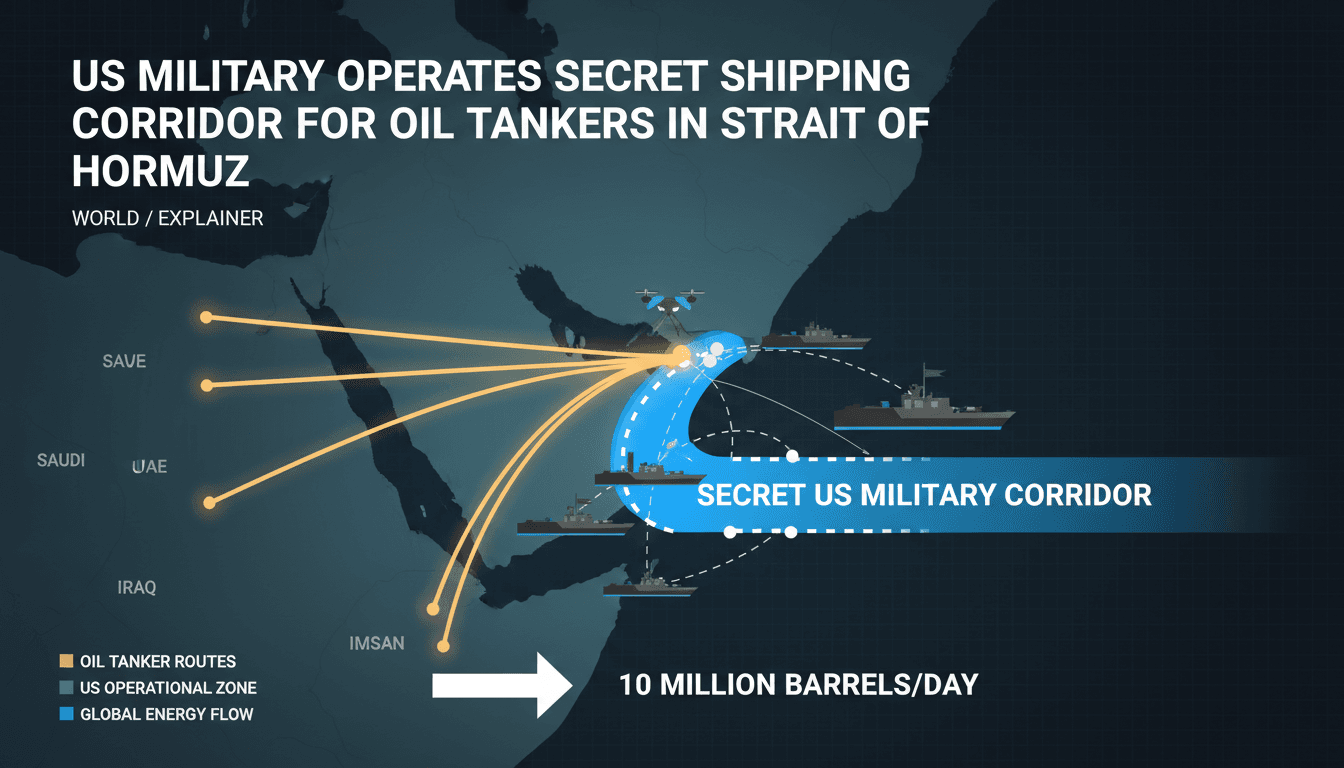
Here's what it means for you.
If you rely on global energy markets, this operation could stabilize oil prices and ensure supply continuity.
Why it matters
The US military's intervention directly impacts global oil supply chains and energy prices amid ongoing geopolitical tensions.
What happened (in 30 seconds)
- The US military established a secret shipping corridor in the southern lane of the Strait of Hormuz to facilitate oil tanker transit.
- Approximately 10 million barrels of oil per day are being exported through this corridor, representing a significant portion of Gulf oil production.
- The operation is a response to Iranian threats and aims to maintain global energy flows despite regional conflicts.
The context you actually need
- The Strait of Hormuz is a critical chokepoint for global oil shipments, with about 20% of the world's oil passing through it.
- Iran has previously threatened to close the strait, leading to heightened military presence and operational adjustments by the US.
- The US Central Command (CENTCOM) has been actively impairing Iranian surveillance capabilities, allowing for safer navigation for commercial vessels.
What's really happening
The establishment of a secret shipping corridor by the US military in the Strait of Hormuz is a strategic maneuver aimed at ensuring the uninterrupted flow of oil from Gulf producers amidst escalating tensions with Iran. This corridor, operational since approximately June 2026, allows for nightly convoys of 15 to 20 oil tankers to transit safely along the Omani coast, effectively bypassing traditional routes that are contested by Iranian forces.
The operation is a direct response to a series of Iranian provocations, including the placement of naval mines and threats to close the strait. By controlling the southern lane, US forces are not only safeguarding commercial shipping but also reinforcing their military presence in a region critical to global energy supplies. The US military's oversight includes air cover and real-time instructions for the tankers, ensuring that they can navigate safely despite the ongoing conflict.
This initiative has significant implications for global oil markets. With approximately 10 million barrels of oil being exported daily through this corridor, the operation represents roughly half of the pre-conflict oil flow through the strait. The US government, under President Trump, has confirmed the substantial volumes of oil exiting the strait, emphasizing the importance of maintaining energy supplies amid a stalemate with Iran.
The operation also reflects a broader strategy of the US to mitigate risks to navigation and energy supply chains in the face of regional instability. By coordinating with Gulf oil producers, including Saudi Arabia, UAE, Kuwait, Qatar, and Bahrain, the US is reinforcing its role as a stabilizing force in the region. This collaboration is crucial for ensuring that oil markets remain resilient, particularly as geopolitical tensions continue to simmer.
As the operation unfolds, it is essential to monitor the responses from Iran and other regional players, as well as the potential impacts on global oil prices and supply chains. The US military's actions in the Strait of Hormuz are not just about immediate security; they are also about shaping the future of energy markets in a volatile geopolitical landscape.
Who feels it first (and how)
- Oil producers in the Gulf: Increased security for exports and potential stabilization of prices.
- Global energy markets: Fluctuations in oil prices based on supply continuity and geopolitical developments.
- Shipping companies: Enhanced operational safety and reduced risk of disruptions in transit routes.
What to watch next
- Iran's military responses: Any escalation could impact the corridor's security and oil supply.
- Global oil prices: Watch for fluctuations as the corridor stabilizes or faces challenges.
- US-Iran negotiations: Future diplomatic efforts could alter the operational landscape in the Strait.
The US military is actively controlling a shipping corridor for oil tankers in the Strait of Hormuz.
Continued coordination between the US and Gulf oil producers to maintain supply chains.
The long-term impact of Iranian responses on the corridor's security and global oil markets.
Frequently Asked Questions
- Why it matters?
- The US military's intervention directly impacts global oil supply chains and energy prices amid ongoing geopolitical tensions.
- What happened (in 30 seconds)?
- The US military established a secret shipping corridor in the southern lane of the Strait of Hormuz to facilitate oil tanker transit. Approximately 10 million barrels of oil per day are being exported through this corridor, representing a significant portion of Gulf oil production. The operation is a response to Iranian threats and aims to maintain global energy flows despite regional conflicts.
- What's really happening?
- The establishment of a secret shipping corridor by the US military in the Strait of Hormuz is a strategic maneuver aimed at ensuring the uninterrupted flow of oil from Gulf producers amidst escalating tensions with Iran. This corridor, operational since approximately June 2026, allows for nightly convoys of 15 to 20 oil tankers to transit safely along the Omani coast, effectively bypassing traditional routes that are contested by Iranian forces. The operation is a direct response to a series of
- Who feels it first (and how)?
- Oil producers in the Gulf: Increased security for exports and potential stabilization of prices. Global energy markets: Fluctuations in oil prices based on supply continuity and geopolitical developments. Shipping companies: Enhanced operational safety and reduced risk of disruptions in transit routes.
- What to watch next?
- Iran's military responses: Any escalation could impact the corridor's security and oil supply. Global oil prices: Watch for fluctuations as the corridor stabilizes or faces challenges. US-Iran negotiations: Future diplomatic efforts could alter the operational landscape in the Strait.
Jordanian news and regional updates.
"Roya News is a Jordanian outlet focused on breaking news and local affairs."
— A47 Editor
أكسيوس: الجيش الأمريكي ينشئ ممرا بحريا سريا عبر مضيق هرمز
A report by Axios reveals that the U.S. military is establishing a secret maritime corridor through the Strait of Hormuz. This strategic move is likely aimed at enhancing military logistics and ensuring safe passage in a region critical for global oi...
Arabic-language coverage of international news and geopolitics.
"RT Arabic is a Russian state-funded outlet often criticized for promoting Kremlin-aligned narratives."
— A47 Editor
"أكسيوس": الولايات المتحدة أقامت ممرا سريا لنقل النفط عبر مضيق هرمز
Axios reported that the United States has established a secret corridor for the daily transport of millions of barrels of oil through the Strait of Hormuz, according to two American officials. This development highlights the strategic importance of t...
Pan-Arab political news and analysis.
"Al-Quds Al-Arabi is a London-based Arabic newspaper known for political coverage."
— A47 Editor
أكسيوس: عملية أمريكية سرية لتأمين نقل ملايين براميل النفط عبر مضيق هرمز
The United States has revealed a secret military operation aimed at securing the movement of oil tankers through the Strait of Hormuz, enabling the transport of millions of barrels of oil daily to global markets, despite ongoing tensions with Iran. T...