
South Korea initiates first container ship trial on Arctic Northern Sea Route
Why it matters
The trial voyage through the Northern Sea Route offers a potential alternative to the Suez Canal, impacting shipping times and costs amid ongoing geopolitical tensions.
What happened (in 30 seconds)
- South Korea launched its first commercial container ship trial on August 22, 2026, using the Arctic Northern Sea Route.
- The PanStar Acro is expected to reduce transit times to Europe by up to 10 days and save approximately 7,000 km compared to traditional Suez routes.
- This initiative follows similar efforts by China and reflects a broader trend of diversifying shipping lanes due to disruptions in the Middle East.
The context you actually need
- Geopolitical tensions in the Middle East have disrupted global shipping, prompting the search for alternative routes.
- The Northern Sea Route has become more navigable due to climate change, with transits increasing significantly in recent years.
- Major shipping companies are exploring new routes to mitigate risks associated with traditional chokepoints like the Suez Canal.
What's really happening
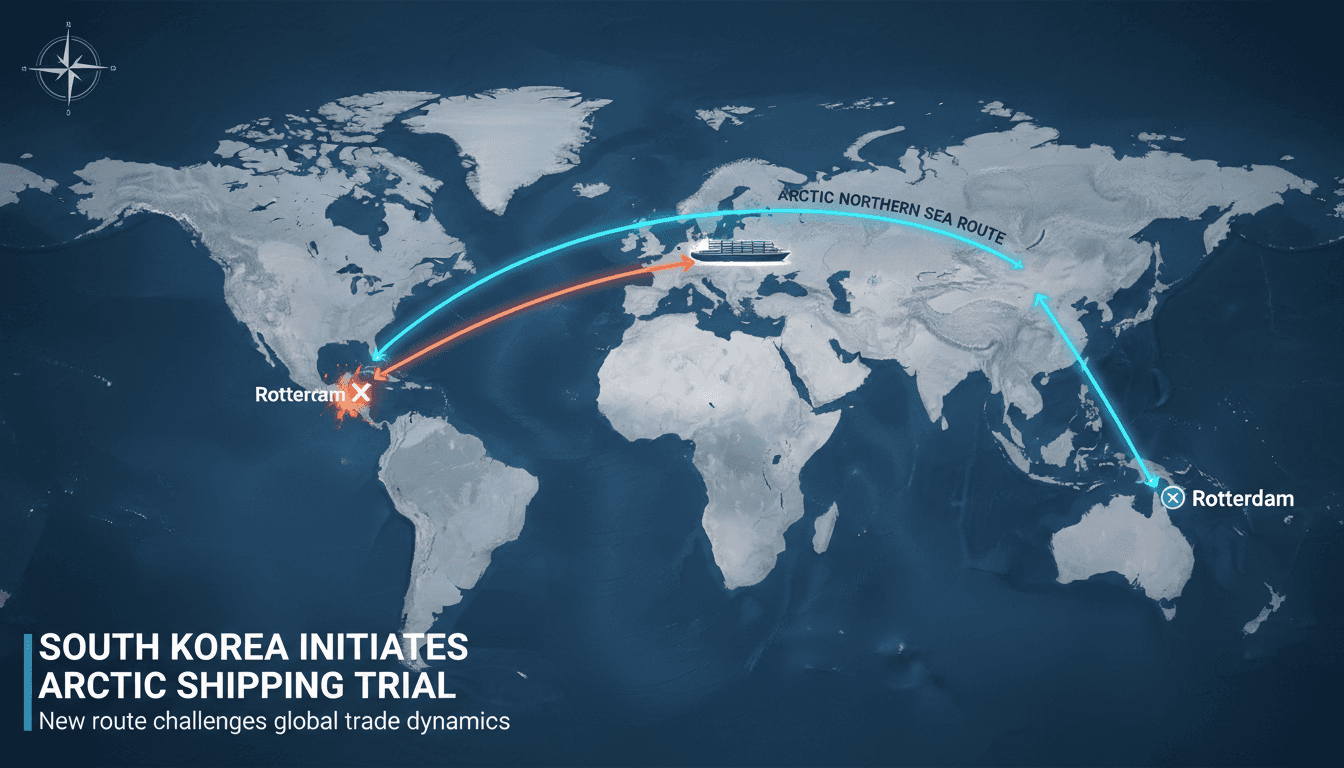
On August 22, 2026, South Korea's PanStar Acro embarked on a pioneering voyage from Busan New Port, navigating the Arctic Northern Sea Route (NSR) towards European ports such as Felixstowe, Rotterdam, and Gdansk. This trial is not merely a logistical experiment; it represents a strategic pivot in global shipping dynamics, driven by the need for resilience against geopolitical disruptions, particularly those stemming from conflicts in the Middle East.
The NSR offers a compelling alternative to the Suez Canal, with the potential to cut transit distances by approximately 7,000 km and reduce travel time by up to 10 days. This is significant for shipping companies looking to optimize costs and improve delivery times. The South Korean government, in collaboration with PanStar, is keen to validate the commercial viability of this route, which could redefine shipping logistics between Asia and Europe.
The backdrop to this initiative is a series of escalating tensions in the Middle East, including US-Israeli military actions against Iran that have heightened risks in the Red Sea and Suez Canal. These disruptions have prompted both governments and shipping firms to explore alternative routes, making the NSR an increasingly attractive option. The trial voyage is also a response to a similar initiative by China, which launched its own Arctic shipping service earlier in August 2026, indicating a competitive landscape in polar shipping.
However, the NSR is not without its challenges. The route traverses Russian territorial waters, raising concerns about potential sanctions and geopolitical risks. Additionally, environmental implications are significant; increased shipping traffic could accelerate ice melt in the Arctic, prompting backlash from environmental groups. Major carriers, such as CMA CGM, have already expressed intentions to avoid the route due to these concerns.
As the PanStar Acro makes its way through the Arctic, it symbolizes a broader shift in global shipping strategies. The normalization of the NSR as a secondary corridor could position Busan as a key hub in this new shipping landscape, but it also highlights the delicate balance between economic opportunity and environmental responsibility.
Who feels it first (and how)
- Shipping companies: They may benefit from reduced transit times and costs but face new geopolitical risks.
- Logistics firms: Changes in shipping routes could alter supply chain dynamics and logistics planning.
- Environmental groups: Increased Arctic shipping traffic raises concerns about ecological impacts.
- Port authorities in Busan and Europe: They may see shifts in cargo volumes and operational strategies.
What to watch next
- Monitoring shipping volumes through the NSR will indicate its viability as a long-term route.
- Regulatory responses from Russia regarding shipping traffic could impact operational feasibility.
- Environmental assessments will be crucial in determining the sustainability of increased Arctic shipping.
The PanStar Acro has successfully embarked on its trial voyage.
The NSR will see increased interest from shipping companies as geopolitical tensions persist.
The long-term environmental impact of increased shipping traffic in the Arctic remains to be fully understood.
Frequently Asked Questions
- Why it matters?
- The trial voyage through the Northern Sea Route offers a potential alternative to the Suez Canal, impacting shipping times and costs amid ongoing geopolitical tensions.
- What happened (in 30 seconds)?
- South Korea launched its first commercial container ship trial on August 22, 2026, using the Arctic Northern Sea Route. The PanStar Acro is expected to reduce transit times to Europe by up to 10 days and save approximately 7,000 km compared to traditional Suez routes. This initiative follows similar efforts by China and reflects a broader trend of diversifying shipping lanes due to disruptions in the Middle East.
- What's really happening?
- On August 22, 2026, South Korea's PanStar Acro embarked on a pioneering voyage from Busan New Port, navigating the Arctic Northern Sea Route (NSR) towards European ports such as Felixstowe, Rotterdam, and Gdansk. This trial is not merely a logistical experiment; it represents a strategic pivot in global shipping dynamics, driven by the need for resilience against geopolitical disruptions, particularly those stemming from conflicts in the Middle East. The NSR offers a compelling alternative to t
- Who feels it first (and how)?
- Shipping companies: They may benefit from reduced transit times and costs but face new geopolitical risks. Logistics firms: Changes in shipping routes could alter supply chain dynamics and logistics planning. Environmental groups: Increased Arctic shipping traffic raises concerns about ecological impacts. Port authorities in Busan and Europe: They may see shifts in cargo volumes and operational strategies.
- What to watch next?
- Monitoring shipping volumes through the NSR will indicate its viability as a long-term route. Regulatory responses from Russia regarding shipping traffic could impact operational feasibility. Environmental assessments will be crucial in determining the sustainability of increased Arctic shipping.
Regional and international reporting focused on Middle Eastern politics, diplomacy, and economics.
"Asharq Al-Awsat is a Saudi-owned international newspaper reflecting mainstream Gulf political perspectives."
— A47 Editor
South Korea Sends 1st Container Ship Through Arctic Route
South Korea has successfully sent its first container ship, the PanStar Acro, through the Arctic route, marking a significant milestone in maritime navigation as it heads towards Europe. This voyage is part of a broader initiative to explore the comm...
Global news coverage with extensive reporting on Middle Eastern conflicts and geopolitics.
"Al Jazeera is a Qatar-based broadcaster known for wide regional coverage and alternative perspectives."
— A47 Editor
South Korea sending first container ship through Arctic route
South Korea's PanStar Acro has embarked on its maiden voyage through the Arctic route, heading towards Europe, as part of a test to assess the commercial viability of this path opened by melting sea ice.
Comprehensive coverage of Middle Eastern and global issues.
"Al Jazeera is a prominent voice from the Global South, especially the Middle East, with an emphasis on underreported stories."
— A47 Editor
South Korea sending first container ship through Arctic route
South Korea's PanStar Acro has embarked on its maiden voyage through the Arctic route, heading towards Europe, as part of a test to assess the commercial viability of this path opened by melting sea ice.
Pan-Arab news coverage spanning politics, business, sports, and regional affairs.
"Asharq Al-Awsat reflects a broad Arab editorial perspective with strong attention to regional geopolitics."
— A47 Editor
سفينة حاويات تبحر من كوريا الجنوبية إلى أوروبا عبر القطب الشمالي
A South Korean container ship embarked on a trial journey to Europe via the Arctic on Saturday, highlighting growing interest in this new maritime route. This initiative reflects the potential for alternative shipping pathways as climate change opens...
RT is a Russian state-funded network covering global events from a Russian perspective.
"RT is widely criticized for promoting pro-Kremlin narratives and is considered by many to be a state propaganda outlet."
— A47 Editor
Major Asian exporter tests Russian Arctic shortcut to Europe
Seoul is currently testing the Northern Sea Route as a shipping shortcut to Europe, a move prompted by disruptions in traditional shipping lanes and ongoing geopolitical tensions. This development highlights South Korea's interest in enhancing its tr...
Regional and international reporting focused on Middle Eastern politics, diplomacy, and economics.
"Asharq Al-Awsat is a Saudi-owned international newspaper reflecting mainstream Gulf political perspectives."
— A47 Editor
South Korea to Send First Container Ship Through Arctic Route
South Korea has successfully sent its first container ship, the PanStar Acro, through the Arctic route, marking a significant milestone in maritime navigation as it heads towards Europe. This voyage is part of a broader initiative to explore the comm...