
US Initiates Operation Economic Outcast with New Sanctions on Iran
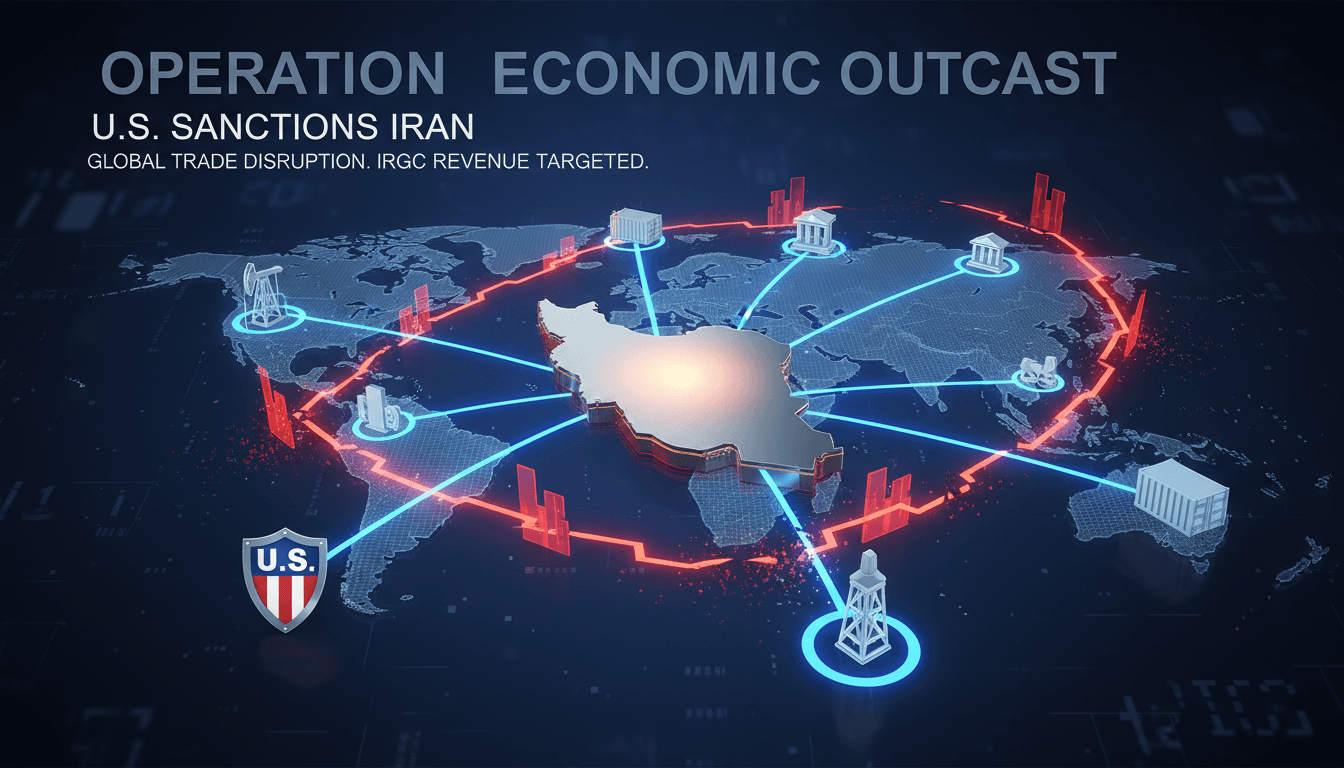
Here's what it means for you.
If you engage in international trade or finance, be prepared for increased compliance scrutiny and potential disruptions.
Why it matters
These sanctions could reshape global trade dynamics, particularly for businesses linked to Iran.
What happened (in 30 seconds)
- On August 24, 2026, the U.S. launched Operation Economic Outcast, targeting Iran's economic lifelines.
- Nearly 60 entities and individuals were sanctioned, focusing on sectors like digital assets, gold, and shipping.
- Secondary sanctions threaten foreign partners, compelling them to cease Iran-related business or face exclusion from the U.S. dollar system.
The context you actually need
- Iran's economy has been under pressure from previous sanctions, relying heavily on oil smuggling and cyber operations for revenue.
- The U.S. aims to cut off funding for the Iranian Revolutionary Guard Corps (IRGC) and other regime activities amid escalating geopolitical tensions.
- Countries like the UAE and China are now at risk of secondary sanctions, complicating their trade relationships with Iran.
What's really happening
Operation Economic Outcast represents a strategic escalation in the U.S. sanctions regime against Iran, designed to cripple the Iranian economy by targeting its five key economic lifelines: oil, technology, digital assets, aviation, and shipping. The U.S. Treasury Department, under Secretary Scott Bessent, has meticulously mapped out Iranian evasion networks, identifying nearly 60 entities, individuals, and vessels involved in these sectors.
The sanctions are not merely punitive; they are a calculated effort to disrupt Iran's revenue streams that fund military and regime activities. By imposing sectoral sanctions, the U.S. aims to create a ripple effect that extends beyond Iran's borders, compelling foreign partners to comply or face severe repercussions, including exclusion from the U.S. dollar system. This creates a high-stakes environment for international businesses, particularly those in the UAE, China, Singapore, and Switzerland, which have historically engaged in trade with Iran.
The operational mechanics of these sanctions involve a zero-leakage enforcement strategy, targeting vessel brokers, financial intermediaries, and specific sectors to ensure compliance. The U.S. has issued compliance timelines, giving foreign entities a limited window to cease Iran-related business. Failure to comply could result in secondary sanctions, which would significantly impact their ability to operate in the global market.
This campaign follows months of escalating tensions between the U.S. and Iran, marked by declining Iranian oil exports and a concerted effort by the U.S. to isolate the Iranian regime amid regional instability. The Iranian government has publicly condemned these measures, with officials claiming readiness to withstand the pressure and predicting U.S. defeat. However, the reality on the ground suggests that Iranian oil flows will continue to face significant challenges, particularly as enforcement efforts target buyers in China and other nations.
As the sanctions take effect, the implications for global trade and finance are profound. Businesses must navigate a landscape fraught with compliance risks, particularly those with ties to the UAE, where several sanctioned entities are based. The potential for secondary sanctions creates a chilling effect, prompting firms to reassess their exposure to Iranian networks and consider the long-term viability of their operations in the region.
Who feels it first (and how)
- International traders: Increased compliance costs and potential disruptions in supply chains.
- Financial institutions: Heightened scrutiny and risk of secondary sanctions for facilitating transactions.
- Shipping companies: Greater risks associated with transporting goods linked to Iran.
- UAE-based firms: Direct impact due to sanctions on local entities involved in oil networks.
- Chinese businesses: Potential backlash from U.S. sanctions affecting trade relations.
What to watch next
- Compliance timelines: Monitor how quickly foreign entities adapt to the new sanctions and cease Iran-related business.
- Market reactions: Watch for fluctuations in oil prices and trade volumes as enforcement begins.
- Geopolitical developments: Keep an eye on Iran's responses and any potential retaliatory measures that could escalate tensions.
The U.S. has sanctioned nearly 60 entities and individuals linked to Iran.
Increased compliance risks for businesses engaged in trade with Iran, particularly in the UAE and China.
The long-term effectiveness of these sanctions in altering Iran's behavior or regime stability.
Frequently Asked Questions
- Why it matters?
- These sanctions could reshape global trade dynamics, particularly for businesses linked to Iran.
- What happened (in 30 seconds)?
- On August 24, 2026, the U.S. launched Operation Economic Outcast, targeting Iran's economic lifelines. Nearly 60 entities and individuals were sanctioned, focusing on sectors like digital assets, gold, and shipping. Secondary sanctions threaten foreign partners, compelling them to cease Iran-related business or face exclusion from the U.S. dollar system.
- What's really happening?
- Operation Economic Outcast represents a strategic escalation in the U.S. sanctions regime against Iran, designed to cripple the Iranian economy by targeting its five key economic lifelines: oil, technology, digital assets, aviation, and shipping. The U.S. Treasury Department, under Secretary Scott Bessent, has meticulously mapped out Iranian evasion networks, identifying nearly 60 entities, individuals, and vessels involved in these sectors. The sanctions are not merely punitive; they are a ca
- Who feels it first (and how)?
- International traders: Increased compliance costs and potential disruptions in supply chains. Financial institutions: Heightened scrutiny and risk of secondary sanctions for facilitating transactions. Shipping companies: Greater risks associated with transporting goods linked to Iran. UAE-based firms: Direct impact due to sanctions on local entities involved in oil networks. Chinese businesses: Potential backlash from U.S. sanctions affecting trade relations.
- What to watch next?
- Compliance timelines: Monitor how quickly foreign entities adapt to the new sanctions and cease Iran-related business. Market reactions: Watch for fluctuations in oil prices and trade volumes as enforcement begins. Geopolitical developments: Keep an eye on Iran's responses and any potential retaliatory measures that could escalate tensions.
Regional coverage and analysis focused on politics, diplomacy, and business across the Middle East.
"Al-Monitor is known for analytical reporting on Middle East politics and policy developments."
— A47 Editor
Factbox-What's included in the new US sanctions campaign to pressure Iran's economy?
U.S. Treasury Secretary Scott Bessent announced a new sanctions campaign against Iran, describing it as an economic onslaught aimed at crippling Tehran's economy. This initiative combines new sanctions with threats directed at Iran's trading partners...
Capitol Hill news, legislation, and policy insight.
"The Hill specializes in U.S. politics and policy, with a focus on Capitol Hill developments and a reputation for insider reporting."
— A47 Editor
Bessent slow rolls ‘Economic D-Day’ on Iran
Treasury Secretary Scott Bessent announced the Trump administration's 'Economic D-Day' strategy against Iran, which focuses on imposing severe economic sanctions aimed at isolating the Iranian regime. This announcement coincides with the expiration o...
Comprehensive coverage of Middle Eastern and global issues.
"Al Jazeera is a prominent voice from the Global South, especially the Middle East, with an emphasis on underreported stories."
— A47 Editor
Trump administration announces ‘economic D-day’ sanctions on Iran
The Trump administration has announced a new round of economic sanctions on Iran, described by Treasury Secretary Scott Bessent as an 'economic D-Day' aimed at crippling Iran's economy and isolating the country from international trade. This move fol...
Global news coverage with extensive reporting on Middle Eastern conflicts and geopolitics.
"Al Jazeera is a Qatar-based broadcaster known for wide regional coverage and alternative perspectives."
— A47 Editor
Trump administration announces ‘economic D-day’ sanctions on Iran
The Trump administration has announced a new round of economic sanctions on Iran, described by Treasury Secretary Scott Bessent as an 'economic D-Day' aimed at crippling Iran's economy and isolating the country from international trade. This move fol...
Regional coverage and analysis focused on politics, diplomacy, and business across the Middle East.
"Al-Monitor is known for analytical reporting on Middle East politics and policy developments."
— A47 Editor
In 'warning shot,' US threatens sanctions on Iran’s trading partners
U.S. Treasury Secretary Scott Bessent announced that countries must cease business with Iran within defined timelines or face U.S. sanctions, marking a significant escalation in economic pressure against Tehran. This warning comes amid ongoing tensio...
Policy, elections, and government reporting.
"NPR is an American public media organization known for thoughtful reporting and a slightly left-leaning editorial tone."
— A47 Editor
Treasury Secretary Scott Bessent unveils new U.S. economic sanctions to isolate Iran
Treasury Secretary Scott Bessent announced a new wave of economic sanctions aimed at isolating Iran, which the Trump administration has termed an 'economic D-Day.' This announcement follows the expiration of a deadline for a nuclear deal with Iran, w...
International stories from NPR’s global desk.
"NPR is an American public media organization known for thoughtful reporting and a slightly left-leaning editorial tone."
— A47 Editor
Treasury Secretary Scott Bessent unveils new U.S. economic sanctions to isolate Iran
Treasury Secretary Scott Bessent announced a new wave of economic sanctions aimed at isolating Iran, which the Trump administration has termed an 'economic D-Day.' This announcement follows the expiration of a deadline for a nuclear deal with Iran, w...
International stories from NPR’s global desk.
"NPR is an American public media organization known for thoughtful reporting and a slightly left-leaning editorial tone."
— A47 Editor
U.S. to detail new economic pressures on Iran. And, Canada to impose tariffs on U.S.
U.S. Treasury Secretary Scott Bessent is set to announce new economic pressures on Iran, aiming to significantly impact its economy amid ongoing tensions. This announcement follows a series of escalating sanctions intended to isolate Iran economicall...
Breaking news, politics, business, and entertainment from the U.S. and around the world.
"The New York Post is a tabloid-format newspaper known for its sensationalist headlines and conservative-leaning editorial tone."
— A47 Editor
‘Economic D-Day’ sanctions against Iran will be ‘single greatest financial offensive ever’ Bessent says
Treasury Secretary Scott Bessent announced that the United States is set to impose what he described as the 'single greatest financial offensive ever' against Iran, coinciding with the expiration of a deadline for a nuclear deal. This move is part of...
Global coverage of politics, crises, and international affairs.
"HuffPost provides progressive-oriented reporting on international developments, often focusing on humanitarian and social justice issues."
— A47 Editor
New U.S. Sanctions Target All Potential Revenue Sources For Iran, Bessent Says
U.S. Treasury Secretary Scott Bessent announced new sanctions targeting all potential revenue sources for Iran, emphasizing that operating in gray areas of conflict is no longer acceptable. This move is part of a broader strategy to economically isol...