
US Treasury Implements Operation Economic Outcast Against Iran Amid Ongoing Military Tensions
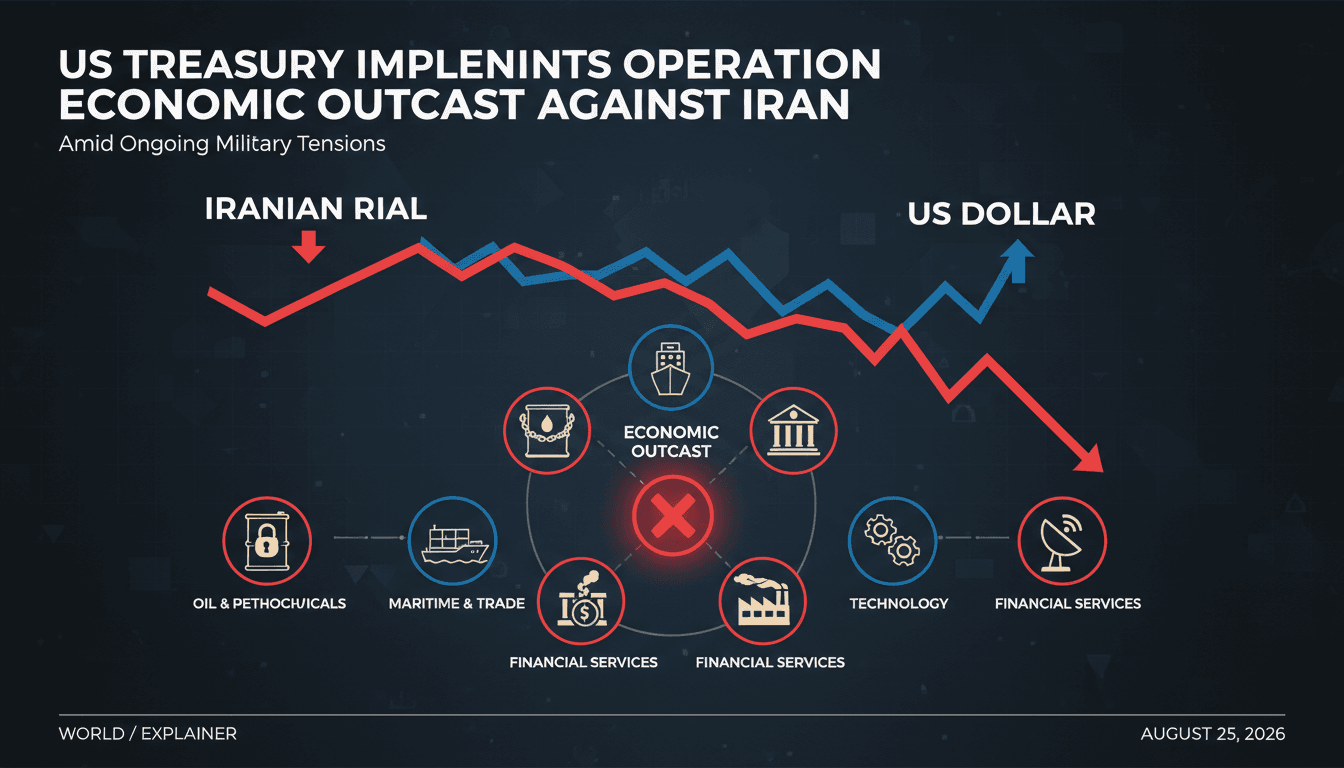
Here's what it means for you.
If you’re involved in global finance or trade, the US's intensified sanctions on Iran could disrupt your operations and increase market volatility.
Why it matters
The US's economic measures against Iran could reshape global oil markets and financial networks, impacting prices and trade routes.
What happened (in 30 seconds)
- On August 25, 2026, the US Treasury suspended general licenses for financial transactions with Iran, escalating economic pressure.
- Operation Economic Outcast targets various sectors, including digital assets and shipping, aiming to isolate Iran from global finance.
- The Iranian rial hit a historic low, exceeding two million rials per US dollar, reflecting immediate market reactions to the sanctions.
The context you actually need
- The US-Iran military confrontation has been ongoing for 179 days, marked by naval operations and strikes in the Strait of Hormuz.
- A memorandum of understanding signed earlier in 2026 had temporarily reduced hostilities, but stalled negotiations led to renewed sanctions.
- Iranian officials have publicly rejected the sanctions, indicating a readiness to counteract the economic measures and maintain regional alliances.
What's really happening
The US Treasury's launch of Operation Economic Outcast marks a significant pivot from military confrontation to economic warfare against Iran. This shift is driven by a combination of strategic objectives and the need to exert pressure without escalating military engagements. The suspension of general licenses for financial transactions is a critical component of this strategy, as it effectively cuts off Iran's access to international financial systems, thereby crippling its ability to engage in global trade.
The sanctions target key sectors of the Iranian economy, including oil, technology, and shipping, which are vital for its economic survival. By expanding secondary sanctions, the US aims to deter third-party countries and companies from engaging with Iran, thereby isolating it further. This approach not only seeks to weaken Iran's economic standing but also aims to send a clear message to other nations about the consequences of supporting Tehran.
The immediate impact of these sanctions has been profound. The Iranian rial's depreciation to over two million rials per US dollar signifies a loss of confidence in the Iranian economy, which could lead to inflation and increased hardship for the Iranian populace. Iranian officials, including representatives from the Islamic Revolutionary Guard Corps (IRGC), have responded defiantly, indicating their preparedness to counter the sanctions through various means, including strengthening ties with regional allies.
Moreover, the geopolitical landscape is shifting as the US prepares to redeploy diplomats to Middle Eastern embassies, signaling a potential escalation in diplomatic efforts or military readiness. The suspension of flights by Finnish airline Finnair to Dubai due to security concerns illustrates the broader implications of this conflict, affecting not just Iran but also neighboring countries and global travel.
As the situation unfolds, the interconnectedness of global markets means that these sanctions will likely have ripple effects beyond Iran, influencing oil prices, trade routes, and financial flows across the region and beyond.
Who feels it first (and how)
- Global traders: Increased volatility in oil prices and trade routes could disrupt supply chains.
- Financial institutions: Banks and companies involved in international transactions with Iran may face heightened risks and compliance challenges.
- Middle Eastern airlines: Airlines operating in the region may experience reduced demand and operational disruptions due to security concerns.
- Iranian citizens: The depreciation of the rial and economic isolation will likely lead to increased inflation and reduced purchasing power.
What to watch next
- Iran's economic response: Monitor how Iran adapts to the sanctions, including potential countermeasures or shifts in trade partnerships.
- Global oil prices: Watch for fluctuations in oil prices as sanctions impact Iranian exports and global supply dynamics.
- Regional diplomatic developments: Keep an eye on how neighboring countries respond to the sanctions and any shifts in alliances or security discussions.
The US has suspended general licenses for financial transactions with Iran.
Iran will seek to strengthen regional alliances and counter the sanctions through alternative trade routes.
The long-term effectiveness of the sanctions in achieving US objectives without escalating military conflict.
Frequently Asked Questions
- Why it matters?
- The US's economic measures against Iran could reshape global oil markets and financial networks, impacting prices and trade routes.
- What happened (in 30 seconds)?
- On August 25, 2026, the US Treasury suspended general licenses for financial transactions with Iran, escalating economic pressure. Operation Economic Outcast targets various sectors, including digital assets and shipping, aiming to isolate Iran from global finance. The Iranian rial hit a historic low, exceeding two million rials per US dollar, reflecting immediate market reactions to the sanctions.
- What's really happening?
- The US Treasury's launch of Operation Economic Outcast marks a significant pivot from military confrontation to economic warfare against Iran. This shift is driven by a combination of strategic objectives and the need to exert pressure without escalating military engagements. The suspension of general licenses for financial transactions is a critical component of this strategy, as it effectively cuts off Iran's access to international financial systems, thereby crippling its ability to engage in
- Who feels it first (and how)?
- Global traders: Increased volatility in oil prices and trade routes could disrupt supply chains. Financial institutions: Banks and companies involved in international transactions with Iran may face heightened risks and compliance challenges. Middle Eastern airlines: Airlines operating in the region may experience reduced demand and operational disruptions due to security concerns. Iranian citizens: The depreciation of the rial and economic isolation will likely lead to increased inflation and r
- What to watch next?
- Iran's economic response: Monitor how Iran adapts to the sanctions, including potential countermeasures or shifts in trade partnerships. Global oil prices: Watch for fluctuations in oil prices as sanctions impact Iranian exports and global supply dynamics. Regional diplomatic developments: Keep an eye on how neighboring countries respond to the sanctions and any shifts in alliances or security discussions.
Jordanian news and regional updates.
"Roya News is a Jordanian outlet focused on breaking news and local affairs."
— A47 Editor
اليوم الـ179 للحرب الأمريكية الإيرانية.. أمريكا تُطلق حرباً اقتصادية على إيران
On the 179th day of the ongoing U.S.-Iran conflict, the United States has initiated an economic war against Iran, escalating tensions between the two nations. This development marks a significant shift in the nature of the conflict, focusing on econo...
Pan-Arab news coverage spanning politics, business, sports, and regional affairs.
"Asharq Al-Awsat reflects a broad Arab editorial perspective with strong attention to regional geopolitics."
— A47 Editor
أميركا تبدأ «يوم الإنزال الاقتصادي» لعزل إيران
The United States has expanded its secondary sanctions related to Iran to include five key sectors, coinciding with the imposition of sanctions on approximately 60 individuals, entities, and a ship. This move marks a significant escalation in the U.S...
Jordanian news and regional updates.
"Roya News is a Jordanian outlet focused on breaking news and local affairs."
— A47 Editor
الخزانة الأمريكية تعلن بدء عملية المنبوذ الاقتصادي ضد إيران
The U.S. Department of the Treasury announced on Monday the initiation of an economic outcast operation against Iran, signaling a significant escalation in economic measures aimed at the country. This move is part of ongoing efforts to address concer...
Arabic-language coverage of political affairs and current events.
"Okaz political coverage typically follows mainstream Saudi framing on national and regional affairs."
— A47 Editor
بعد قطع الاتصالات.. واشنطن تستعد لخنق إيران اقتصادياً
The United States is preparing to announce a comprehensive economic sanctions package against Iran in the coming hours, aiming to avoid what Washington considers an unnecessary military escalation amid significant oil flow through the Strait of Hormu...