
Commodity Vessel Crossings in Strait of Hormuz Drop to Five Ships
Here's what it means for you.
If you're in Dubai, expect potential fluctuations in energy prices and supply chain disruptions.
Why it matters
The Strait of Hormuz is a critical chokepoint for global oil and gas supplies, and reduced vessel crossings can lead to increased energy price volatility.
What happened (in 30 seconds)
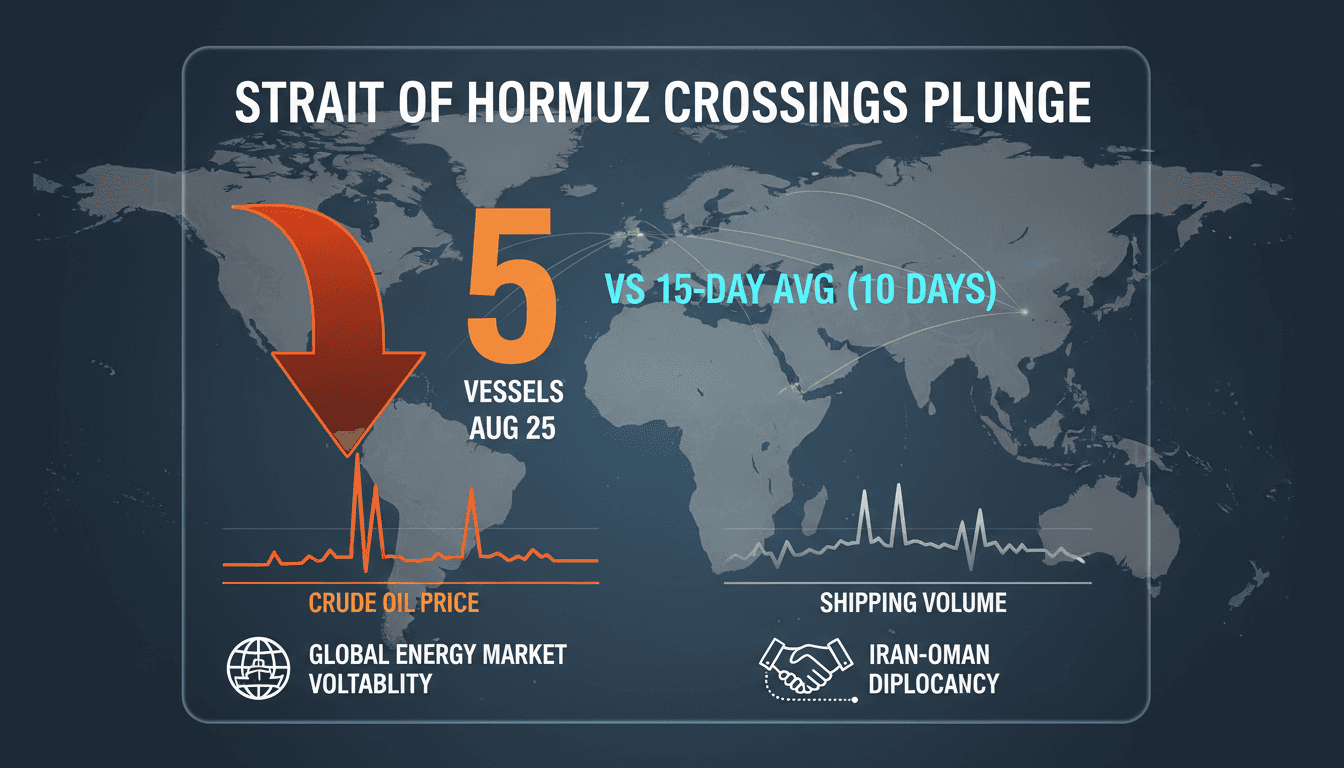
- Only five commodity vessels transited the Strait of Hormuz on August 25, 2026, significantly below the 10-day average of 15.
- Iran and Oman are discussing a temporary navigation corridor and mine clearance amid heightened U.S. economic pressure.
- European gas prices declined by 7% due to optimism surrounding these diplomatic talks, reflecting the strait's influence on global energy markets.
The context you actually need
- Pre-conflict averages for daily crossings in the Strait of Hormuz were around 130 vessels, carrying 20% of the world's crude oil and LNG.
- Recent tensions between the U.S. and Iran have led to a sharp decline in maritime traffic, with attacks and sanctions affecting shipping routes.
- Alternative routing near Omani waters has become more common, as diplomatic efforts continue to restore safer passage through the strait.
What's really happening
The Strait of Hormuz has long been a vital artery for global energy supplies, with approximately 20% of the world's crude oil and liquefied natural gas (LNG) passing through its waters. However, since the onset of U.S.-Iran hostilities in February 2026, commercial traffic has plummeted. The recent report indicating only five vessels crossed the strait on August 25 is a stark reminder of the ongoing instability in the region.
The preliminary data from Kpler highlights a concerning trend: the daily average of vessel crossings has dropped significantly from pre-conflict levels. This decline is not merely a statistical anomaly; it reflects the broader geopolitical tensions that have escalated in recent months. The Iranian Revolutionary Guard has made it clear that any new navigation corridor would be temporary and contingent upon U.S. acceptance of Tehran's terms, indicating that diplomatic negotiations are fraught with complexity.
The discussions between Iran and Oman about a temporary joint navigation corridor and mine clearance are crucial. They signal a potential easing of tensions, but the reality is that any agreement will not restore normal shipping flows without U.S. sanctions relief. ING Economics has pointed out that the current risk premiums in the market are likely to persist as long as these geopolitical tensions remain unresolved.
The implications of reduced crossings extend beyond the immediate region. For Dubai and other Gulf states, the strait's reduced traffic can lead to increased energy price volatility. As seen with the recent 7% decline in European natural gas prices, optimism surrounding diplomatic talks can influence market dynamics. However, this is a double-edged sword; while prices may temporarily ease, the underlying risks associated with supply chain disruptions remain.
Moreover, the ongoing discussions and potential agreements are likely to be closely monitored by global markets. Any sign of progress or setbacks in negotiations will have immediate repercussions on energy prices and supply chains, affecting consumers and businesses alike.
Who feels it first (and how)
- Energy sector professionals: Fluctuations in oil and gas prices directly impact their operations and profitability.
- Importers in Dubai: Supply chain disruptions could lead to delays and increased costs for imported goods.
- Consumers: Rising energy prices may translate to higher costs for utilities and transportation.
What to watch next
- Diplomatic developments: Keep an eye on the outcomes of Iran-Oman talks and any U.S. policy shifts regarding sanctions, as these will directly impact maritime traffic.
- Energy price trends: Monitor fluctuations in global energy prices, particularly in the Gulf region, as they can signal broader market reactions to geopolitical events.
- Shipping traffic data: Continued tracking of vessel crossings in the Strait of Hormuz will provide insights into the stability of this critical trade route.
The Strait of Hormuz is a key transit point for global energy supplies.
Energy price volatility will continue as geopolitical tensions evolve.
The long-term effects of any temporary agreements on maritime traffic and regional stability.
Frequently Asked Questions
- Why it matters?
- The Strait of Hormuz is a critical chokepoint for global oil and gas supplies, and reduced vessel crossings can lead to increased energy price volatility.
- What happened (in 30 seconds)?
- Only five commodity vessels transited the Strait of Hormuz on August 25, 2026, significantly below the 10-day average of 15. Iran and Oman are discussing a temporary navigation corridor and mine clearance amid heightened U.S. economic pressure. European gas prices declined by 7% due to optimism surrounding these diplomatic talks, reflecting the strait's influence on global energy markets.
- What's really happening?
- The Strait of Hormuz has long been a vital artery for global energy supplies, with approximately 20% of the world's crude oil and liquefied natural gas (LNG) passing through its waters. However, since the onset of U.S.-Iran hostilities in February 2026, commercial traffic has plummeted. The recent report indicating only five vessels crossed the strait on August 25 is a stark reminder of the ongoing instability in the region. The preliminary data from Kpler highlights a concerning trend: the dai
- Who feels it first (and how)?
- Energy sector professionals: Fluctuations in oil and gas prices directly impact their operations and profitability. Importers in Dubai: Supply chain disruptions could lead to delays and increased costs for imported goods. Consumers: Rising energy prices may translate to higher costs for utilities and transportation.
- What to watch next?
- Diplomatic developments: Keep an eye on the outcomes of Iran-Oman talks and any U.S. policy shifts regarding sanctions, as these will directly impact maritime traffic. Energy price trends: Monitor fluctuations in global energy prices, particularly in the Gulf region, as they can signal broader market reactions to geopolitical events. Shipping traffic data: Continued tracking of vessel crossings in the Strait of Hormuz will provide insights into the stability of this critical trade route.
Pan-Arab news coverage spanning politics, business, sports, and regional affairs.
"Asharq Al-Awsat reflects a broad Arab editorial perspective with strong attention to regional geopolitics."
— A47 Editor
حركة الملاحة عبر مضيق هرمز دون متوسط 10 أيام
Preliminary data indicated that five ships carrying raw materials transited the Strait of Hormuz on Tuesday, a figure that has not changed significantly from the previous day but is considerably lower than the ten-day average of 15 vessels.
Regional coverage and analysis focused on politics, diplomacy, and business across the Middle East.
"Al-Monitor is known for analytical reporting on Middle East politics and policy developments."
— A47 Editor
Gulf ship traffic via Strait of Hormuz hovers below 10-day average, data shows
On August 26, 2026, five commodity vessels transited the Strait of Hormuz, a figure that remains below the 10-day average of 15 vessels, according to preliminary data from shiptracker Kpler. This slight change follows a weekend where fewer than 20 sh...
Arabic-language coverage of political affairs and current events.
"Okaz political coverage typically follows mainstream Saudi framing on national and regional affairs."
— A47 Editor
حركة الملاحة دون المستوى.. إيران تُصعّد: المسار الجديد في هرمز مؤقت
According to initial data from Reuters, five ships carrying essential goods transited the Strait of Hormuz on Tuesday, a figure that remains consistent with the previous day but significantly lower than the ten-day average of 15 vessels. Iranian Depu...
Arabic-language coverage of international news and geopolitics.
"RT Arabic is a Russian state-funded outlet often criticized for promoting Kremlin-aligned narratives."
— A47 Editor
بيانات شحن: حركة ملاحة هرمز تتراجع إلى 5 سفن فقط
Recent data indicates that only five vessels carrying cargo transited the Strait of Hormuz on Tuesday, a figure that remains consistent with the previous day but significantly lower than the recent ten-day average of 15 ships.
Arabic-language coverage of international news and geopolitics.
"RT Arabic is a Russian state-funded outlet often criticized for promoting Kremlin-aligned narratives."
— A47 Editor
بيانات: انخفاض حركة سفن البضائع عبر مضيق هرمز لأدنى مستوى في 3 أشهر
Recent shipping data revealed that only one cargo ship passed through the Strait of Hormuz yesterday, marking the lowest number of crossings since May 7. This decline in traffic highlights a significant reduction in shipping activity in this crucial ...
Arabic-language coverage of international news and geopolitics.
"RT Arabic is a Russian state-funded outlet often criticized for promoting Kremlin-aligned narratives."
— A47 Editor
تراجع عبور السفن عبر مضيق هرمز إلى أقل من 20 سفينة خلال عطلة نهاية الأسبوع
Recent data indicates that fewer than 20 commercial ships transited the Strait of Hormuz over the weekend, amid ongoing maritime restrictions and military tensions between the United States and Iran.