
IRGC Navy Declares Control Over Strait of Hormuz Amid U.S.-Iran Tensions
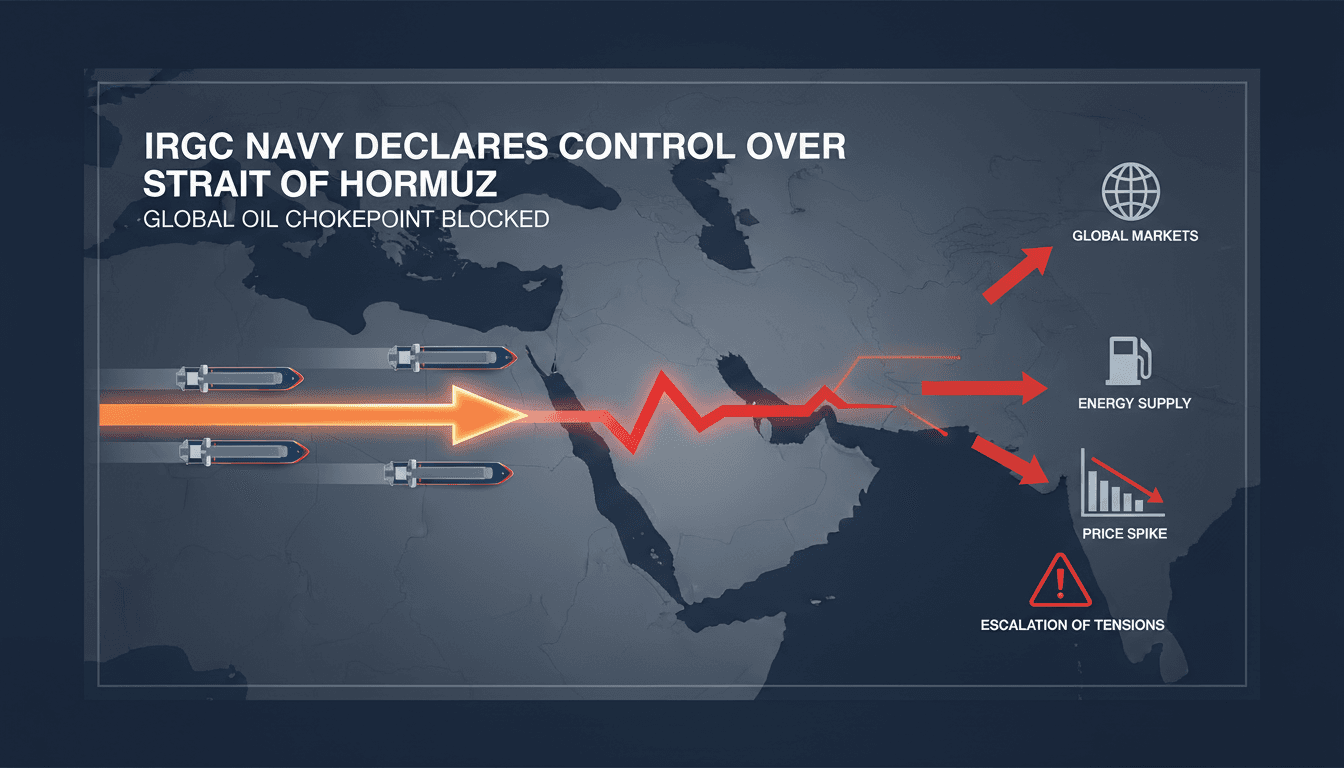
Here's what it means for you.
If you rely on global oil markets, the IRGC's actions could lead to increased fuel prices and supply chain disruptions.
Why it matters
The Strait of Hormuz is a critical chokepoint for approximately 20% of the world's oil and LNG exports, making its control pivotal for global energy security.
What happened (in 30 seconds)
- On August 28, 2026, the IRGC Navy declared full control over the Strait of Hormuz, closing it to vessels without Iranian coordination.
- U.S. claims of an open passage following mine-clearing operations were dismissed by Iran as misinformation aimed at manipulating oil prices.
- The ongoing U.S.-Iran conflict, which began in February 2026, has escalated tensions and led to severe restrictions on maritime traffic.
The context you actually need
- The Strait of Hormuz is a vital maritime route, with around 95 vessels crossing daily before the conflict, now reduced to about 10.
- Iran's conditions for reopening the strait include the cessation of U.S. military actions and lifting of sanctions, which complicates diplomatic efforts.
- The fragile ceasefire established in June 2026 has deteriorated, with both sides accusing each other of violations, further entrenching the blockade.
What's really happening
The IRGC Navy's assertion of control over the Strait of Hormuz is a strategic maneuver in the ongoing U.S.-Iran conflict, which has roots in geopolitical tensions and economic sanctions. Following joint U.S.-Israeli military strikes on Iranian territory in February 2026, Iran responded by closing the strait, a key maritime passage for global oil and liquefied natural gas (LNG) exports. This closure has significant implications for international energy markets, as approximately 20% of global oil and LNG exports transit through this narrow waterway.
Iran's declaration on August 28, 2026, emphasizes that any vessel wishing to pass must coordinate with Iranian authorities, effectively creating a blockade. This move is framed as a response to what Iran perceives as U.S. misinformation regarding the strait's status. The U.S. administration, under President Donald Trump, maintains that the strait is open following mine-clearing operations, but Iran's rejection of this claim highlights the deepening mistrust between the two nations.
The economic implications are profound. With daily crossings reduced from an average of 95 to around 10, the disruption in shipping lanes is likely to lead to increased fuel prices and supply chain delays. This situation is exacerbated by Iran's recent sanctions list targeting vessels that do not comply with its new regulations. The IRGC's control over the strait is not just a military assertion; it is a calculated economic strategy aimed at leveraging Iran's position in the global oil market.
As the conflict continues, regional actors like Oman are attempting to mediate and establish alternative shipping corridors, but these efforts are hampered by the entrenched positions of both the U.S. and Iran. The broader diplomatic landscape remains stalled, with Iran's conditions for reopening the strait remaining unmet. This standoff not only affects oil prices but also has ripple effects on global markets, influencing everything from consumer goods to energy prices.
Who feels it first (and how)
- Consumers: Higher fuel prices and potential shortages in goods due to disrupted supply chains.
- Logistics companies: Increased costs and delays in shipping, impacting operations and profitability.
- Energy sector: Fluctuations in oil prices affecting profitability and investment decisions.
- Tourism industry in Dubai: Potential declines in tourist numbers due to increased travel costs and uncertainty.
What to watch next
- Oil price fluctuations: Monitor how the market reacts to ongoing tensions and potential supply shortages.
- Diplomatic negotiations: Watch for any breakthroughs or escalations in talks between Iran and regional mediators like Oman.
- Military movements: Keep an eye on U.S. naval presence in the region and any changes in Iranian military posture.
The Strait of Hormuz is critical for global oil and LNG exports.
Continued tensions between the U.S. and Iran will affect global oil prices and supply chains.
The timeline for any potential resolution or reopening of the strait remains uncertain.
Frequently Asked Questions
- Why it matters?
- The Strait of Hormuz is a critical chokepoint for approximately 20% of the world's oil and LNG exports, making its control pivotal for global energy security.
- What happened (in 30 seconds)?
- On August 28, 2026, the IRGC Navy declared full control over the Strait of Hormuz, closing it to vessels without Iranian coordination. U.S. claims of an open passage following mine-clearing operations were dismissed by Iran as misinformation aimed at manipulating oil prices. The ongoing U.S.-Iran conflict, which began in February 2026, has escalated tensions and led to severe restrictions on maritime traffic.
- What's really happening?
- The IRGC Navy's assertion of control over the Strait of Hormuz is a strategic maneuver in the ongoing U.S.-Iran conflict, which has roots in geopolitical tensions and economic sanctions. Following joint U.S.-Israeli military strikes on Iranian territory in February 2026, Iran responded by closing the strait, a key maritime passage for global oil and liquefied natural gas (LNG) exports. This closure has significant implications for international energy markets, as approximately 20% of global oil
- Who feels it first (and how)?
- Consumers: Higher fuel prices and potential shortages in goods due to disrupted supply chains. Logistics companies: Increased costs and delays in shipping, impacting operations and profitability. Energy sector: Fluctuations in oil prices affecting profitability and investment decisions. Tourism industry in Dubai: Potential declines in tourist numbers due to increased travel costs and uncertainty.
- What to watch next?
- Oil price fluctuations: Monitor how the market reacts to ongoing tensions and potential supply shortages. Diplomatic negotiations: Watch for any breakthroughs or escalations in talks between Iran and regional mediators like Oman. Military movements: Keep an eye on U.S. naval presence in the region and any changes in Iranian military posture.
Arabic-language coverage of international news and geopolitics.
"RT Arabic is a Russian state-funded outlet often criticized for promoting Kremlin-aligned narratives."
— A47 Editor
الحرس الثوري الإيراني: مضيق هرمز مغلق أمام جميع السفن التي ستعبر دون التنسيق معنا
The Iranian Revolutionary Guard Corps has asserted its complete and decisive control over the Strait of Hormuz, declaring that the strategic waterway is firmly closed to any vessels that attempt to cross without coordination with them.
Pan-Arab political news and analysis.
"Al-Quds Al-Arabi is a London-based Arabic newspaper known for political coverage."
— A47 Editor
الحرس الثوري: مضيق هرمز مغلق أمام جميع السفن التي لا تنسق مع إيران
The Iranian Revolutionary Guard Corps announced that the Strait of Hormuz is closed to all ships intending to pass without coordination with Iran. They described U.S. claims about keeping the strait open as a falsehood aimed at controlling oil prices...
Arabic-language coverage of international news and geopolitics.
"RT Arabic is a Russian state-funded outlet often criticized for promoting Kremlin-aligned narratives."
— A47 Editor
استخبارات الحرس الثوري تصدر بيانا حول "المواجهة المصيرية مع العدو": مخطط للموساد ورسائل للشعب
The Iranian Revolutionary Guard Intelligence announced in a statement that Iran's sovereignty over the Strait of Hormuz remains intact, revealing a purported 'Mossad plan' within the country. This statement was directed towards the Iranian people, em...
Arabic-language coverage of international news and geopolitics.
"RT Arabic is a Russian state-funded outlet often criticized for promoting Kremlin-aligned narratives."
— A47 Editor
الحرس الثوري الإيراني يحدد شرطين لفتح مضيق هرمز
Iranian Revolutionary Guard spokesperson Hossein Mohri stated that the Strait of Hormuz will not be opened unless the United States accepts Iranian conditions. This statement highlights ongoing tensions between Iran and the U.S. regarding maritime se...
Pan-Arab news coverage spanning politics, business, sports, and regional affairs.
"Asharq Al-Awsat reflects a broad Arab editorial perspective with strong attention to regional geopolitics."
— A47 Editor
«الحرس الثوري»: لا فتح لـ«هرمز» من دون شروطنا
Iranian Revolutionary Guard spokesperson Hossein Mohbi stated that Iran will not reopen the Strait of Hormuz unless the United States accepts Tehran's conditions and returns to the memorandum of understanding.
Pan-Arab political news and analysis.
"Al-Quds Al-Arabi is a London-based Arabic newspaper known for political coverage."
— A47 Editor
عاجل.. الحرس الثوري الإيراني: المضيق لن يفتح إذا لم تقبل أمريكا بشروطنا
The Iranian Revolutionary Guard has stated that the Strait will not be opened unless the United States accepts its conditions. This declaration highlights ongoing tensions between Iran and the U.S., particularly regarding maritime access and regional...