
Glacial Collapse Causes Severe Flooding on Nepal-Tibet Border Leaving Over 1,500 Missing
Here's what it means for you.
The recent floods highlight the increasing risks of climate change, impacting global tourism and humanitarian efforts.
Why it matters
The disaster underscores the vulnerability of critical infrastructure and tourism in regions affected by climate-driven glacial instability.
What happened (in 30 seconds)
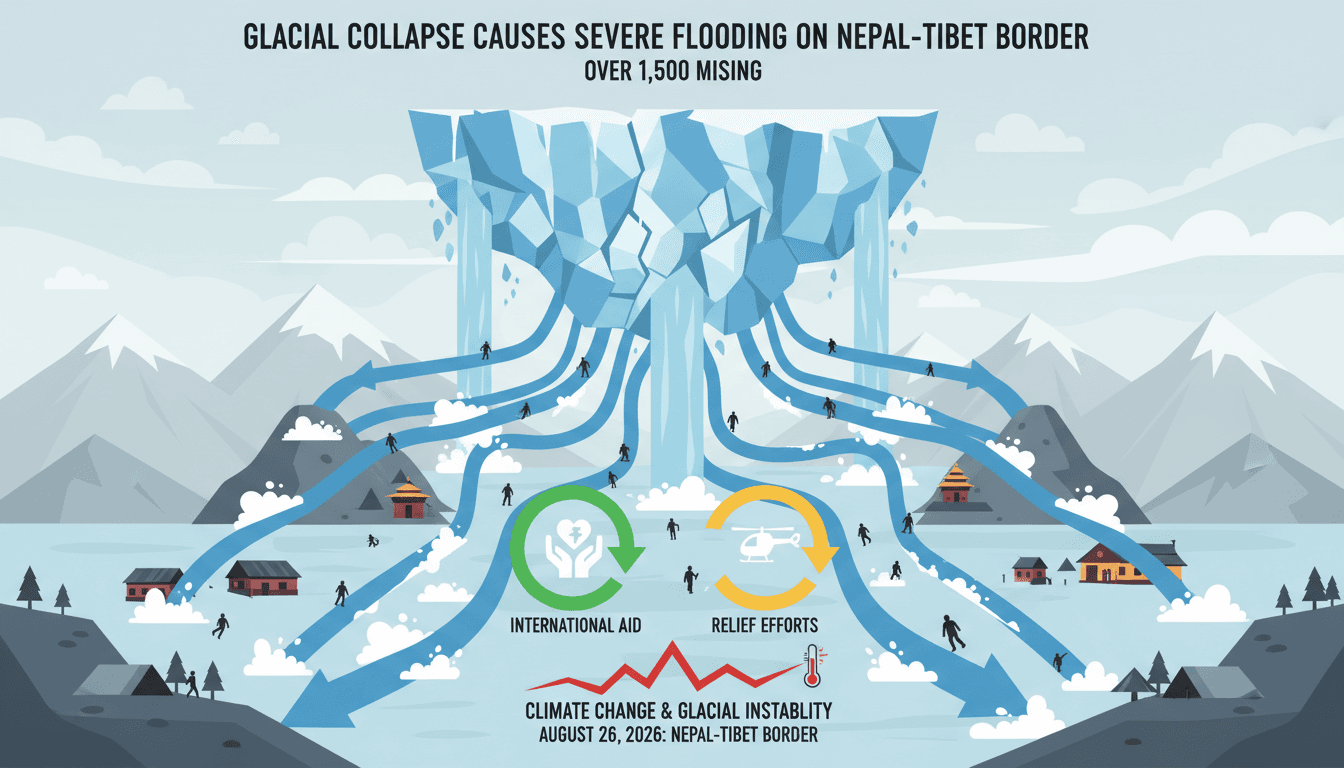
- Glacial collapse on August 26, 2026, triggered flash floods along the Nepal-Tibet border, affecting communities and infrastructure.
- Over 1,500 people are reported missing, including many foreign tourists and pilgrims, with a confirmed death toll of at least 273.
- Rescue operations are ongoing but severely hampered by destroyed roads and bridges, complicating access to affected areas.
The context you actually need
- Accelerated warming in the Himalayas has led to increasing glacial instability, with similar floods occurring in the region in the past.
- The Himalayan region is home to over 60,000 glaciers, which are destabilizing faster than the global average, posing risks to densely populated areas.
- International aid is mobilizing, with multiple countries pledging support, highlighting the global response to regional disasters.
What's really happening
On August 26, 2026, at approximately 8:40 a.m. local time, a significant glacial collapse occurred in the Lhende Khola river valley, sending a torrent of mud, rock, and water cascading down towards communities along the Nepal-Tibet border. Initial reports misidentified the event as a 4.4-magnitude earthquake, which contributed to confusion regarding the disaster's nature and scale. By the following day, authorities confirmed at least 270 fatalities in Nepal and three in Tibet, with over 1,500 individuals reported missing, including nearly 600 foreign nationals.
The floods have devastated infrastructure, destroying roads and bridges, which has severely hampered rescue efforts. Helicopters were deployed to airlift survivors and deliver aid, but the extensive damage has made access to affected areas challenging. Many of the missing individuals were tourists and pilgrims traveling to the sacred site of Kailash Mansarovar, a popular destination for Hindu pilgrims.
This disaster is not an isolated incident; it reflects a broader trend of increasing glacial instability in the Himalayas, driven by climate change. Experts from the International Centre for Integrated Mountain Development (ICIMOD) and regional hydrologists have noted that the glaciers in this region are melting and destabilizing at rates faster than the global average. The implications are dire, as these glaciers feed into major rivers that support millions of people downstream.
The Nepal-Tibet border region has experienced similar flash floods in the past, including a notable incident in July 2025, which was also attributed to glacial lake overflow. As climate change accelerates, the frequency and intensity of such events are expected to increase, posing significant risks to local communities and international tourists alike.
The response to this disaster has seen a coordinated effort from various stakeholders, including the Nepalese government, Chinese authorities, and international aid organizations. The United States has pledged $500,000 in aid, while India has dispatched helicopters with supplies. The UN and several other countries, including the UK, Canada, and Australia, have also offered support. However, the immediate impact on global markets has been minimal, though the regional tourism and pilgrimage sectors are likely to face significant disruptions.
Who feels it first (and how)
- Tourists and Pilgrims: Foreign nationals traveling to the region are directly affected, with many reported missing or in need of rescue.
- Local Communities: Residents in the affected areas face loss of homes, livelihoods, and access to essential services.
- Aid Organizations: Humanitarian groups are mobilizing resources and personnel to assist in rescue and recovery efforts, impacting their operational capacities.
What to watch next
- Rescue Operations: Monitor the progress of ongoing search and rescue efforts, which will determine the final casualty figures and the effectiveness of international aid.
- Infrastructure Recovery: Watch for updates on rebuilding efforts in the region, as this will affect local economies and tourism in the long term.
- Climate Policy Responses: Observe how this disaster influences global discussions on climate change and disaster preparedness, particularly in vulnerable regions.
The death toll and number of missing individuals are expected to rise as rescue operations continue.
Increased scrutiny on climate change policies and their effectiveness in mitigating risks associated with glacial instability.
The long-term economic impact on the tourism sector in the region and how quickly infrastructure can be restored.
Frequently Asked Questions
- Why it matters?
- The disaster underscores the vulnerability of critical infrastructure and tourism in regions affected by climate-driven glacial instability.
- What happened (in 30 seconds)?
- Glacial collapse on August 26, 2026, triggered flash floods along the Nepal-Tibet border, affecting communities and infrastructure. Over 1,500 people are reported missing, including many foreign tourists and pilgrims, with a confirmed death toll of at least 273. Rescue operations are ongoing but severely hampered by destroyed roads and bridges, complicating access to affected areas.
- What's really happening?
- On August 26, 2026, at approximately 8:40 a.m. local time, a significant glacial collapse occurred in the Lhende Khola river valley, sending a torrent of mud, rock, and water cascading down towards communities along the Nepal-Tibet border. Initial reports misidentified the event as a 4.4-magnitude earthquake, which contributed to confusion regarding the disaster's nature and scale. By the following day, authorities confirmed at least 270 fatalities in Nepal and three in Tibet, with over 1,500 in
- Who feels it first (and how)?
- Tourists and Pilgrims: Foreign nationals traveling to the region are directly affected, with many reported missing or in need of rescue. Local Communities: Residents in the affected areas face loss of homes, livelihoods, and access to essential services. Aid Organizations: Humanitarian groups are mobilizing resources and personnel to assist in rescue and recovery efforts, impacting their operational capacities.
- What to watch next?
- Rescue Operations: Monitor the progress of ongoing search and rescue efforts, which will determine the final casualty figures and the effectiveness of international aid. Infrastructure Recovery: Watch for updates on rebuilding efforts in the region, as this will affect local economies and tourism in the long term. Climate Policy Responses: Observe how this disaster influences global discussions on climate change and disaster preparedness, particularly in vulnerable regions.
International stories from NPR’s global desk.
"NPR is an American public media organization known for thoughtful reporting and a slightly left-leaning editorial tone."
— A47 Editor
At least 1,500 missing after deadly Nepal-Tibet floods
A catastrophic flood has struck the Nepal-Tibet border, leaving at least 1,500 people missing, many of whom are foreign tourists. The floods have swept away entire villages, resulting in widespread destruction and significant loss of life. Reports in...
Oil, metals, and agriculture: supply/demand headlines, OPEC chatter, inventories, and price action.
"Solid tape for energy and metals traders tracking macro and micro catalysts."
— A47 Editor
Death toll mounts, more than 1,000 missing in Nepal and China after Himalayan flood
A catastrophic flood in the Himalayan region has resulted in a rising death toll, with reports indicating that more than 1,000 individuals are currently missing across Nepal and China. The flooding has caused widespread devastation, impacting communi...
Global news coverage with extensive reporting on Middle Eastern conflicts and geopolitics.
"Al Jazeera is a Qatar-based broadcaster known for wide regional coverage and alternative perspectives."
— A47 Editor
‘Swept away’: Nepal families search for relatives after devastating floods
A catastrophic flood has struck the Nepal-Tibet border, resulting in at least 180 confirmed deaths and approximately 1,400 individuals reported missing. The disaster, caused by a glacier collapse, has led to widespread destruction, with families desp...
Comprehensive coverage of Middle Eastern and global issues.
"Al Jazeera is a prominent voice from the Global South, especially the Middle East, with an emphasis on underreported stories."
— A47 Editor
‘Swept away’: Nepal families search for relatives after devastating floods
A catastrophic flood has struck the Nepal-Tibet border, resulting in at least 180 confirmed deaths and approximately 1,400 individuals reported missing. The disaster, caused by a glacier collapse, has led to widespread destruction, with families desp...