
Glacier Collapse Causes Catastrophic Floods on Nepal-Tibet Border Resulting in Hundreds of Deaths and Missing Persons
Here's what it means for you.
The devastating floods on the Nepal-Tibet border could disrupt global tourism and humanitarian efforts in the region.
Why it matters
This event highlights the increasing risks posed by climate change, particularly in vulnerable mountainous regions.
What happened (in 30 seconds)
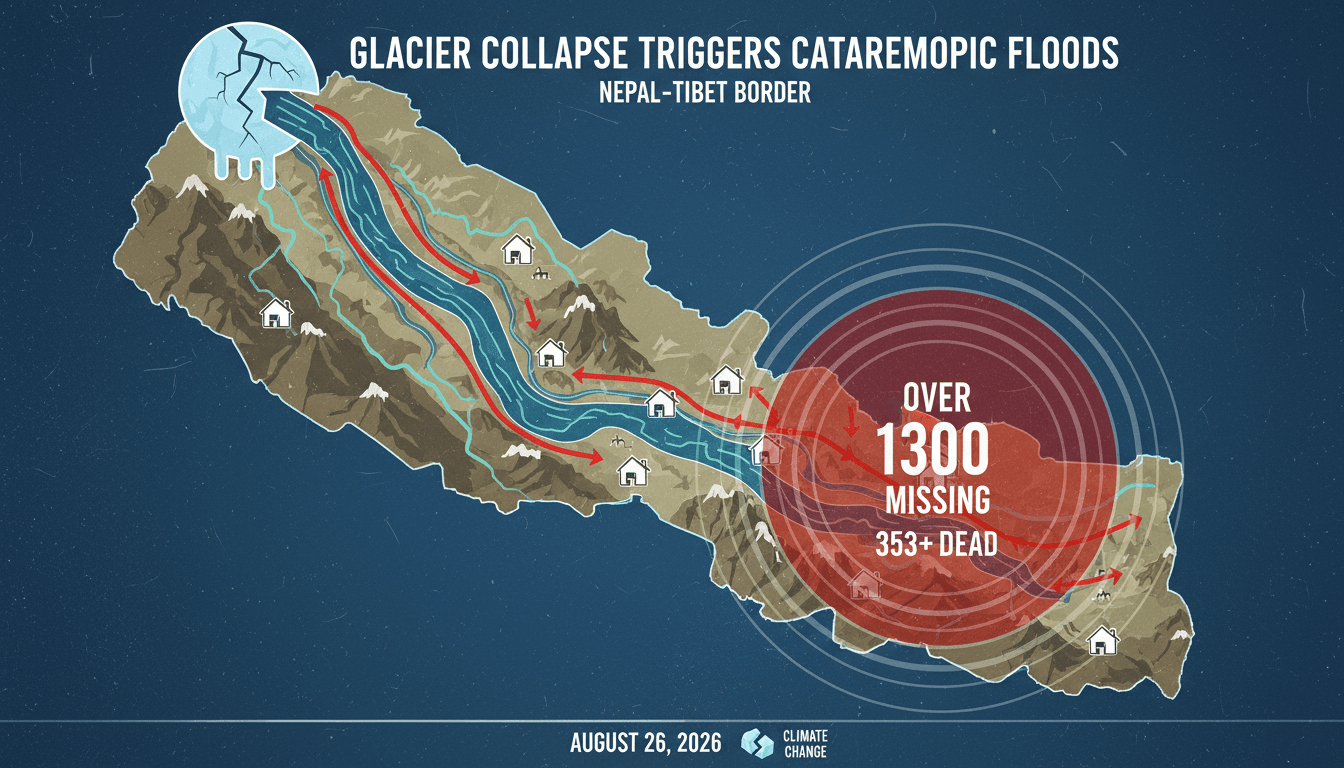
- Flash floods and mudslides struck the Nepal-Tibet border on August 26, 2026, following a glacier collapse.
- At least 353 people have died and over 1,300 are reported missing, including many foreign tourists.
- Rescue operations are ongoing, hampered by damaged infrastructure and challenging terrain.
The context you actually need
- Frequent glacial lake outburst floods are becoming more common in the Himalayan region due to climate change and glacier retreat.
- The affected area is a popular route for tourists and Hindu pilgrims, particularly those visiting sacred sites like Mount Kailash.
- International cooperation is crucial, as multiple foreign governments are involved in rescue efforts for their nationals.
What's really happening
On August 26, 2026, a glacier collapse in the Himalayas unleashed a torrent of water, ice, and debris that surged through the Bhote Koshi and Trishuli river valleys. This catastrophic event obliterated villages, bridges, and roads within minutes, leading to a swift and tragic loss of life. By the following day, the death toll had risen to at least 353, with more than 1,300 individuals reported missing across both Nepal and Tibet. The majority of the missing are foreign nationals, including tourists and pilgrims from over 30 countries, with India having the highest number of affected individuals.
The immediate aftermath saw Nepalese authorities reporting 270 deaths and 826 missing, while Chinese officials confirmed three deaths and 558 missing in Tibet. The scale of the disaster has prompted a coordinated international response, with rescue teams deploying helicopters to extract survivors and deliver aid, as ground access remains severely limited due to the destruction of infrastructure.
The Himalayan region is particularly susceptible to such disasters, with climate change exacerbating the frequency and intensity of glacial lake outburst floods and landslides. The affected area is not only a vital route for local communities but also a significant destination for international tourists and pilgrims, making the implications of this disaster far-reaching. The destruction of infrastructure, including dozens of bridges and approximately 40 kilometers of roads, poses a long-term challenge for recovery efforts and could deter future tourism.
As rescue operations continue, the focus is on locating the missing and providing aid to survivors. However, the broader implications of this disaster extend beyond immediate humanitarian concerns. The event serves as a stark reminder of the vulnerabilities faced by communities in high-risk areas and the urgent need for climate adaptation strategies.
Who feels it first (and how)
- Tourists and pilgrims: Many foreign nationals are among the missing, impacting their families and home countries.
- Local communities: Residents in the affected areas face loss of life, homes, and livelihoods.
- Tourism sector: The disaster could lead to a decline in tourism, affecting local economies reliant on visitors.
What to watch next
- Rescue operation updates: Continued reports on the status of missing persons and the effectiveness of rescue efforts will be crucial.
- Infrastructure recovery plans: Monitoring how local and international authorities plan to rebuild and restore access to the region will indicate future tourism viability.
- Climate change discussions: Increased dialogue around climate adaptation strategies in vulnerable regions may emerge as a response to this disaster.
The death toll and number of missing persons are expected to rise as rescue operations continue.
There will be increased scrutiny on climate change impacts in the Himalayan region and calls for better disaster preparedness.
The long-term economic effects on tourism and local communities remain uncertain.
Frequently Asked Questions
- Why it matters?
- This event highlights the increasing risks posed by climate change, particularly in vulnerable mountainous regions.
- What happened (in 30 seconds)?
- Flash floods and mudslides struck the Nepal-Tibet border on August 26, 2026, following a glacier collapse. At least 353 people have died and over 1,300 are reported missing, including many foreign tourists. Rescue operations are ongoing, hampered by damaged infrastructure and challenging terrain.
- What's really happening?
- On August 26, 2026, a glacier collapse in the Himalayas unleashed a torrent of water, ice, and debris that surged through the Bhote Koshi and Trishuli river valleys. This catastrophic event obliterated villages, bridges, and roads within minutes, leading to a swift and tragic loss of life. By the following day, the death toll had risen to at least 353, with more than 1,300 individuals reported missing across both Nepal and Tibet. The majority of the missing are foreign nationals, including touri
- Who feels it first (and how)?
- Tourists and pilgrims: Many foreign nationals are among the missing, impacting their families and home countries. Local communities: Residents in the affected areas face loss of life, homes, and livelihoods. Tourism sector: The disaster could lead to a decline in tourism, affecting local economies reliant on visitors.
- What to watch next?
- Rescue operation updates: Continued reports on the status of missing persons and the effectiveness of rescue efforts will be crucial. Infrastructure recovery plans: Monitoring how local and international authorities plan to rebuild and restore access to the region will indicate future tourism viability. Climate change discussions: Increased dialogue around climate adaptation strategies in vulnerable regions may emerge as a response to this disaster.
Pan-Arab news coverage spanning politics, business, sports, and regional affairs.
"Asharq Al-Awsat reflects a broad Arab editorial perspective with strong attention to regional geopolitics."
— A47 Editor
فقدان أكثر من 1300 شخص من جنسيات مختلفة في نيبال والتبت إثر الفيضانات
More than 1,300 individuals of various nationalities have been reported missing in Nepal and Tibet due to severe flooding. This natural disaster has raised significant concerns regarding the safety and well-being of those affected in the region.
Oil, metals, and agriculture: supply/demand headlines, OPEC chatter, inventories, and price action.
"Solid tape for energy and metals traders tracking macro and micro catalysts."
— A47 Editor
Hundreds killed, more than 1,000 missing in Nepal and China after Himalayan flood
A catastrophic flood in the Himalayan region has resulted in hundreds of fatalities and left over 1,000 individuals missing across Nepal and China. The disaster has raised significant concerns regarding the safety and preparedness of the affected are...
International coverage of politics, security, and social issues.
"Global News is a mainstream Canadian outlet with a centrist editorial stance, focusing on factual reporting."
— A47 Editor
Catastrophic Nepal, Tibet flood death toll soars as 25 Canadians still missing
Catastrophic flash floods have struck the Nepal-Tibet border, resulting in at least 353 confirmed deaths and over 1,300 individuals reported missing, including 25 Canadians. The floods were triggered by a glacier collapse, leading to widespread destr...
RT is a Russian state-funded network covering global events from a Russian perspective.
"RT is widely criticized for promoting pro-Kremlin narratives and is considered by many to be a state propaganda outlet."
— A47 Editor
Nepal floods leave hundreds dead, thousands missing
A catastrophic flood has struck the Nepal-Tibet border, resulting in a rising death toll of at least 359 confirmed fatalities and thousands reported missing, including many foreign tourists. Rescue operations are ongoing as search teams work to locat...
Global news coverage with extensive reporting on Middle Eastern conflicts and geopolitics.
"Al Jazeera is a Qatar-based broadcaster known for wide regional coverage and alternative perspectives."
— A47 Editor
Satellite images show destruction from Nepal-Tibet floods
A catastrophic flood struck the Nepal-Tibet border following a glacier collapse in the Himalayas, resulting in at least 165 confirmed deaths and over 1,300 individuals reported missing. The disaster has caused widespread destruction, with rescue oper...
Comprehensive coverage of Middle Eastern and global issues.
"Al Jazeera is a prominent voice from the Global South, especially the Middle East, with an emphasis on underreported stories."
— A47 Editor
Satellite images show destruction from Nepal-Tibet floods
A catastrophic flood triggered by a glacier collapse in the Himalayas has devastated the Nepal-Tibet border, resulting in at least 270 confirmed deaths and over 1,300 individuals reported missing. Satellite images reveal extensive destruction across ...