
US Declares Strait of Hormuz Shipping Lanes Mine-Free Amid Ongoing Commercial Navigation Challenges
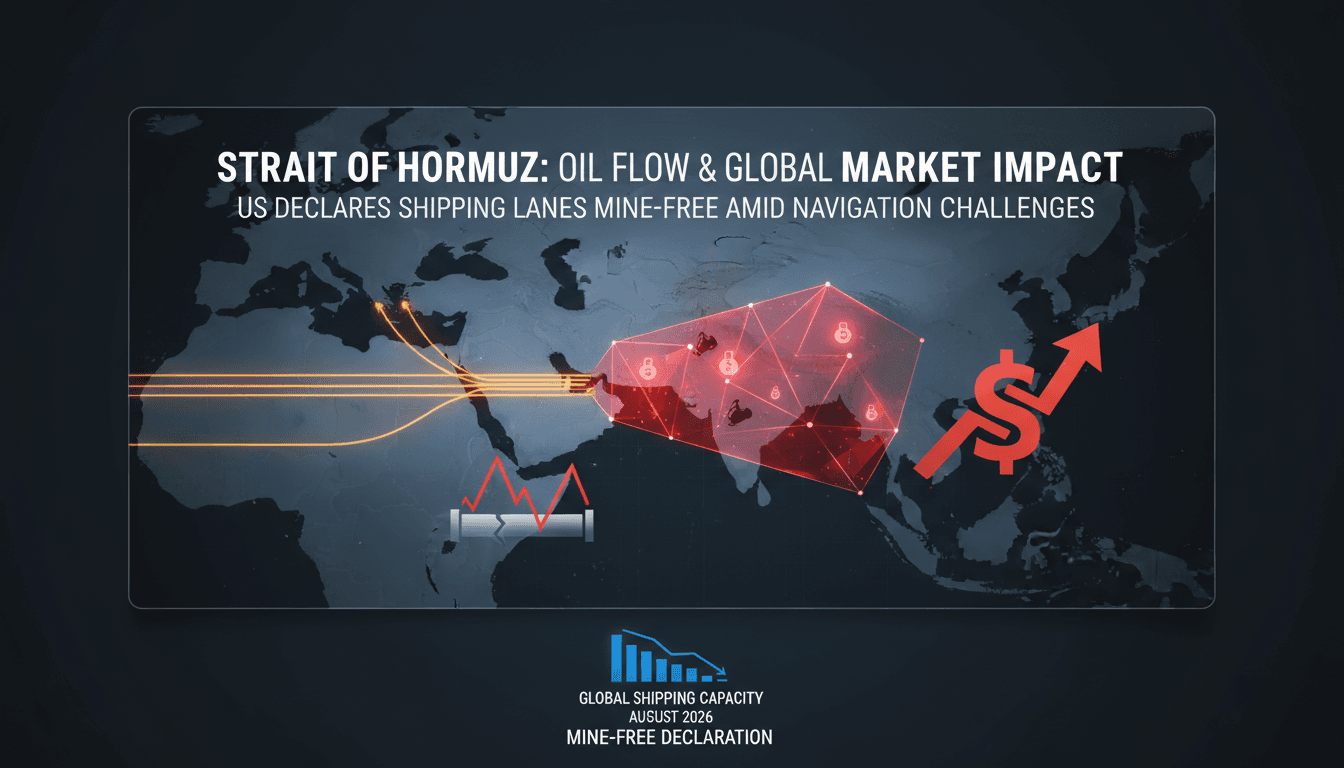
Here's what it means for you.
If you rely on global energy markets, the ongoing instability in the Strait of Hormuz could impact your costs and supply chains.
Why it matters
The Strait of Hormuz is a critical chokepoint for global oil and LNG shipments, affecting energy prices and supply chains worldwide.
What happened (in 30 seconds)
- On August 28, 2026, US Central Command declared the shipping lanes in the Strait of Hormuz mine-free after extensive clearance operations.
- Despite this announcement, commercial traffic remains severely constrained at only 5-15% of pre-war levels due to ongoing security concerns.
- The US-Iran conflict, which escalated in February 2026, continues to influence shipping routes and insurance costs.
The context you actually need
- The Strait of Hormuz is vital for global energy, with about one-fifth of seaborne oil and LNG passing through it.
- Iran's military actions, including mining and threats to shipping, have created a volatile environment, prompting a US naval counter-blockade.
- Shipping companies are rerouting to avoid risks, leading to increased energy costs and supply chain delays, particularly affecting regions like Dubai.
What's really happening
The recent declaration by US Central Command (CENTCOM) that the Strait of Hormuz is now mine-free follows a series of military operations aimed at restoring safe passage for commercial vessels. This announcement, made by Admiral Brad Cooper, was intended to reassure global shipping operators and facilitate negotiations with Iran. However, the reality on the ground tells a different story.
Despite CENTCOM's claims, commercial traffic through the strait remains alarmingly low, with only 5-15% of normal volumes reported. This is largely due to persistent security concerns and the high cost of insurance for vessels navigating these waters. Shipping data from Kpler indicates that on a recent Thursday, only seven vessels transited the strait, far below the 10-day average of 15. This stark contrast highlights the gap between official statements and operational realities.
The backdrop to this situation is a protracted conflict between the US and Iran that began in late February 2026. Following Iran's aggressive actions, including mining the Traffic Separation Scheme (TSS) and deploying drones and missiles, the US initiated a naval counter-blockade. A June 2026 Memorandum of Understanding (MOU) aimed to facilitate demining and limited transit, but the ongoing risks have led shipping companies to seek alternative routes, particularly near Oman.
The economic implications are significant. Oil prices surged from around $72 to $126 per barrel during peak disruptions, reflecting market sensitivity to any renewed threats in the region. The US administration views the current situation as leverage for potential negotiations with Iran, but skepticism remains among allies regarding the completeness of mine clearance. Estimates suggest that 80-150 mines may still be present, further complicating the situation.
In summary, while the US has declared the strait open, the reality is that commercial navigation remains severely constrained. The interplay of military actions, insurance costs, and geopolitical tensions continues to shape the operational landscape for shipping companies, with far-reaching implications for global energy markets.
Who feels it first (and how)
- Shipping companies: Facing increased costs and rerouting pressures due to security concerns.
- Energy consumers: Experiencing elevated prices as oil supply remains constrained.
- Dubai businesses: Encountering supply chain delays and higher energy costs due to reduced throughput in the Strait of Hormuz.
What to watch next
- Insurance rates: Monitor changes in insurance premiums for vessels operating in the region, as they reflect perceived risks.
- Oil prices: Keep an eye on Brent crude fluctuations, which are sensitive to any renewed threats or disruptions in the Strait.
- US-Iran negotiations: Watch for developments in diplomatic talks, as any agreements could influence shipping routes and market stability.
The Strait of Hormuz is critical for global oil and LNG transit.
Shipping companies will continue to favor alternative routes due to security concerns.
The timeline for full reopening of the strait and the potential for renewed conflict.
Frequently Asked Questions
- Why it matters?
- The Strait of Hormuz is a critical chokepoint for global oil and LNG shipments, affecting energy prices and supply chains worldwide.
- What happened (in 30 seconds)?
- On August 28, 2026, US Central Command declared the shipping lanes in the Strait of Hormuz mine-free after extensive clearance operations. Despite this announcement, commercial traffic remains severely constrained at only 5-15% of pre-war levels due to ongoing security concerns. The US-Iran conflict, which escalated in February 2026, continues to influence shipping routes and insurance costs.
- What's really happening?
- The recent declaration by US Central Command (CENTCOM) that the Strait of Hormuz is now mine-free follows a series of military operations aimed at restoring safe passage for commercial vessels. This announcement, made by Admiral Brad Cooper, was intended to reassure global shipping operators and facilitate negotiations with Iran. However, the reality on the ground tells a different story. Despite CENTCOM's claims, commercial traffic through the strait remains alarmingly low, with only 5-15% of
- Who feels it first (and how)?
- Shipping companies: Facing increased costs and rerouting pressures due to security concerns. Energy consumers: Experiencing elevated prices as oil supply remains constrained. Dubai businesses: Encountering supply chain delays and higher energy costs due to reduced throughput in the Strait of Hormuz.
- What to watch next?
- Insurance rates: Monitor changes in insurance premiums for vessels operating in the region, as they reflect perceived risks. Oil prices: Keep an eye on Brent crude fluctuations, which are sensitive to any renewed threats or disruptions in the Strait. US-Iran negotiations: Watch for developments in diplomatic talks, as any agreements could influence shipping routes and market stability.
Pan-Arab news coverage spanning politics, business, sports, and regional affairs.
"Asharq Al-Awsat reflects a broad Arab editorial perspective with strong attention to regional geopolitics."
— A47 Editor
«هرمز»... بين إعلان واشنطن «فتح الممرات» وواقع الملاحة المتعثرة
Despite the United States announcing that international shipping lanes in the Strait of Hormuz are now open, maritime traffic remains significantly below normal levels. This situation highlights ongoing challenges in the region that affect global shi...
Jordanian news and regional updates.
"Roya News is a Jordanian outlet focused on breaking news and local affairs."
— A47 Editor
مباحثات أمريكية يابانية لتأمين الملاحة في هرمز وتعزيز الردع بالهندي والهادئ
Recent discussions between the United States and Japan have focused on securing navigation in the Strait of Hormuz and enhancing deterrence in the Indian and Pacific Oceans. These talks highlight the strategic importance of maritime security in these...
Pan-Arab political news and analysis.
"Al-Quds Al-Arabi is a London-based Arabic newspaper known for political coverage."
— A47 Editor
إيران تعلن إبقاء هرمز مغلقا رغم محادثاتها مع عُمان لإنشاء ممر ملاحي مؤقت
Iran and Oman are discussing a framework agreement to establish a temporary maritime corridor in the Strait of Hormuz and to remove mines; however, Tehran has warned that this vital waterway will remain closed unless the United States ends its war. W...