
Venezuela Considers Leaving OPEC Amid Strengthening US Oil Relations
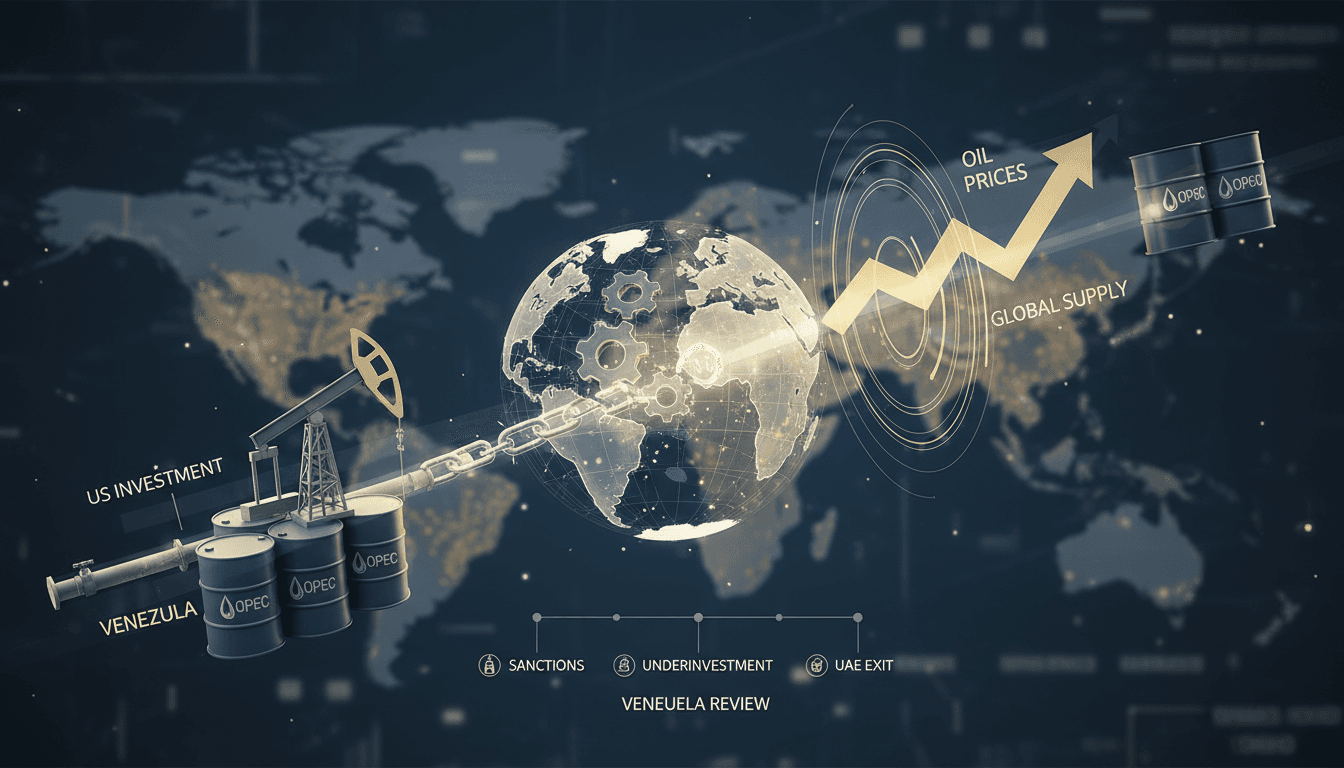
Here's what it means for you.
The potential exit of Venezuela from OPEC could reshape global oil dynamics, impacting prices and investment strategies.
Why it matters
Venezuela's deliberation to exit OPEC highlights growing fragmentation within the cartel, which could lead to increased volatility in global oil markets.
What happened (in 30 seconds)
- Venezuela is considering leaving OPEC, the organization it co-founded in 1960, amid discussions with US officials about oilfield access.
- Current production levels are low, with Venezuela producing approximately 1.2 million barrels per day, down from over 3 million a decade ago.
- The UAE's recent exit from OPEC has intensified concerns about the cartel's cohesion and its ability to manage global oil supply.
The context you actually need
- Venezuela's oil production has plummeted due to years of sanctions, underinvestment, and political instability, making foreign investment crucial for recovery.
- OPEC has seen multiple exits in recent years, including Qatar, Ecuador, and Angola, indicating a trend of fragmentation that could weaken the cartel's influence.
- The US is actively engaging with Venezuela to facilitate oilfield investments, signaling a shift in alliances that could prioritize US-Venezuelan relations over OPEC solidarity.
What's really happening
Venezuela's consideration of an OPEC exit is rooted in its urgent need to revitalize its oil sector, which has suffered from years of sanctions and mismanagement. The country, which holds the world's largest proven oil reserves at approximately 303 billion barrels, is exploring partnerships with US energy companies, particularly in the Orinoco Belt and Lake Maracaibo. These discussions began in mid-2026 as the Venezuelan government seeks to attract foreign capital to rebuild its oil infrastructure.
The backdrop of this potential exit is the recent departure of the UAE from OPEC in May 2026, which was driven by disputes over production quotas. This exit has raised alarms about the cartel's ability to maintain cohesive supply management, especially as other member states like Qatar, Ecuador, and Angola have also left in recent years. The fragmentation of OPEC could lead to increased competition among oil producers, diminishing the cartel's influence over global oil prices.
If Venezuela were to withdraw from OPEC, it would remove a founding member from the organization, further complicating the cartel's efforts to manage production levels. However, the immediate impact on global supply may be limited, given Venezuela's current production levels. Analysts suggest that while the exit could symbolize a shift towards US partnerships, it may not drastically alter the global oil supply landscape in the short term.
The negotiations with US officials are crucial for Venezuela, as they represent a potential lifeline for the country's beleaguered oil industry. The prospect of increased US investment could accelerate Venezuela's output recovery, but it also raises questions about the future of OPEC and its ability to exert control over oil markets. As the dynamics shift, the implications for global oil prices and investment flows will be significant, particularly for regions like Dubai, which may experience indirect effects from these developments.
Who feels it first (and how)
- Oil producers: Increased competition could lead to price volatility.
- Investors in energy sectors: Shifts in investment strategies may be necessary as OPEC's influence wanes.
- Consumers globally: Changes in oil prices could affect fuel costs and economic stability.
- Regional economies: Countries reliant on oil exports may face challenges as market dynamics shift.
What to watch next
- US-Venezuela negotiations: The outcome of talks regarding oilfield access will be pivotal for Venezuela's production recovery.
- OPEC's response: How remaining OPEC members react to Venezuela's potential exit could signal the cartel's future stability.
- Global oil prices: Monitor fluctuations in Brent and WTI prices as market reactions unfold in response to these developments.
Venezuela's oil production is currently low at 1.2 million barrels per day.
Increased competition among oil producers as OPEC's cohesion weakens.
The long-term impact of Venezuela's potential exit on global oil supply and prices.
Frequently Asked Questions
- Why it matters?
- Venezuela's deliberation to exit OPEC highlights growing fragmentation within the cartel, which could lead to increased volatility in global oil markets.
- What happened (in 30 seconds)?
- Venezuela is considering leaving OPEC, the organization it co-founded in 1960, amid discussions with US officials about oilfield access. Current production levels are low, with Venezuela producing approximately 1.2 million barrels per day, down from over 3 million a decade ago. The UAE's recent exit from OPEC has intensified concerns about the cartel's cohesion and its ability to manage global oil supply.
- What's really happening?
- Venezuela's consideration of an OPEC exit is rooted in its urgent need to revitalize its oil sector, which has suffered from years of sanctions and mismanagement. The country, which holds the world's largest proven oil reserves at approximately 303 billion barrels, is exploring partnerships with US energy companies, particularly in the Orinoco Belt and Lake Maracaibo. These discussions began in mid-2026 as the Venezuelan government seeks to attract foreign capital to rebuild its oil infrastructu
- Who feels it first (and how)?
- Oil producers: Increased competition could lead to price volatility. Investors in energy sectors: Shifts in investment strategies may be necessary as OPEC's influence wanes. Consumers globally: Changes in oil prices could affect fuel costs and economic stability. Regional economies: Countries reliant on oil exports may face challenges as market dynamics shift.
- What to watch next?
- US-Venezuela negotiations: The outcome of talks regarding oilfield access will be pivotal for Venezuela's production recovery. OPEC's response: How remaining OPEC members react to Venezuela's potential exit could signal the cartel's future stability. Global oil prices: Monitor fluctuations in Brent and WTI prices as market reactions unfold in response to these developments.
English-language digital publication covering business, politics, technology, and current affairs.
"The Arabian Post mixes original and syndicated-style coverage with a broad regional and global business-news orientation."
— A47 Editor
Venezuela exit threat deepens OPEC strains
Venezuela is contemplating a potential exit from OPEC, raising concerns about the organization's stability following the recent departure of the United Arab Emirates. This consideration comes as Venezuela engages in discussions with U.S. officials to...
Macro commentary, policy analysis, growth/inflation themes, and global outlooks.
"Contextual macro coverage that complements day-to-day market headlines."
— A47 Editor
Venezuela weighs OPEC exit as U.S. ties deepen, Bloomberg reports
Venezuela is contemplating its exit from OPEC as its ties with the United States strengthen, according to a report by Bloomberg. This potential departure from the oil cartel comes amidst significant shifts in Venezuela's economic strategies, includin...
Pan-Arab political news and analysis.
"Al-Quds Al-Arabi is a London-based Arabic newspaper known for political coverage."
— A47 Editor
بلومبرغ نيوز: فنزويلا تدرس الانسحاب من أوبك
Bloomberg News reported that Venezuela is seriously considering withdrawing from the Organization of the Petroleum Exporting Countries (OPEC). The discussion about this potential exit is taking place with U.S. officials, although no final decision ha...