
Nepal-Tibet Flash Floods Result in Over 1,200 Deaths and Ongoing Rescue Operations
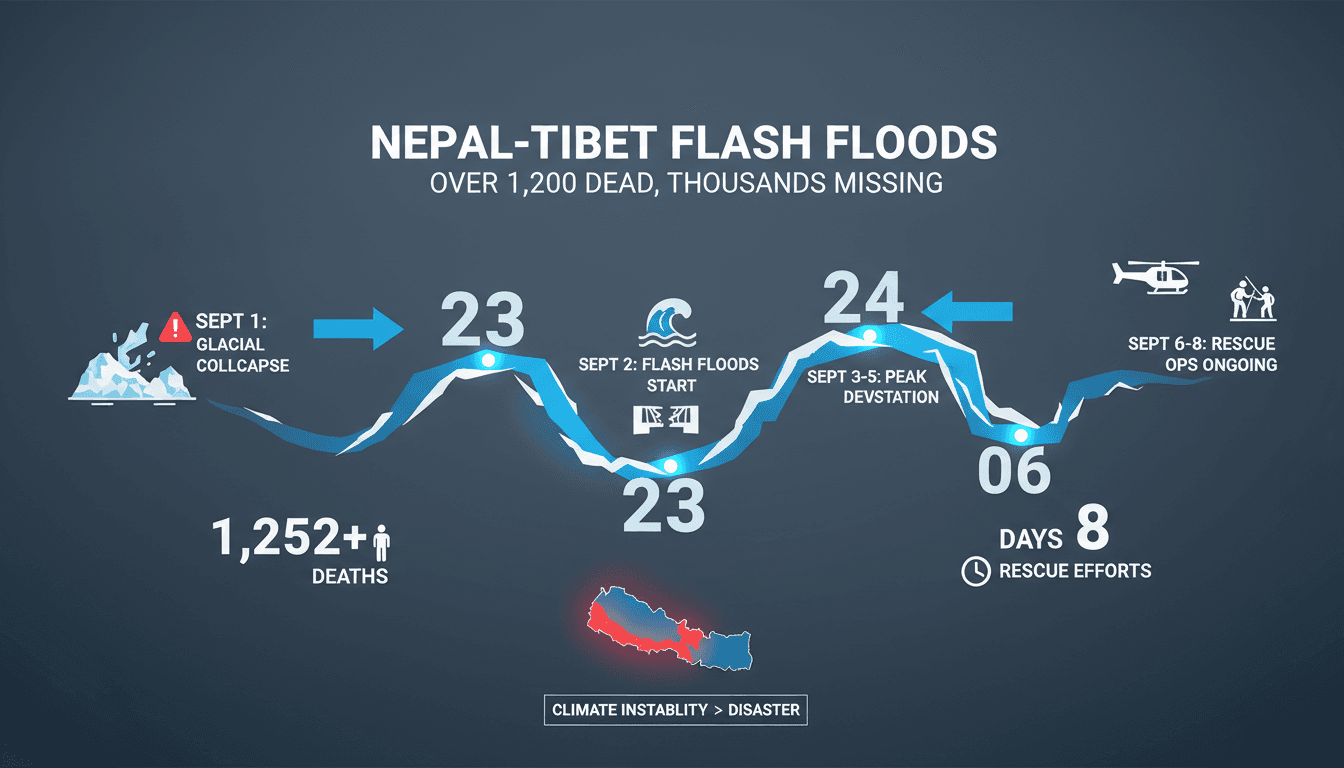
Here's what it means for you.
The devastating flash floods in Nepal and Tibet could influence global humanitarian aid dynamics and climate policy discussions.
Why it matters
The floods highlight the increasing vulnerability of communities to climate-related disasters, affecting international aid and disaster preparedness strategies.
What happened (in 30 seconds)
- On August 26, 2026, an ice-rock avalanche triggered flash floods along the Nepal-Tibet border, resulting in over 1,200 confirmed deaths and thousands missing.
- Rescue operations have entered their eighth day, with over 21,000 personnel deployed to search for survivors amid challenging conditions.
- Authorities are managing overwhelmed morgues and initiating DNA identification for victims, while warnings of secondary flood risks persist.
The context you actually need
- Climate change is contributing to glacier instability, increasing the frequency of such disasters in the Himalayas.
- Infrastructure damage includes significant impacts on hydropower projects and local villages, disrupting livelihoods and energy supplies.
- International response is critical, as Nepal's government has requested no immediate foreign aid but has accepted over $42 million in contributions.
What's really happening
The flash floods that struck Nepal and Tibet on August 26, 2026, were triggered by a catastrophic ice-rock avalanche, a phenomenon increasingly linked to climate change. As glaciers in the Himalayas destabilize, the risk of such avalanches rises, leading to sudden and severe flooding. This particular event has devastated communities along the Bhotekoshi and Trishuli river systems, with the immediate aftermath revealing a grim reality: over 1,200 confirmed deaths and more than 4,000 individuals still unaccounted for.
Rescue operations have been hampered by challenging terrain and adverse weather conditions, complicating efforts to locate survivors trapped in hydropower tunnels and remote debris fields. The Nepal Army, alongside local police and disaster management authorities, has mobilized over 21,000 personnel to conduct search and rescue missions. Helicopter operations have been crucial in extracting individuals from isolated areas, but the scale of the disaster has overwhelmed local resources, leading to a dire need for international support.
As the death toll continues to rise, the government has initiated symbolic funerals for unidentified victims, while morgues struggle to accommodate the influx of bodies. The Prime Minister, Balendra Shah, has emphasized the need for global awareness regarding climate change, linking the floods to broader environmental issues. This disaster not only highlights the immediate humanitarian crisis but also raises questions about long-term disaster preparedness and climate resilience in the region.
The economic implications are still unfolding, but the destruction of infrastructure, including hydropower projects, could have lasting effects on local economies and energy supplies. As Nepal navigates this crisis, the focus will shift towards recovery and reconstruction, with an emphasis on improving resilience against future climate-related disasters.
Who feels it first (and how)
- Local communities: Families affected by the loss of loved ones and homes, facing immediate humanitarian needs.
- Rescue and emergency services: Overwhelmed by the scale of the disaster, requiring additional resources and support.
- Hydropower sector: Significant disruptions to energy production and infrastructure, impacting local and regional energy supplies.
What to watch next
- International aid response: Monitor how global organizations and countries respond to Nepal's request for assistance and the implications for future disaster relief efforts.
- Climate policy discussions: Watch for increased dialogue on climate change and disaster preparedness in international forums, potentially influencing future funding and policy decisions.
- Secondary flood risks: Keep an eye on warnings regarding debris-blocked lakes and the potential for further flooding, which could complicate recovery efforts.
Over 1,200 confirmed deaths and more than 4,000 missing individuals as of September 3, 2026.
Increased international focus on climate change and disaster preparedness in response to the floods.
The long-term economic impacts on Nepal's infrastructure and energy sectors.
Frequently Asked Questions
- Why it matters?
- The floods highlight the increasing vulnerability of communities to climate-related disasters, affecting international aid and disaster preparedness strategies.
- What happened (in 30 seconds)?
- On August 26, 2026, an ice-rock avalanche triggered flash floods along the Nepal-Tibet border, resulting in over 1,200 confirmed deaths and thousands missing. Rescue operations have entered their eighth day, with over 21,000 personnel deployed to search for survivors amid challenging conditions. Authorities are managing overwhelmed morgues and initiating DNA identification for victims, while warnings of secondary flood risks persist.
- What's really happening?
- The flash floods that struck Nepal and Tibet on August 26, 2026, were triggered by a catastrophic ice-rock avalanche, a phenomenon increasingly linked to climate change. As glaciers in the Himalayas destabilize, the risk of such avalanches rises, leading to sudden and severe flooding. This particular event has devastated communities along the Bhotekoshi and Trishuli river systems, with the immediate aftermath revealing a grim reality: over 1,200 confirmed deaths and more than 4,000 individuals s
- Who feels it first (and how)?
- Local communities: Families affected by the loss of loved ones and homes, facing immediate humanitarian needs. Rescue and emergency services: Overwhelmed by the scale of the disaster, requiring additional resources and support. Hydropower sector: Significant disruptions to energy production and infrastructure, impacting local and regional energy supplies.
- What to watch next?
- International aid response: Monitor how global organizations and countries respond to Nepal's request for assistance and the implications for future disaster relief efforts. Climate policy discussions: Watch for increased dialogue on climate change and disaster preparedness in international forums, potentially influencing future funding and policy decisions. Secondary flood risks: Keep an eye on warnings regarding debris-blocked lakes and the potential for further flooding, which could complicat
Comprehensive coverage of global events, politics, and international issues.
"NBC News is a mainstream outlet known for comprehensive national and international coverage with a centrist to slightly left-leaning editorial tone."
— A47 Editor
Search for survivors from deadly Nepal floods enters eighth day
The search for survivors from the catastrophic floods in Nepal has entered its eighth day, with over 1,200 confirmed dead and more than 4,000 individuals reported missing. The floods, triggered by a glacier collapse, have overwhelmed morgues, leading...
International stories from NPR’s global desk.
"NPR is an American public media organization known for thoughtful reporting and a slightly left-leaning editorial tone."
— A47 Editor
Families of the missing in Nepal's flash floods perform symbolic cremations
Eight days after devastating flash floods in Nepal, families of the missing are conducting symbolic cremations for their loved ones, unable to locate them amidst the chaos. The floods, triggered by a glacier collapse, have left nearly 3,000 individua...
Global coverage of politics, crises, and international affairs.
"HuffPost provides progressive-oriented reporting on international developments, often focusing on humanitarian and social justice issues."
— A47 Editor
Rescuers Comb Through Mud And Debris As Nepal-China Floods Leave Over 1,000 Dead
A catastrophic flood has devastated the Nepal-Tibet border, resulting in over 1,000 confirmed deaths and more than 1,500 individuals reported missing. The disaster, triggered by a glacier collapse, has led to significant destruction, prompting extens...