
Ukraine Intensifies Drone Operations to Disrupt Russian Civilian Airspace
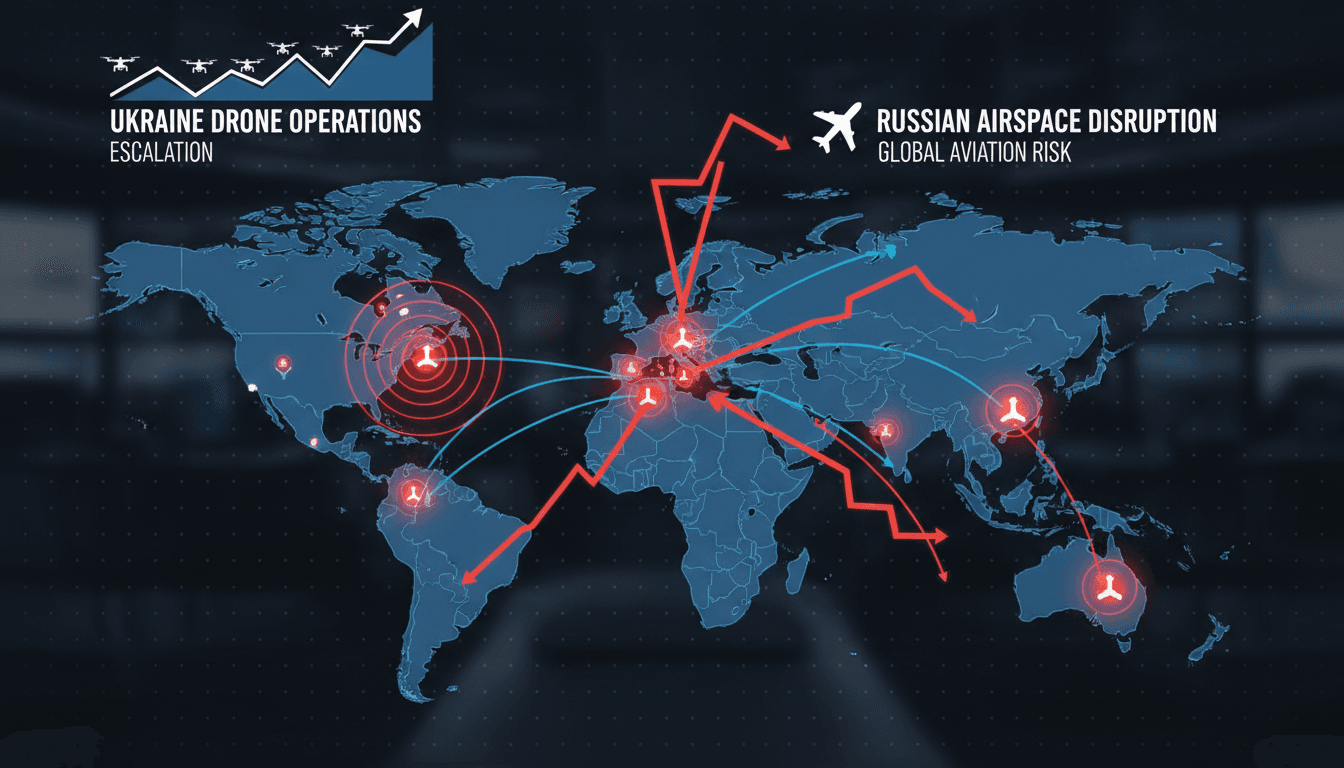
Here's what it means for you.
If you travel to or through Russia, expect potential delays, increased costs, and route changes.
Why it matters
This escalation could significantly impact global aviation routes and insurance costs, affecting travelers and airlines alike.
What happened (in 30 seconds)
- Ukraine announced plans to intensify drone operations near Russian airports, aiming to disrupt commercial air traffic.
- President Zelensky warned that Russian airspace is becoming unsafe, urging airlines to reconsider operations.
- Temporary airport closures have surged, with some airlines already canceling flights due to heightened risks.
The context you actually need
- Since February 2022, Ukraine's airspace has been closed to civilian flights, leading to increased drone strikes on Russian targets.
- Temporary closures of Russian airports began in summer 2023, escalating in 2026 amid intensified military activity.
- Middle Eastern and Asian carriers continue to operate in Russian airspace, despite warnings, which could lead to increased operational risks.
What's really happening
Ukraine's recent announcement to escalate drone operations is a strategic move aimed at crippling Russia's civilian air traffic and, by extension, its economy. This tactic, part of a broader military strategy dubbed "Operation Carpet," seeks to exert constant pressure on Russian infrastructure. President Zelensky's declaration that "the safe days in Russia’s skies are over" signals a shift in the conflict's dynamics, where Ukraine is leveraging drone technology to create a new front in the war.
The operational scale of these drone activities is significant. Reports indicate that in a single night, Russian authorities claimed to have shot down 791 Ukrainian drones, with over 600 aimed at the Moscow region. This level of drone activity not only disrupts air traffic but also instills fear and uncertainty among airlines and passengers. The International Civil Aviation Organization (ICAO) has been notified of the heightened risks, which could lead to broader implications for international aviation safety standards.
As Ukraine intensifies its drone operations, the economic ramifications for Russia could be severe. Disruptions in air traffic can lead to increased operational costs for airlines, particularly those still using Russian airspace. The potential for rising aviation insurance premiums and fuel surcharges is a real concern for carriers, especially those based in the Middle East, such as Emirates and Qatar Airways, which have continued to operate in this risky environment.
Moreover, the geopolitical implications are profound. Russia's response to these escalations, including labeling Ukrainian actions as "state terrorism," could lead to further military retaliation or a tightening of airspace restrictions. This creates a feedback loop where increased military activity leads to more drone operations, further destabilizing the region and impacting global air travel.
In summary, Ukraine's drone strategy is not just a military tactic; it is a calculated move to disrupt Russia's economic stability and challenge the status quo of air travel in the region. As this situation evolves, the implications for airlines, travelers, and international relations will be significant.
Who feels it first (and how)
- Airlines operating in Russian airspace: Increased operational risks and potential cancellations.
- Travelers to and from Russia: Likely delays, increased costs, and rerouted flights.
- Insurance companies: Potential rise in aviation insurance premiums due to heightened risks.
- Middle Eastern carriers: Facing operational challenges and increased scrutiny over safety.
What to watch next
- Airline responses: Monitor how airlines adjust their routes and operations in response to the escalating risks.
- ICAO regulations: Watch for any new safety advisories or regulations from the ICAO regarding air travel in Russian airspace.
- Military developments: Keep an eye on the evolving military situation in Ukraine and Russia, as it will directly impact air traffic safety.
Ukraine is intensifying drone operations near Russian airports.
Increased cancellations and delays for airlines operating in Russian airspace.
The long-term impact on global aviation routes and insurance costs.
Frequently Asked Questions
- Why it matters?
- This escalation could significantly impact global aviation routes and insurance costs, affecting travelers and airlines alike.
- What happened (in 30 seconds)?
- Ukraine announced plans to intensify drone operations near Russian airports, aiming to disrupt commercial air traffic. President Zelensky warned that Russian airspace is becoming unsafe, urging airlines to reconsider operations. Temporary airport closures have surged, with some airlines already canceling flights due to heightened risks.
- What's really happening?
- Ukraine's recent announcement to escalate drone operations is a strategic move aimed at crippling Russia's civilian air traffic and, by extension, its economy. This tactic, part of a broader military strategy dubbed "Operation Carpet," seeks to exert constant pressure on Russian infrastructure. President Zelensky's declaration that "the safe days in Russia’s skies are over" signals a shift in the conflict's dynamics, where Ukraine is leveraging drone technology to create a new front in the war.
- Who feels it first (and how)?
- Airlines operating in Russian airspace: Increased operational risks and potential cancellations. Travelers to and from Russia: Likely delays, increased costs, and rerouted flights. Insurance companies: Potential rise in aviation insurance premiums due to heightened risks. Middle Eastern carriers: Facing operational challenges and increased scrutiny over safety.
- What to watch next?
- Airline responses: Monitor how airlines adjust their routes and operations in response to the escalating risks. ICAO regulations: Watch for any new safety advisories or regulations from the ICAO regarding air travel in Russian airspace. Military developments: Keep an eye on the evolving military situation in Ukraine and Russia, as it will directly impact air traffic safety.
Global political, business, and cultural coverage from WSJ international desks.
"The Wall Street Journal offers extensive international reporting with a reputation for financial insight and a center-right editorial stance."
— A47 Editor
Ukraine’s Next Goal Is to Shut Down Russia’s Commercial Airspace
Ukraine is intensifying its efforts to shut down Russian commercial airspace, as pressure mounts on airlines to reconsider the safety of flying to Russian airports amid escalating drone warfare. This follows a series of significant drone attacks on R...
European current affairs, EU politics, and regional developments.
"France 24 is viewed as a globally focused outlet with balanced coverage and a European perspective."
— A47 Editor
Ukraine warns Russian airspace ‘not safe’ in message to UN aviation watchdog
Ukraine has issued a warning to the UN aviation agency, asserting that Russian airspace is increasingly unsafe due to heightened drone activity, particularly following President Volodymyr Zelensky's announcement of plans for intensified drone strikes...
Global coverage of politics, crises, and international affairs.
"HuffPost provides progressive-oriented reporting on international developments, often focusing on humanitarian and social justice issues."
— A47 Editor
Zelenskyy Warns Airlines That Russia's Airspace Is Unsafe Due To Ukrainian Drones
Ukrainian President Volodymyr Zelenskyy has warned airlines that Russian airspace is unsafe due to the increasing threat posed by Ukrainian drone operations, indicating that Russian authorities are not adequately communicating this risk.