
Somali Businesses Adopt Direct Shipping Routes Amid Houthi Advances
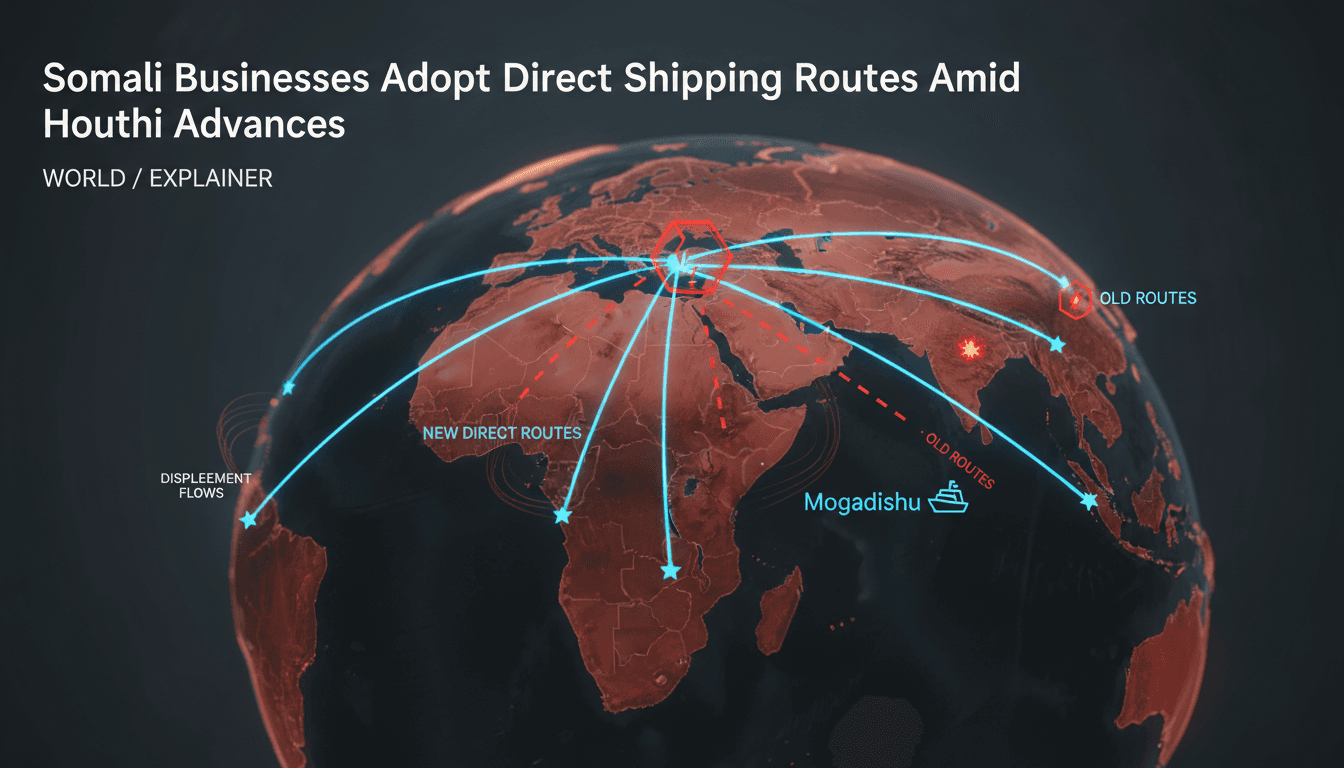
Here's what it means for you.
If you rely on imports from Somalia, expect potential delays and increased costs as businesses adapt to new shipping routes.
Why it matters
The shift in shipping routes reflects broader geopolitical tensions that could disrupt global supply chains.
What happened (in 30 seconds)
- On September 13, 2026, Somali importers began exploring direct shipping routes from Asia to Mogadishu due to Houthi disruptions.
- Houthi territorial gains in Yemen have raised security concerns around key maritime chokepoints, affecting traditional shipping routes.
- Over 85,000 Yemenis have been displaced since early September, exacerbating regional instability and impacting trade.
The context you actually need
- Yemen's conflict has persisted for 12 years, with recent Houthi advances reigniting hostilities and disrupting established trade routes.
- Somalia's reliance on Gulf states for imports has made it vulnerable to regional conflicts, prompting a reevaluation of maritime logistics.
- Direct shipping alternatives are being tested, such as the inaugural sugar shipment from Sri Lanka, indicating a shift in trade dynamics.
What's really happening
The recent advances by Iran-backed Houthis in Yemen have significantly altered the landscape of maritime trade in the region. With the capture of strategic locations like a key port city and an island at the Bab al-Mandab Strait, Somali businesses are facing heightened risks associated with traditional shipping routes that pass through the Gulf states. The Bab al-Mandab Strait and the Strait of Hormuz are critical chokepoints for global shipping, and any disruptions here can have cascading effects on supply chains.
As a response to these security concerns, Somali port officials, led by Mogadishu Seaport Director Mohamed Ali Nur, are proactively seeking alternative shipping routes directly from Asia. This shift is not merely a reaction to immediate threats but a strategic pivot to ensure the continuity of trade. The first direct shipment of sugar from Sri Lanka marks a significant milestone in this transition, showcasing the Somali business community's resilience and adaptability.
However, this shift comes with challenges. Increased transportation costs and potential delays are anticipated as new routes are established. The ongoing conflict in Yemen has already displaced over 85,000 people, creating a humanitarian crisis that further complicates the regional landscape. The International Organization for Migration (IOM) has reported significant displacement flows, with many fleeing to Djibouti, which could strain resources and impact trade dynamics.
Moreover, the heightened risks for vessels transiting through affected waters have led to increased insurance premiums and freight rates. Somali importers and exporters must now navigate a more complex logistical environment, balancing cost, security, and reliability. The implications of these changes extend beyond Somalia, affecting regional traders and consumers who rely on Gulf intermediaries for their imports.
As the situation evolves, the Somali business community's ability to adapt to these new realities will be crucial. The exploration of direct shipping routes could lead to a more resilient trade framework, but it will require careful management of costs and logistics to mitigate the impact on consumers.
Who feels it first (and how)
- Somali importers: Facing increased costs and potential delays in receiving goods.
- Exporters from Asia: Adjusting to new shipping routes and logistics challenges.
- Consumers in Somalia: Likely to experience higher prices and longer wait times for imported goods.
- Regional traders: May see shifts in logistics costs and supply chain dynamics as alternatives emerge.
What to watch next
- Shipping rates: Monitor changes in freight costs as new routes are established, which could indicate the financial impact on consumers.
- Displacement trends: Keep an eye on the flow of displaced Yemenis to Djibouti, as this could affect regional stability and trade.
- Insurance premiums: Watch for fluctuations in maritime insurance costs, which could signal increased risks in affected waters.
Somali businesses are actively seeking direct shipping routes due to security concerns.
Increased transportation costs and delays for imported goods in Somalia.
The long-term viability of new shipping routes and their impact on regional trade dynamics.
Frequently Asked Questions
- Why it matters?
- The shift in shipping routes reflects broader geopolitical tensions that could disrupt global supply chains.
- What happened (in 30 seconds)?
- On September 13, 2026, Somali importers began exploring direct shipping routes from Asia to Mogadishu due to Houthi disruptions. Houthi territorial gains in Yemen have raised security concerns around key maritime chokepoints, affecting traditional shipping routes. Over 85,000 Yemenis have been displaced since early September, exacerbating regional instability and impacting trade.
- What's really happening?
- The recent advances by Iran-backed Houthis in Yemen have significantly altered the landscape of maritime trade in the region. With the capture of strategic locations like a key port city and an island at the Bab al-Mandab Strait, Somali businesses are facing heightened risks associated with traditional shipping routes that pass through the Gulf states. The Bab al-Mandab Strait and the Strait of Hormuz are critical chokepoints for global shipping, and any disruptions here can have cascading effec
- Who feels it first (and how)?
- Somali importers: Facing increased costs and potential delays in receiving goods. Exporters from Asia: Adjusting to new shipping routes and logistics challenges. Consumers in Somalia: Likely to experience higher prices and longer wait times for imported goods. Regional traders: May see shifts in logistics costs and supply chain dynamics as alternatives emerge.
- What to watch next?
- Shipping rates: Monitor changes in freight costs as new routes are established, which could indicate the financial impact on consumers. Displacement trends: Keep an eye on the flow of displaced Yemenis to Djibouti, as this could affect regional stability and trade. Insurance premiums: Watch for fluctuations in maritime insurance costs, which could signal increased risks in affected waters.
Conservative-leaning political and national coverage.
"The Washington Times is a conservative-leaning newspaper known for its political coverage and advocacy of right-of-center viewpoints."
— A47 Editor
Somalis rethink trade routes as Houthis disrupt established shipping channels
Somalia's business community is actively seeking alternative shipping routes due to significant disruptions and security concerns in the Bab al-Mandab Strait and the Strait of Hormuz, following the capture of a key port city and an island by Iran-bac...
24/7 international news from a French perspective in multiple languages.
"France 24 is viewed as a globally focused outlet with balanced coverage and a European perspective."
— A47 Editor
Yemen: Fighting escalates around the Bab el-Mandeb Strait
Fighting has intensified in Yemen as Iran-backed Houthi forces have seized control of strategic territories around the Bab el-Mandeb Strait, including the port city of Mocha and the island of Perim. This escalation has prompted counterattacks from go...
European coverage of Middle East politics and security issues.
"France 24 offers international reporting with a European editorial perspective."
— A47 Editor
Yemen: Fighting escalates around the Bab el-Mandeb Strait
Fighting has intensified in Yemen as Iran-backed Houthi forces have seized control of strategic territories around the Bab el-Mandeb Strait, including the port city of Mocha and the island of Perim. This escalation has prompted counterattacks from go...
European coverage of Middle East politics and security issues.
"France 24 offers international reporting with a European editorial perspective."
— A47 Editor
Yemen: Houthi offensive triggers new displacement crisis
More than 70,000 people have fled their homes in Yemen following an offensive by Iran-backed Houthi rebels aimed at seizing control of the Bab el-Mandeb Strait. Many have sought refuge in Aden, while approximately 1,400 have crossed into neighboring ...
Coverage of current events and conflicts in the Middle East.
"France 24 is viewed as a globally focused outlet with balanced coverage and a European perspective."
— A47 Editor
Yemen: Houthi offensive triggers new displacement crisis
More than 70,000 people have fled their homes in Yemen following an offensive by Iran-backed Houthi rebels aimed at seizing control of the Bab el-Mandeb Strait. Many have sought refuge in Aden, while approximately 1,400 have crossed into neighboring ...
24/7 international news from a French perspective in multiple languages.
"France 24 is viewed as a globally focused outlet with balanced coverage and a European perspective."
— A47 Editor
Houthis seize key sites around Bab el-Mandeb as Saudi oil exports face disruption
Houthi forces have seized control of key sites around Bab el-Mandeb, including the strategic island of Perim and the port city of Mocha, following drone attacks that led Saudi Arabia to halt oil transfers through a major pipeline. This escalation mar...
UAE-based English-language newspaper covering regional politics, economics, and global affairs.
"The National reflects Emirati policy perspectives while maintaining international editorial standards."
— A47 Editor
Ship traffic in Bab Al Mandeb strait halves as Houthis seize control of key island
Ship traffic in the Bab Al Mandeb Strait has decreased by 50% following the Houthi rebels' seizure of a key island, exacerbating tensions in the region. This development is part of a broader escalation in military operations by the Houthis, who have ...
Business, investment, entrepreneurship, leadership, and innovation.
"Forbes is known for its coverage of business leaders, market trends, and entrepreneurial ventures with a pro-business editorial stance."
— A47 Editor
The Houthis Do Not Need To Close Bab El-Mandeb
The Houthis have escalated tensions in the Bab el-Mandeb Strait, a crucial maritime route, by claiming responsibility for an attack on a Saudi vessel. This incident highlights the increasing risks associated with shipping in the region, as companies ...
International coverage of politics, culture, and current affairs.
"BBC News is widely regarded as a reputable international news organization, known for its impartial tone and public service mandate."
— A47 Editor
How global trade and oil prices could be hit by Houthi advance
Yemen's Houthi rebels have advanced towards the Bab al-Mandab Strait, a critical maritime route for global trade and oil shipping, raising concerns over potential disruptions. This escalation follows their recent military offensives and the seizure o...