
US Limits Air Protection for Tankers in Strait of Hormuz Amid Iranian Attacks
Here's what it means for you.
If you rely on global oil markets, expect price fluctuations and potential supply chain disruptions.
Why it matters
The Strait of Hormuz is a critical chokepoint for global oil transit, and changes in protection protocols can significantly impact oil prices and shipping logistics.
What happened (in 30 seconds)
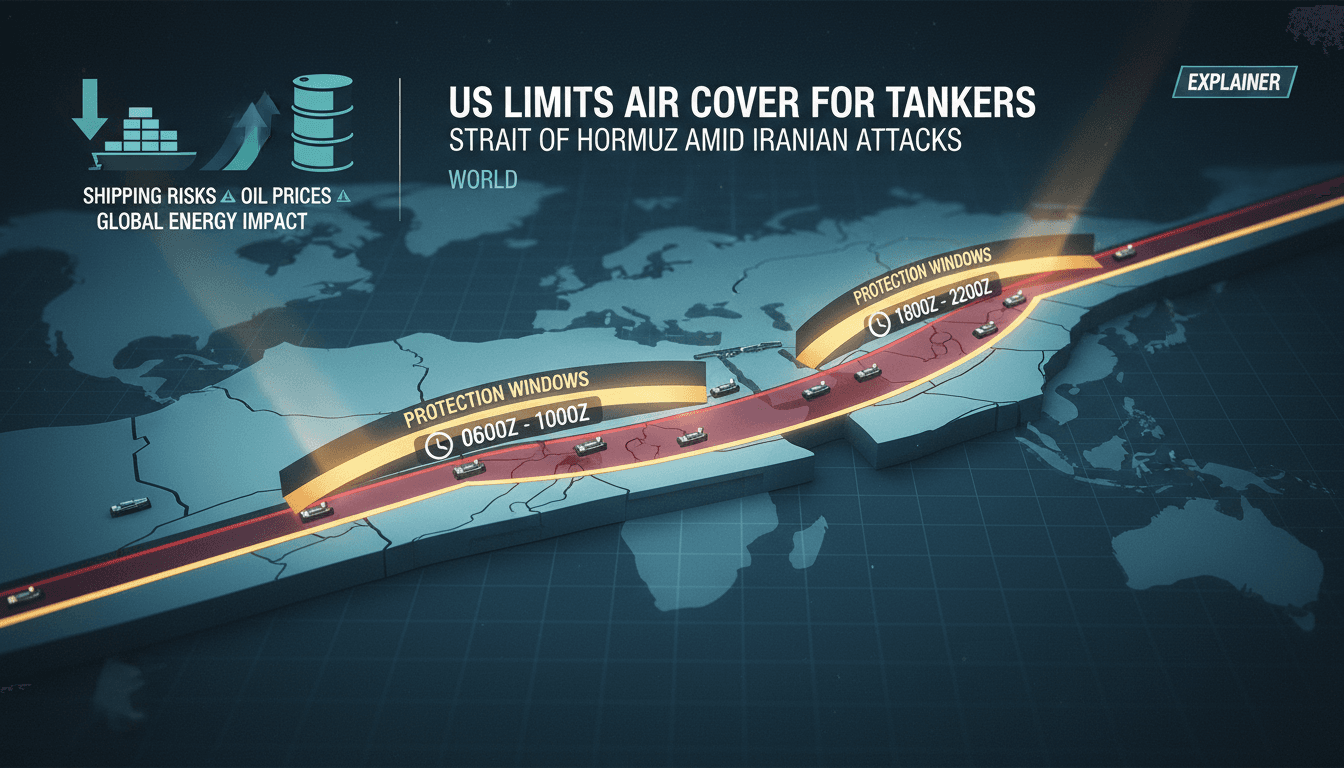
- On September 12, 2026, the US restricted air protection for tankers in the Strait of Hormuz to two specific daily time windows.
- This adjustment follows increased Iranian attacks on vessels transiting at night, prompting a shift in military resource allocation.
- Shipping volumes through the strait have dropped significantly, averaging under 20 vessels daily, compared to over 100 before the conflict.
The context you actually need
- Tensions escalated between the US and Iran in early 2026, leading to a maritime conflict that has seen attacks on commercial shipping.
- The US has provided air protection along a southern route near Oman since May 2026 to facilitate safe passage amid these tensions.
- Oil prices have reacted to these developments, with volatility observed as prices rose above $100 per barrel following the announcement.
What's really happening
The recent adjustment in US maritime security protocols for the Strait of Hormuz reflects a strategic response to escalating threats from Iran. Since early 2026, the region has seen a marked increase in hostilities, with Iranian forces targeting commercial vessels, particularly during nighttime transits. This has created a precarious environment for shipping operators, who are now faced with heightened risks and operational challenges.
In response, the US Naval Cooperation and Guidance for Shipping (NCAGS) center has narrowed the air protection window for tankers to two specific daily slots. This change is designed to optimize the limited military resources available while encouraging shipping operators to align their transit schedules with these protected windows. By concentrating air support during these times, the US aims to enhance the safety of commercial vessels navigating this critical maritime route.
The implications of this shift are significant. With the Strait of Hormuz being a vital artery for global oil transport—accounting for approximately 20% of the world's oil supply—any disruption can lead to immediate and far-reaching consequences. The reduction in protection windows means that vessels are now advised against nighttime transits, which could lead to delays and increased costs for shipping operators. This, in turn, may contribute to rising oil prices, as the market reacts to perceived risks and supply constraints.
Moreover, the ongoing conflict has already resulted in a substantial decrease in shipping volumes through the strait, with recent data indicating an average of under 20 vessels daily, a stark contrast to pre-conflict levels exceeding 100. This decline not only affects oil supply but also has broader implications for global trade and economic stability, particularly for countries heavily reliant on oil imports.
As the situation evolves, the US's strategic decisions will continue to shape the maritime landscape in the region. The focus on daytime transit protection may lead to increased operational costs for shipping companies, which could ultimately be passed on to consumers in the form of higher prices for goods and energy.
Who feels it first (and how)
- Shipping operators: Increased operational costs and scheduling challenges due to limited protection windows.
- Oil markets: Fluctuations in prices as supply risks become more pronounced.
- Consumers: Potential rise in energy prices and goods due to increased shipping costs.
- Regional economies: Countries dependent on oil exports or imports may experience economic pressures.
What to watch next
- Oil price trends: Monitor fluctuations in global oil prices as the market reacts to changes in shipping security and supply risks.
- Shipping volume data: Keep an eye on the number of vessels transiting the Strait of Hormuz to gauge the impact of the new protection windows.
- Geopolitical developments: Watch for any shifts in US-Iran relations that could further affect maritime security and oil supply chains.
The US has restricted air protection for tankers to two daily windows.
Oil prices will remain volatile as markets adjust to new risks.
The long-term impact on shipping routes and global trade dynamics.
Frequently Asked Questions
- Why it matters?
- The Strait of Hormuz is a critical chokepoint for global oil transit, and changes in protection protocols can significantly impact oil prices and shipping logistics.
- What happened (in 30 seconds)?
- On September 12, 2026, the US restricted air protection for tankers in the Strait of Hormuz to two specific daily time windows. This adjustment follows increased Iranian attacks on vessels transiting at night, prompting a shift in military resource allocation. Shipping volumes through the strait have dropped significantly, averaging under 20 vessels daily, compared to over 100 before the conflict.
- What's really happening?
- The recent adjustment in US maritime security protocols for the Strait of Hormuz reflects a strategic response to escalating threats from Iran. Since early 2026, the region has seen a marked increase in hostilities, with Iranian forces targeting commercial vessels, particularly during nighttime transits. This has created a precarious environment for shipping operators, who are now faced with heightened risks and operational challenges. In response, the US Naval Cooperation and Guidance for Ship
- Who feels it first (and how)?
- Shipping operators: Increased operational costs and scheduling challenges due to limited protection windows. Oil markets: Fluctuations in prices as supply risks become more pronounced. Consumers: Potential rise in energy prices and goods due to increased shipping costs. Regional economies: Countries dependent on oil exports or imports may experience economic pressures.
- What to watch next?
- Oil price trends: Monitor fluctuations in global oil prices as the market reacts to changes in shipping security and supply risks. Shipping volume data: Keep an eye on the number of vessels transiting the Strait of Hormuz to gauge the impact of the new protection windows. Geopolitical developments: Watch for any shifts in US-Iran relations that could further affect maritime security and oil supply chains.
Egyptian politics, economy, and society coverage.
"Al Masry Al Youm is a major Egyptian newspaper with broad national coverage."
— A47 Editor
بعد تصعيد الهجمات ليلًا.. أمريكا تحدد مواعيد لمرور الناقلات عبر مضيق هرمز
The United States has established specific timeframes for oil tankers and commercial vessels wishing to transit through the Strait of Hormuz, following an escalation of nighttime attacks. This decision aims to ensure military protection for these shi...
Arabic-language coverage of political affairs and current events.
"Okaz political coverage typically follows mainstream Saudi framing on national and regional affairs."
— A47 Editor
واشنطن تقيّد عبور ناقلات النفط في هرمز لحمايتها من إيران
The United States has requested oil tankers and commercial ships transiting the Strait of Hormuz to adhere to specific crossing times to ensure optimal military support and protection amid rising Iranian attacks on vessels, particularly at night, as ...
Arabic-language political and world news coverage for UAE readers.
"Emarat Al Youm world coverage usually presents international developments through a UAE and Arab audience lens."
— A47 Editor
أميركا تحدد مواعيد مرور الناقلات عبر "هرمز" أميركا تحدد مواعيد مرور الناقلات عبر "هرمز"
The United States has requested that oil tankers passing through the Strait of Hormuz navigate only during specified times to ensure military protection. This measure aims to enhance security in a strategically significant maritime route.