
Houthi Forces Capture Key Red Sea Territory in Yemen
Why it matters
The Houthi control over key Red Sea territories heightens risks for global shipping, potentially increasing costs and delays.
What happened (in 30 seconds)
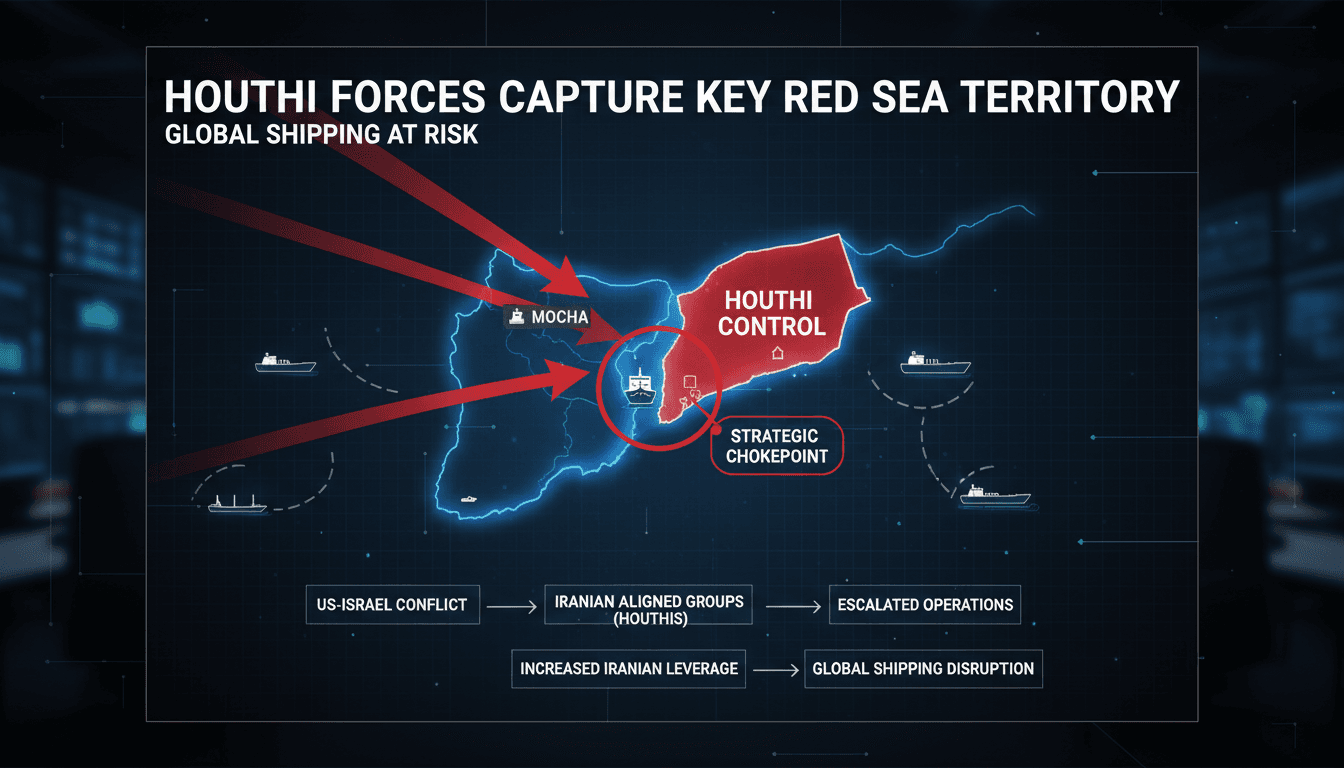
- Houthi forces executed a rapid military advance along Yemen's Red Sea coast, capturing significant territory including the port of Mocha.
- The Houthis now control approximately 130 km of coastline and key positions overlooking the Bab al-Mandab strait, a critical shipping route.
- Iranian support has bolstered Houthi capabilities, complicating the regional conflict and raising concerns for global shipping security.
The context you actually need
- Yemen's civil war has persisted since 2014, with a fragile UN-brokered truce in place since 2022.
- The US and Israel's recent military actions against Iran have escalated tensions, prompting Iranian proxies like the Houthis to increase their operations.
- Saudi Arabia's economic lifelines are threatened, as the Houthis' advance jeopardizes oil exports and shipping routes through the Red Sea.
What's really happening
In early September 2026, Houthi forces launched a swift military offensive along the Tihamah coastal plain, capturing the strategic port of Mocha and advancing towards the Bab al-Mandab strait. This marked a significant territorial gain for the Iran-backed group, which had been relatively stagnant in its military operations for years. The Houthis' advance was characterized by a well-coordinated blitz that caught Saudi-backed Yemeni government forces off guard, leading to their withdrawal or routing.
The Houthis now control approximately 130 km of coastline, positioning them to exert influence over one of the world's most critical maritime chokepoints. The Bab al-Mandab strait is vital for global shipping, connecting the Red Sea to the Gulf of Aden and the Arabian Sea. This strategic location allows the Houthis to threaten shipping lanes, particularly for vessels transiting to and from the Suez Canal.
Iran's involvement has been crucial in this offensive, with the Iranian Revolutionary Guards reportedly providing arms, strategic advice, and operational direction to the Houthis. This support enhances the Houthis' military capabilities and allows them to challenge Saudi Arabia's influence in the region. The recent territorial gains not only bolster the Houthis' position in Yemen but also serve to increase Iran's leverage over global shipping routes, particularly in light of the ongoing US-Israel conflict with Iran.
The implications of this advance extend beyond Yemen. Oil prices surged to $100 per barrel for the first time since July 2026, driven by fears of disrupted shipping routes and increased costs for energy-dependent economies, including Dubai. Shipping firms have expressed skepticism over Houthi assurances of safe navigation, particularly for Saudi vessels, raising concerns about potential disruptions in global trade.
As the Houthis consolidate their control, the risk to shipping in the Red Sea and beyond is likely to escalate, prompting a reevaluation of maritime security strategies by affected nations and companies.
Who feels it first (and how)
- Shipping companies: Increased insurance costs and potential delays in transit times.
- Energy-dependent economies: Higher oil prices affecting economic stability and growth.
- Global traders: Disruptions in supply chains leading to increased costs and uncertainty.
- Regional governments: Heightened security concerns and potential military responses to protect shipping routes.
What to watch next
- Shipping insurance rates: A rise in rates could indicate increased risk perception among insurers regarding Red Sea transit.
- Oil price fluctuations: Continued volatility in oil prices will reflect the ongoing impact of the Houthi advance on global markets.
- Military responses from Saudi Arabia and the US: Any escalation in military action could further destabilize the region and impact shipping security.
The Houthis control significant territory along the Red Sea coast.
Shipping risks will increase, leading to higher costs and potential delays.
The extent of military responses from Saudi Arabia and the US in reaction to the Houthi advance.
Frequently Asked Questions
- Why it matters?
- The Houthi control over key Red Sea territories heightens risks for global shipping, potentially increasing costs and delays.
- What happened (in 30 seconds)?
- Houthi forces executed a rapid military advance along Yemen's Red Sea coast, capturing significant territory including the port of Mocha. The Houthis now control approximately 130 km of coastline and key positions overlooking the Bab al-Mandab strait, a critical shipping route. Iranian support has bolstered Houthi capabilities, complicating the regional conflict and raising concerns for global shipping security.
- What's really happening?
- In early September 2026, Houthi forces launched a swift military offensive along the Tihamah coastal plain, capturing the strategic port of Mocha and advancing towards the Bab al-Mandab strait. This marked a significant territorial gain for the Iran-backed group, which had been relatively stagnant in its military operations for years. The Houthis' advance was characterized by a well-coordinated blitz that caught Saudi-backed Yemeni government forces off guard, leading to their withdrawal or rout
- Who feels it first (and how)?
- Shipping companies: Increased insurance costs and potential delays in transit times. Energy-dependent economies: Higher oil prices affecting economic stability and growth. Global traders: Disruptions in supply chains leading to increased costs and uncertainty. Regional governments: Heightened security concerns and potential military responses to protect shipping routes.
- What to watch next?
- Shipping insurance rates: A rise in rates could indicate increased risk perception among insurers regarding Red Sea transit. Oil price fluctuations: Continued volatility in oil prices will reflect the ongoing impact of the Houthi advance on global markets. Military responses from Saudi Arabia and the US: Any escalation in military action could further destabilize the region and impact shipping security.
International coverage of politics, culture, and current affairs.
"BBC News is widely regarded as a reputable international news organization, known for its impartial tone and public service mandate."
— A47 Editor
Lightning Houthi advance in Yemen may bring dangerous new dimension to Iran war
The Iran-backed Houthi rebels have made significant military advancements in Yemen, capturing the strategic port city of Mocha and the island of Perim, which are crucial for controlling shipping routes in the Red Sea. This marks one of the most notab...
Global news coverage with extensive reporting on Middle Eastern conflicts and geopolitics.
"Al Jazeera is a Qatar-based broadcaster known for wide regional coverage and alternative perspectives."
— A47 Editor
Houthi advance in Yemen is about more than just the Red Sea
The Houthi rebels in Yemen have made significant military advances, consolidating their control over key areas, including the strategic port city of Mocha and the Bab al-Mandab Strait, which are vital for shipping routes in the Red Sea. This escalati...
Comprehensive coverage of Middle Eastern and global issues.
"Al Jazeera is a prominent voice from the Global South, especially the Middle East, with an emphasis on underreported stories."
— A47 Editor
Houthi advance in Yemen is about more than just the Red Sea
The Houthi rebels in Yemen have made significant military advances, consolidating their control over key areas, including the strategic port city of Mocha and the Bab al-Mandab Strait, which are vital for shipping routes in the Red Sea. This escalati...
Conservative-leaning political and national coverage.
"The Washington Times is a conservative-leaning newspaper known for its political coverage and advocacy of right-of-center viewpoints."
— A47 Editor
Iran-backed Houthis grab more territory on Yemen's western coast
Houthi rebel forces in Yemen have successfully expanded their control along the western coastline, concluding a week of intense fighting against Saudi coalition forces. This territorial gain underscores the ongoing conflict in Yemen, where the Iran-b...
Regional coverage and analysis focused on politics, diplomacy, and business across the Middle East.
"Al-Monitor is known for analytical reporting on Middle East politics and policy developments."
— A47 Editor
Iranian arms and advice helped Yemen's Houthis seize key Red Sea city, sources say
The Iranian-backed Houthi rebels have seized the strategic port city of Mocha on Yemen's Red Sea coast, bolstered by direct support from Iran's Revolutionary Guards. This military advance is part of a broader offensive against Saudi-backed government...
International stories from NPR’s global desk.
"NPR is an American public media organization known for thoughtful reporting and a slightly left-leaning editorial tone."
— A47 Editor
Why gains by Iran-backed Houthis in Yemen could push gas prices even higher
The Iran-backed Houthi forces have made significant advances along Yemen's Red Sea coast, including the seizure of the strategic port city of Mocha, which is critical for maritime shipping routes. This escalation has included attacks on Saudi Arabia'...