
Multiple Explosions Reported Near Oil Tanker South of Al Mukha Yemen
Why it matters
The incident underscores ongoing maritime security challenges that can disrupt international trade and energy transport.
What happened (in 30 seconds)
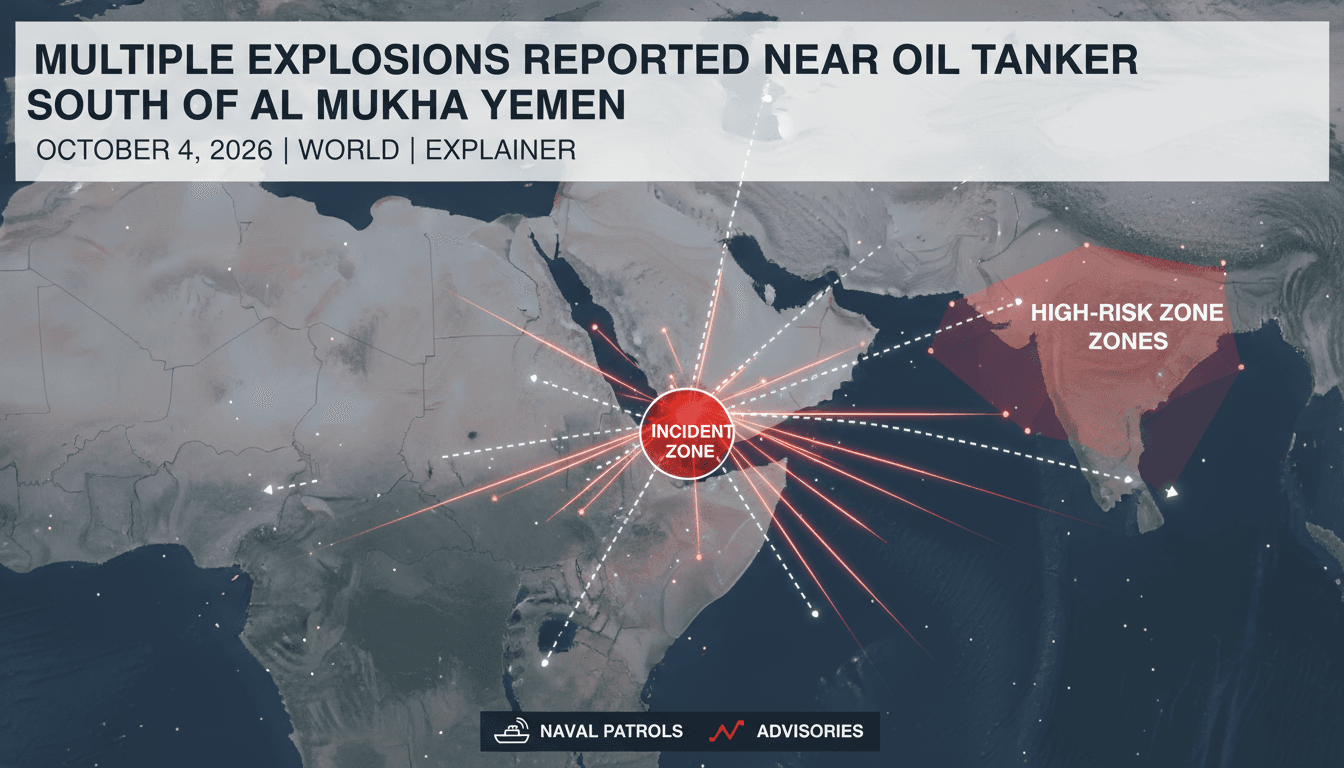
- On October 4, 2026, multiple explosions were reported near an unidentified oil tanker 60 nautical miles south of Al Mukha, Yemen.
- The crew remained unharmed, and there was no reported damage to the vessel or environmental impact.
- UKMTO issued a navigational advisory, urging vessels in the area to exercise caution and report any suspicious activity.
The context you actually need
- Maritime security threats in the Red Sea and Gulf of Aden have been escalating, with commercial vessels facing risks from projectiles and drones linked to regional conflicts.
- UKMTO plays a critical role in monitoring maritime safety, providing advisories to protect vital shipping lanes essential for global energy transport.
- Previous incidents in the region have led to increased naval patrols but have not significantly impacted global oil markets or trade routes.
What's really happening
The explosions reported near the tanker on October 4, 2026, highlight the precarious nature of maritime security in the Red Sea and Gulf of Aden. This region has been a hotspot for threats against commercial shipping, primarily due to ongoing conflicts involving Houthi forces in Yemen. These conflicts have led to a series of incidents where vessels have been targeted by projectiles, drones, or small boats, creating an environment of uncertainty for shipping operators.
The United Kingdom Maritime Trade Operations (UKMTO) is tasked with monitoring these threats and disseminating information to ensure the safety of international shipping lanes. In this instance, the UKMTO issued Warning 151-26 shortly after receiving reports of the explosions, emphasizing the need for heightened vigilance among vessels transiting the area. The advisory serves as a reminder of the risks present in these waters, which are crucial for global energy transport.
While the immediate impact of this incident appears limited—no injuries or environmental damage were reported—the broader implications for maritime trade are significant. Shipping companies may face increased insurance premiums and potential route diversions as they seek to mitigate risks associated with navigating through high-threat areas. This could lead to longer transit times and higher costs, which may ultimately be passed on to consumers.
Moreover, the incident comes amid a backdrop of geopolitical tensions that can influence global oil prices and shipping routes. Although no immediate shifts in oil markets were observed following the explosions, the potential for future disruptions remains a concern for stakeholders in the energy sector. The interconnected nature of global trade means that even localized incidents can have ripple effects, impacting everything from shipping logistics to consumer prices.
As the investigation into the explosions continues, the maritime industry will be closely monitoring developments. Increased naval patrols and shipping advisories may become the norm in response to such incidents, further complicating the operational landscape for shipping companies. The situation serves as a stark reminder of the vulnerabilities inherent in global trade and the ongoing need for robust security measures to protect vital shipping routes.
Who feels it first (and how)
- Shipping companies: Increased operational costs due to heightened security measures and potential route changes.
- Logistics operators: Possible delays in delivery times affecting supply chain efficiency.
- Insurance providers: Elevated premiums for vessels operating in high-risk areas.
- Consumers: Potential price increases for goods transported through affected shipping lanes.
What to watch next
- Increased naval presence: Watch for announcements regarding naval patrols in the Red Sea and Gulf of Aden, which could indicate rising tensions.
- Insurance rate changes: Monitor shifts in maritime insurance premiums as companies reassess risks associated with transiting these waters.
- Market reactions: Keep an eye on global oil prices and shipping costs, as any significant disruptions could lead to fluctuations.
The explosions occurred near a commercial tanker, and the crew reported no injuries or damage.
Shipping companies will increase security measures and may adjust routes to avoid high-risk areas.
The long-term impact on global oil markets and shipping logistics remains to be seen.
Frequently Asked Questions
- Why it matters?
- The incident underscores ongoing maritime security challenges that can disrupt international trade and energy transport.
- What happened (in 30 seconds)?
- On October 4, 2026, multiple explosions were reported near an unidentified oil tanker 60 nautical miles south of Al Mukha, Yemen. The crew remained unharmed, and there was no reported damage to the vessel or environmental impact. UKMTO issued a navigational advisory, urging vessels in the area to exercise caution and report any suspicious activity.
- What's really happening?
- The explosions reported near the tanker on October 4, 2026, highlight the precarious nature of maritime security in the Red Sea and Gulf of Aden. This region has been a hotspot for threats against commercial shipping, primarily due to ongoing conflicts involving Houthi forces in Yemen. These conflicts have led to a series of incidents where vessels have been targeted by projectiles, drones, or small boats, creating an environment of uncertainty for shipping operators. The United Kingdom Maritim
- Who feels it first (and how)?
- Shipping companies: Increased operational costs due to heightened security measures and potential route changes. Logistics operators: Possible delays in delivery times affecting supply chain efficiency. Insurance providers: Elevated premiums for vessels operating in high-risk areas. Consumers: Potential price increases for goods transported through affected shipping lanes.
- What to watch next?
- Increased naval presence: Watch for announcements regarding naval patrols in the Red Sea and Gulf of Aden, which could indicate rising tensions. Insurance rate changes: Monitor shifts in maritime insurance premiums as companies reassess risks associated with transiting these waters. Market reactions: Keep an eye on global oil prices and shipping costs, as any significant disruptions could lead to fluctuations.
Arabic-language coverage of international news and geopolitics.
"RT Arabic is a Russian state-funded outlet often criticized for promoting Kremlin-aligned narratives."
— A47 Editor
"العمليات البحرية البريطانية" ترصد انفجارات قرب ناقلة نفط جنوب المخا اليمنية
The British Maritime Operations Center reported on Sunday that an incident involving an oil tanker occurred near the Yemeni coast, with explosions detected in the vicinity. Reports confirmed that the crew of the vessel is safe.
Jordanian news and regional updates.
"Roya News is a Jordanian outlet focused on breaking news and local affairs."
— A47 Editor
الهيئة البحرية البريطانية: بلاغ عن وقوع انفجار على بعد 60 ميلاً بحرياً جنوب المخا في اليمن
The British Maritime Authority reported an explosion occurring 60 nautical miles south of Al-Mokha, Yemen. This incident was detected by a maritime facility monitoring oil tankers in the region, indicating a potential escalation of maritime security ...
Jordanian news and regional updates.
"Roya News is a Jordanian outlet focused on breaking news and local affairs."
— A47 Editor
التجارة البحرية البريطانية: ربان ناقلة نفط أكد إصابتها بمقذوف على بعد 4 أميال بحرية شرق سلطنة عمان
The UK Maritime Trade Operations (UKMTO) announced on Saturday that a tanker was struck by a projectile approximately four nautical miles east of Oman. This incident raises concerns about maritime security in the region, particularly for vessels oper...