
Oxfam-CEOBS Report Finds Environmental Contamination Across More Than 99 Percent of Gaza Territory
Why it matters
Environmental degradation spanning critical soil, water, and air assets creates generational infrastructure liabilities that outlast conflict timelines and delay economic recovery cycles.
What happened (in 30 seconds)
- A sweeping assessment was released: On November 23, 2026, Oxfam International and the Conflict and Environment Observatory (CEOBS) published a joint report detailing widespread toxic contamination across the Gaza Strip caused by military actions.
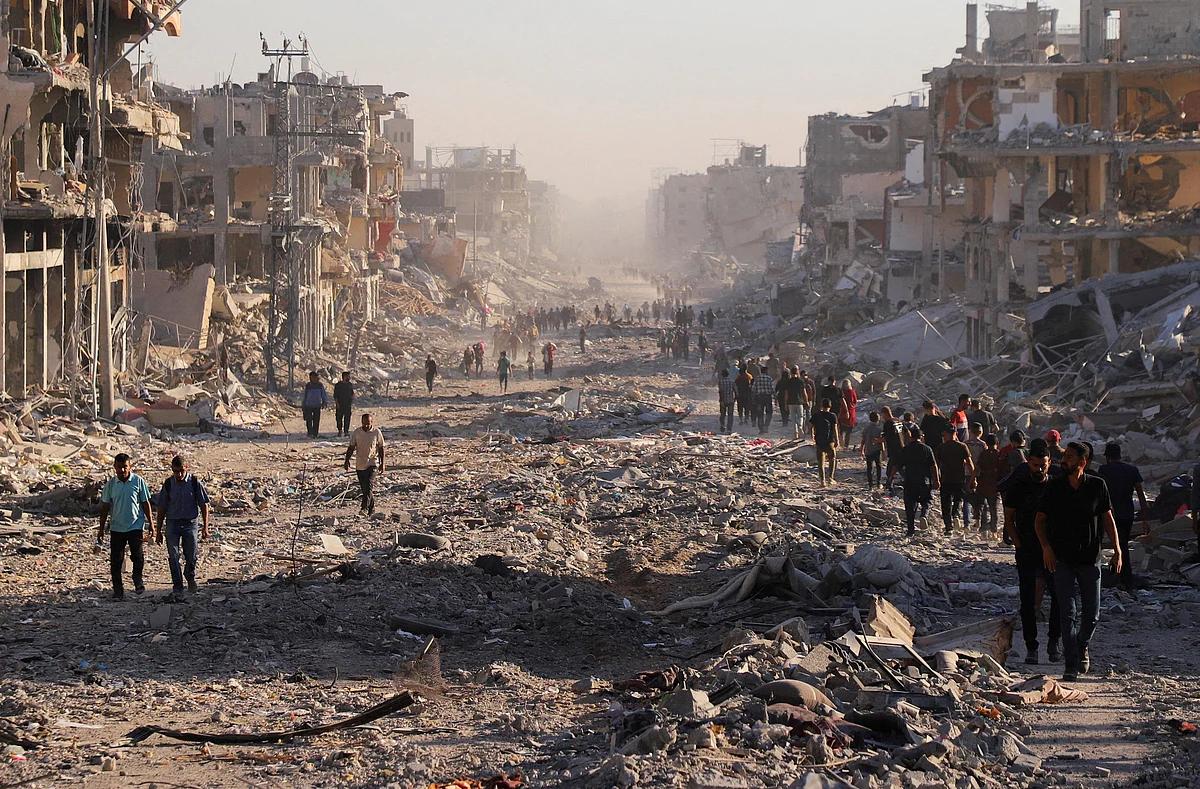
- Data revealed near-total territorial exposure: Satellite imagery and remote sensing indicate that 99 percent of the territory exhibits indicators of potential chemical, biological, or heavy metal contamination, with 78 percent of the landmass directly scarred by bombardment and infrastructure collapse.
- Official positions diverged immediately: Israeli authorities rejected the findings as unfounded, stating that destruction stemmed from military infrastructure placed within civilian zones, while reporting groups demanded unfettered access for remediation equipment.
The context you actually need
- Conflict intensity degraded baseline infrastructure: Escalating after October 7, 2023, continuous operations involving explosive ordnance, ground actions, and incendiary strikes damaged 85 percent of municipal water facilities.
- Debris accumulation created physical bottlenecks: Over 61 million tonnes of potentially hazardous rubble—frequently laced with asbestos, dioxins, and unexploded munitions—now occupy urban and agricultural centers.
- Water access reached critical thresholds: Per capita potable water supplies dropped to roughly 18 liters per day, alongside elevated faecal coliform counts detected in primary groundwater wells.
What's really happening
The Oxfam-CEOBS findings map an operational transition from immediate physical destruction to structural, long-term environmental failure. When military strikes compromise 85 percent of water infrastructure and produce more than 61 million tonnes of rubble, the primary operational challenge shifts from asset destruction to the systemic poisoning of natural capital.
The core mechanism is cross-media contamination. Explosive residues, heavy metals, asbestos fibers from collapsed buildings, dioxins from uncontrolled fires, and biological pathogens from broken sewage networks do not stay localized. Instead, rain and wind transfer particulate matter into subterranean aquifers and agricultural topsoil. In areas showing the highest density of strikes—such as Gaza City, Khan Younis, Rafah, and Jabalia—the breakdown of sanitation networks has pushed raw effluent into the soil column. This explains the elevated faecal coliform readings identified in regional groundwater wells, which directly threatens the residual water supply currently delivering just 18 liters per person daily.
The institutional gridlock over remediation reflects competing organizational incentives. Non-governmental entities and United Nations agencies prioritize open logistical corridors to deploy specialized hazardous waste extraction equipment, soil filtration units, and biological remediation teams. Conversely, state security apparatuses operate on containment and risk-mitigation frameworks, strictly vetting heavy machinery and dual-use industrial parts to manage strategic security vulnerabilities.
Consequently, environmental stabilization remains effectively frozen. Without on-ground technical verification, environmental scientists must rely on remote sensing and satellite platforms to approximate toxicity profiles. This dynamic prevents the implementation of targeted cleanup workflows, compounding secondary contamination risks across coastal aquifers. The structural implication is that physical recovery cannot mirror traditional post-conflict reconstruction models: building over millions of tonnes of unclassified, toxic rubble without systematic remediation permanently locks heavy metals into municipal sub-bases and local food chains.
Who feels it first (and how)
- Local civilian populations: Face immediate physiological risks from compromised groundwater, elevated pathogen counts, and airborne asbestos particulates released by ongoing debris displacement.
- Humanitarian and recovery logistics operators: Must navigate strict import controls on dual-use heavy machinery while attempting to deliver sanitation and water treatment solutions.
- Regional public health bodies: Face elevated monitoring demands to track transboundary ecological vectors, waterborne diseases, and potential contamination spillovers.
- Development finance institutions: Obligated to divert conventional capital expenditure away from commercial rebuilding toward complex, high-cost toxic site clearance programs.
What to watch next
- Independent on-ground sampling missions: The granting or denial of entry permits for United Nations Environment Programme (UNEP) technical inspection units will dictate the timeline for verified baseline chemical data.
- Equipment import policy shifts: Any operational recalibration regarding dual-use equipment approvals will determine whether specialized debris-clearing and water-filtration machinery can reach target zones.
- Coastal aquifer salinity and pathogen benchmarks: Sustained water testing data from international bodies will signal whether groundwater degradation is becoming irreversibly established across southern coastal pockets.
Indicators of potential environmental contamination affect more than 99 percent of the Gaza Strip, 85 percent of water assets are damaged, and over 61 million tonnes of debris have been generated.
Without industrial-scale soil and aquifer remediation, toxic particulates will depress agricultural yields and increase respiratory and waterborne illness incidence across the population for years.
Whether international pressure will establish an agreed protocol for the entry of hazardous waste disposal equipment, or if independent verification teams will be permitted full on-site access.
Frequently Asked Questions
- Why it matters?
- Environmental degradation spanning critical soil, water, and air assets creates generational infrastructure liabilities that outlast conflict timelines and delay economic recovery cycles.
- What happened (in 30 seconds)?
- A sweeping assessment was released: On November 23, 2026, Oxfam International and the Conflict and Environment Observatory (CEOBS) published a joint report detailing widespread toxic contamination across the Gaza Strip caused by military actions. Data revealed near-total territorial exposure: Satellite imagery and remote sensing indicate that 99 percent of the territory exhibits indicators of potential chemical, biological, or heavy metal contamination, with 78 percent of the landmass directly s
- What's really happening?
- The Oxfam-CEOBS findings map an operational transition from immediate physical destruction to structural, long-term environmental failure. When military strikes compromise 85 percent of water infrastructure and produce more than 61 million tonnes of rubble, the primary operational challenge shifts from asset destruction to the systemic poisoning of natural capital. The core mechanism is cross-media contamination. Explosive residues, heavy metals, asbestos fibers from collapsed buildings, dioxi
- Who feels it first (and how)?
- Local civilian populations: Face immediate physiological risks from compromised groundwater, elevated pathogen counts, and airborne asbestos particulates released by ongoing debris displacement. Humanitarian and recovery logistics operators: Must navigate strict import controls on dual-use heavy machinery while attempting to deliver sanitation and water treatment solutions. Regional public health bodies: Face elevated monitoring demands to track transboundary ecological vectors, waterborne disea
- What to watch next?
- Independent on-ground sampling missions: The granting or denial of entry permits for United Nations Environment Programme (UNEP) technical inspection units will dictate the timeline for verified baseline chemical data. Equipment import policy shifts: Any operational recalibration regarding dual-use equipment approvals will determine whether specialized debris-clearing and water-filtration machinery can reach target zones. Coastal aquifer salinity and pathogen benchmarks: Sustained water testing
UAE-based newspaper covering Gulf politics, society, and international developments.
"Gulf News is one of the UAE’s most prominent English-language publications."
— A47 Editor
Gaza faces toxic contamination for generations, report warns
Gulf News reports that a new report warns Gaza faces toxic contamination for generations, describing the territory as a 'toxic wasteland' for decades after Israel's military destruction, with widespread poisoned water and contamination across the str...
A curated Gulf News feed featuring major stories across news, business, opinion, and lifestyle.
"Gulf News is a major UAE newspaper whose featured stories feed reflects a broad editorial mix shaped for a Gulf audience."
— A47 Editor
Gaza faces toxic contamination for generations, report warns
Gulf News reports that a new report warns Gaza faces toxic contamination for generations, describing the territory as a 'toxic wasteland' for decades after Israel's military destruction, with widespread poisoned water and contamination across the str...
English-language reporting on Saudi politics, policy, and society.
"Saudi Gazette reflects mainstream Saudi institutional perspectives."
— A47 Editor
Israeli attacks have turned Gaza into 'toxic wasteland', Oxfam says
A new report by Oxfam and the Conflict and Environment Observatory (Ceobs) says more than 99% of the Gaza Strip shows indicators of environmental contamination from Israeli military attacks, including heavy metals, explosive residues, asbestos from d...
RT is a Russian state-funded network covering global events from a Russian perspective.
"RT is widely criticized for promoting pro-Kremlin narratives and is considered by many to be a state propaganda outlet."
— A47 Editor
Gaza faces decades of toxic fallout from Israeli offensive – report
A report by Oxfam, working with the Conflict and Environment Observatory (Ceobs), finds signs of possible contamination across more than 99% of Gaza following Israel's military offensive, with the damage expected to produce toxic fallout for decades....
International coverage of politics, culture, and current affairs.
"BBC News is widely regarded as a reputable international news organization, known for its impartial tone and public service mandate."
— A47 Editor
Israeli attacks have turned Gaza into 'toxic wasteland', Oxfam says
A report by Oxfam, produced with the Conflict and Environment Observatory (Ceobs), finds signs of possible contamination across almost all of Gaza, which it attributes to Israel's military actions and describes the territory as a 'toxic wasteland' wi...
Reports on climate change, environmental science, sustainability, and nature.
"BBC News is widely regarded as a reputable international news organization, known for its impartial tone and public service mandate."
— A47 Editor
Israeli attacks have turned Gaza into 'toxic wasteland', Oxfam says
Oxfam says Israeli attacks have turned Gaza into a 'toxic wasteland', citing signs of possible contamination across almost all of the territory as a result of Israel's actions, according to a report covered by BBC News.
UAE-based English-language newspaper covering regional politics, economics, and global affairs.
"The National reflects Emirati policy perspectives while maintaining international editorial standards."
— A47 Editor
Gaza turned into ‘toxic wasteland with human survival under threat’
The National reports that Gaza has been turned into a 'toxic wasteland' by Israel's military campaign, with human survival under threat across the territory. A new report by Oxfam and the Conflict and Environment Observatory (Ceobs), covered by Al Ja...
Comprehensive coverage of Middle Eastern and global issues.
"Al Jazeera is a prominent voice from the Global South, especially the Middle East, with an emphasis on underreported stories."
— A47 Editor
Gaza turned into ‘toxic wasteland’ by Israel’s war, says new report
A new report by Oxfam and the Conflict and Environment Observatory (Ceobs), as covered by The Guardian and Al Jazeera, finds that Israel's military destruction of Gaza has left widespread contamination across the entire strip, including poisoned wate...
Global news coverage with extensive reporting on Middle Eastern conflicts and geopolitics.
"Al Jazeera is a Qatar-based broadcaster known for wide regional coverage and alternative perspectives."
— A47 Editor
‘Environmental crimes’: Israel blamed for toxic pollution in 99% of Gaza
Oxfam, working with the Conflict and Environment Observatory (Ceobs), has published a report finding that Israel's military destruction of Gaza has left a 'toxic wasteland,' with contamination reported across nearly the entire strip, affecting water,...
Comprehensive coverage of Middle Eastern and global issues.
"Al Jazeera is a prominent voice from the Global South, especially the Middle East, with an emphasis on underreported stories."
— A47 Editor
‘Environmental crimes’: Israel blamed for toxic pollution in 99% of Gaza
Oxfam, working with the Conflict and Environment Observatory (Ceobs), has published a report finding that Israel's military destruction of Gaza has left a 'toxic wasteland,' with contamination reported across nearly the entire strip, affecting water,...
International coverage from The Guardian's global desks.
"The Guardian is known for its progressive editorial stance and in-depth analysis."
— A47 Editor
Israel’s destruction of Gaza has created a ‘toxic wasteland’, experts find
An Oxfam and Conflict and Environment Observatory (Ceobs) report finds that Israel's military destruction of Gaza has left widespread contamination across the entire strip, with poisoned water, contaminated soil, and toxic air threatening the populat...