
U.S. DOJ Seeks Forfeiture of $61 Million in Cryptocurrency Linked to Iranian Oil Sales
Why it matters
This case highlights the ongoing challenges of enforcing sanctions in a digital economy, impacting global financial systems and cryptocurrency regulations.
What happened (in 30 seconds)
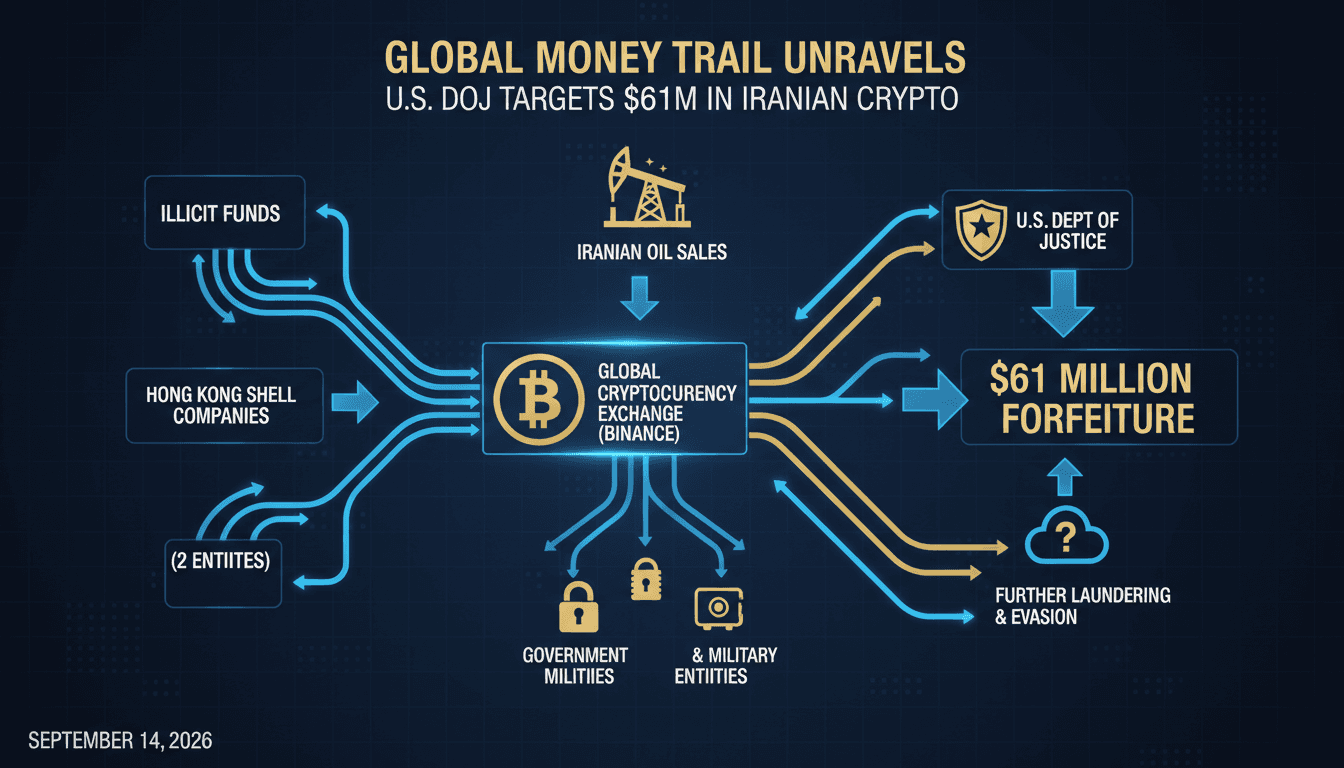
- On September 14, 2026, the U.S. Department of Justice filed a civil forfeiture complaint seeking $61 million in cryptocurrency linked to Iranian oil sales.
- Two Hong Kong companies, Blessed Trust Limited and Hexa Whale Trading Limited, are accused of laundering over $1.5 billion through Binance, a major cryptocurrency exchange.
- The funds are alleged to support Iranian military and terrorist activities, raising concerns about the effectiveness of sanctions against Iran.
The context you actually need
- U.S. sanctions against Iranian oil exports have been in place for years, targeting revenue streams for the Iranian government and military.
- Cryptocurrency has become a favored method for evading traditional banking restrictions, complicating enforcement efforts.
- Previous U.S. actions have targeted similar networks, indicating a persistent focus on disrupting illicit financial activities linked to Iran.
What's really happening
The U.S. Department of Justice's recent civil forfeiture complaint against two Hong Kong-based companies underscores a significant intersection of international finance, cryptocurrency, and geopolitical tensions. The complaint alleges that Blessed Trust Limited and Hexa Whale Trading Limited facilitated the laundering of over $1.5 billion in proceeds from black-market Iranian oil sales, primarily to Chinese buyers. This operation reportedly involved converting fiat payments into cryptocurrency via Binance, a leading digital asset exchange, and routing these funds through a complex network of unhosted addresses referred to as "Entity A."
The allegations suggest that these companies misrepresented their activities to service providers, allowing them to obscure the true nature of their transactions. The U.S. government is targeting approximately $61 million in specific cryptocurrency holdings, including USDT stablecoins, which are often used for their liquidity and stability in trading. This case is part of a broader strategy by U.S. authorities to disrupt financial networks that support Iranian military and terrorist activities, particularly in light of the Islamic Revolutionary Guard Corps (IRGC) being designated as a foreign terrorist organization since 2019.
Binance, which has faced scrutiny in the past for its compliance with regulations, has stated its commitment to cooperating with law enforcement and maintaining a zero-tolerance policy for sanctions violations. However, the implications of this case extend beyond the immediate parties involved. The use of cryptocurrency for laundering proceeds from sanctioned activities raises critical questions about the effectiveness of existing regulatory frameworks and the potential for increased oversight in the crypto space.
As the U.S. continues to pursue actions against entities involved in sanctions evasion, the ripple effects could lead to heightened regulatory scrutiny not only for exchanges like Binance but also for users and investors in the cryptocurrency market. This case serves as a reminder of the complexities and risks associated with digital assets, particularly in a geopolitical context where financial transactions can have far-reaching consequences.
Who feels it first (and how)
- Cryptocurrency traders: Increased regulatory scrutiny may affect trading practices and compliance requirements.
- Investors in crypto exchanges: Potential impacts on exchange operations and market stability could influence investment decisions.
- Companies involved in international trade: Heightened awareness of compliance risks related to sanctions and financial transactions.
- Regulatory bodies: Increased pressure to develop and enforce regulations around cryptocurrency and sanctions compliance.
What to watch next
- Regulatory changes: Watch for potential new regulations targeting cryptocurrency exchanges and their compliance with sanctions. This could reshape the trading landscape.
- Market reactions: Monitor how cryptocurrency markets respond to this case and any subsequent enforcement actions, as volatility may increase.
- International cooperation: Look for developments in international efforts to combat sanctions evasion through digital currencies, which could lead to broader implications for global finance.
The U.S. has filed a civil forfeiture complaint against companies involved in laundering Iranian oil proceeds.
Increased regulatory scrutiny on cryptocurrency exchanges and potential new compliance requirements.
The long-term impact on global oil markets and cryptocurrency trading volumes remains uncertain.
Frequently Asked Questions
- Why it matters?
- This case highlights the ongoing challenges of enforcing sanctions in a digital economy, impacting global financial systems and cryptocurrency regulations.
- What happened (in 30 seconds)?
- On September 14, 2026, the U.S. Department of Justice filed a civil forfeiture complaint seeking $61 million in cryptocurrency linked to Iranian oil sales. Two Hong Kong companies, Blessed Trust Limited and Hexa Whale Trading Limited, are accused of laundering over $1.5 billion through Binance, a major cryptocurrency exchange. The funds are alleged to support Iranian military and terrorist activities, raising concerns about the effectiveness of sanctions against Iran.
- What's really happening?
- The U.S. Department of Justice's recent civil forfeiture complaint against two Hong Kong-based companies underscores a significant intersection of international finance, cryptocurrency, and geopolitical tensions. The complaint alleges that Blessed Trust Limited and Hexa Whale Trading Limited facilitated the laundering of over $1.5 billion in proceeds from black-market Iranian oil sales, primarily to Chinese buyers. This operation reportedly involved converting fiat payments into cryptocurrency v
- Who feels it first (and how)?
- Cryptocurrency traders: Increased regulatory scrutiny may affect trading practices and compliance requirements. Investors in crypto exchanges: Potential impacts on exchange operations and market stability could influence investment decisions. Companies involved in international trade: Heightened awareness of compliance risks related to sanctions and financial transactions. Regulatory bodies: Increased pressure to develop and enforce regulations around cryptocurrency and sanctions complianc
- What to watch next?
- Regulatory changes: Watch for potential new regulations targeting cryptocurrency exchanges and their compliance with sanctions. This could reshape the trading landscape. Market reactions: Monitor how cryptocurrency markets respond to this case and any subsequent enforcement actions, as volatility may increase. International cooperation: Look for developments in international efforts to combat sanctions evasion through digital currencies, which could lead to broader implications for global fi
Global business headlines with AI angles.
"General business outlet that frequently covers AI."
— A47 Editor
Iran Allegedly Laundered $1.5 Billion In Oil Money Through Crypto. The U.S. Is Going After Some Of It.
The U.S. Department of Justice has accused two Hong Kong companies of laundering approximately $1.5 billion in proceeds from sanctioned Iranian oil sales through cryptocurrency, particularly using the Binance exchange. This allegation underscores ong...
Consumer technology news with AI coverage.
"Gadget and tech site reporting on AI in products."
— A47 Editor
DOJ says companies used Binance to funnel $1.5 billion in crypto to Iran
The U.S. Department of Justice (DOJ) has accused companies of using the cryptocurrency exchange Binance to funnel approximately $1.5 billion to Iran, highlighting ongoing concerns about Binance's role in facilitating illegal financial transactions. T...
Covers consumer technology, electronics, gadgets, and product reviews.
"Engadget is a trusted source for gadget reviews and consumer tech news, known for its hands-on analysis and industry coverage."
— A47 Editor
DOJ says companies used Binance to funnel $1.5 billion in crypto to Iran
The U.S. Department of Justice (DOJ) has accused companies of using the cryptocurrency exchange Binance to funnel approximately $1.5 billion to Iran, highlighting ongoing concerns about Binance's role in facilitating illegal financial transactions. T...
Tech policy, trends, and innovation news.
"The New York Times is a globally recognized newspaper offering authoritative reporting with a center-left editorial stance."
— A47 Editor
Two Chinese Firms Used Binance to Launder Iranian Oil Money, US Says
Federal prosecutors have accused two Chinese firms of using Binance, the world's largest cryptocurrency exchange, to launder proceeds from Iranian oil sales, allegedly financing terrorism in the process. This claim highlights the ongoing concerns reg...
Tech industry coverage with AI angles.
"Mainstream tech news intersecting with AI policy and culture."
— A47 Editor
Two Chinese Firms Used Binance to Launder Iranian Oil Money, US Says
Federal prosecutors have accused two Chinese firms of using Binance, the world's largest cryptocurrency exchange, to launder proceeds from Iranian oil sales, allegedly financing terrorism in the process. This claim highlights the ongoing concerns reg...
Markets, economy, and company analysis from NYT’s business desk.
"The New York Times is a globally recognized newspaper offering authoritative reporting with a center-left editorial stance."
— A47 Editor
Two Chinese Firms Used Binance to Launder Iranian Oil Money, US Says
Federal prosecutors have accused two Chinese firms of using Binance, the world's largest cryptocurrency exchange, to launder proceeds from Iranian oil sales, allegedly financing terrorism in the process. This claim highlights the ongoing concerns reg...
Markets desk coverage, trading insights, and investor updates.
"WSJ’s markets reporting provides in-depth analysis and context for investors."
— A47 Editor
DOJ Says Binance Customers Used Crypto Exchange to Funnel Iran Oil Money
The U.S. Department of Justice has accused Binance, a leading cryptocurrency exchange, of facilitating the transfer of approximately $1.5 billion in funds to Iran through interconnected digital wallets. This allegation highlights the ongoing scrutiny...
Covers blockchain, cryptocurrency news, project analysis, and market insights.
"CoinDesk is a well-established cryptocurrency and blockchain news provider, offering comprehensive insights, market data, and industry research."
— A47 Editor
U.S. DOJ seeks $61 million in what it calls Iran's crypto-laundered black market oil sales
The U.S. Department of Justice has filed a civil forfeiture complaint seeking $61 million, alleging that these funds are linked to Iran's illegal cryptocurrency activities used to finance military operations. This action is part of a broader crackdow...
Technology business and AI-related headlines.
"Data-driven tech newsroom with global scope."
— A47 Editor
DOJ Says Millions in Iran Oil Proceeds Laundered on Binance
The US Justice Department has announced its intention to forfeit $61 million, claiming that the funds were generated from Iranian black-market oil sales and subsequently laundered through the cryptocurrency exchange Binance. This action highlights on...
Technology business news, market impacts, and innovation trends.
"Bloomberg is a premier financial and tech news provider, respected for its in-depth reporting and analytical rigor."
— A47 Editor
DOJ Says Millions in Iran Oil Proceeds Laundered on Binance
The US Justice Department has announced its intention to forfeit $61 million, claiming that the funds were generated from Iranian black-market oil sales and subsequently laundered through the cryptocurrency exchange Binance. This action highlights on...