
2026 El Niño Event Sets Record Sea Surface Temperature Anomaly
Why it matters
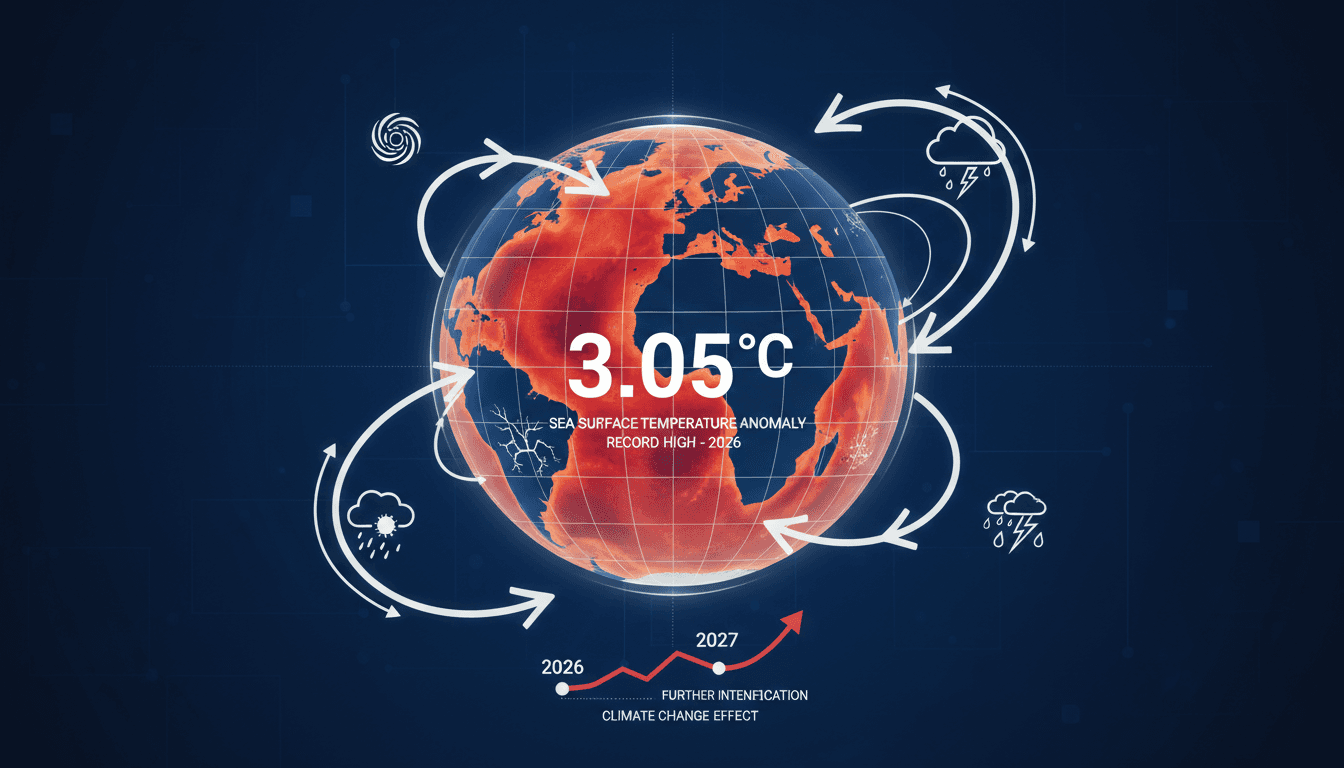
This unprecedented sea surface temperature anomaly signals significant shifts in global weather patterns, which can impact economies and ecosystems worldwide.
What happened (in 30 seconds)
- Record anomaly: The 2026 El Niño event set a new record sea surface temperature anomaly of 3.05°C in the Niño 3.4 region.
- Super El Niño: This event is classified as a super El Niño, driven by natural variability and amplified by climate change.
- Global implications: Early effects include reduced rainfall in India and drought in Central America, with projections indicating 2027 could be the warmest year on record.
The context you actually need
- El Niño-Southern Oscillation (ENSO): This climate pattern involves periodic warming of sea surface temperatures in the tropical Pacific, historically linked to extreme weather events.
- Historical precedents: Strong El Niño events in 1982-83, 1997-98, and 2015-16 have previously caused significant global disruptions, including droughts and floods.
- Anthropogenic influence: The ongoing warming of oceans due to human activity is intensifying the effects of natural climate phenomena like El Niño.
What's really happening
The 2026 El Niño began developing in mid-2026, with sea surface temperature anomalies in the Niño 3.4 region reaching 3.05-3.07°C above the 1991-2020 baseline by September 19. This surpasses the previous record set in 2015, occurring two months earlier than that event's peak. Experts, including climate scientists like Daniel Swain, have described this as potentially the strongest El Niño in living memory, with projections indicating further intensification to around 4.0-4.1°C by late 2026.
The implications of this record-breaking anomaly are profound. As the ocean warms, it alters atmospheric circulation patterns, leading to significant changes in global weather. For instance, the early observed effects include reduced monsoon rainfall in India, which can threaten agricultural output and food security. In Indonesia, wildfires are exacerbated by drier conditions, while Central America faces droughts that impact agriculture and critical infrastructure like the Panama Canal.
Governments and markets are closely monitoring these developments, as the potential for elevated global temperatures could lead to a peak in 2027, possibly exceeding 1.5°C above pre-industrial levels. This scenario raises alarms about the risks to global food supplies, energy demand, and trade dynamics. The interconnectedness of global economies means that disruptions in one region can have cascading effects worldwide, impacting everything from commodity prices to supply chain stability.
As the event strengthens toward its peak in November-December 2026, the urgency for adaptive measures and climate resilience strategies becomes increasingly critical. The scientific community, including organizations like NOAA and the Met Office, is actively engaged in monitoring and forecasting the impacts of this super El Niño, emphasizing the need for preparedness in the face of climate variability.
Who feels it first (and how)
- Farmers in India: Reduced monsoon rainfall threatens crop yields and food security.
- Energy sectors globally: Increased demand for cooling and potential disruptions in energy supply chains.
- Logistics companies: Drought in Central America may affect shipping routes and agricultural exports.
- Insurance industries: Increased claims from weather-related damages could strain resources.
- Consumers: Rising food prices and potential shortages may impact daily living costs.
What to watch next
- Temperature trends: Monitor global temperature readings, especially in the Niño 3.4 region, as they will indicate the intensity of the El Niño event.
- Weather forecasts: Keep an eye on regional weather predictions, particularly in areas historically affected by El Niño, such as Southeast Asia and Central America.
- Agricultural reports: Watch for updates on crop yields and food supply forecasts, as these will signal potential economic impacts.
The 2026 El Niño has set a new record sea surface temperature anomaly.
2027 is projected to be the warmest year on record, with significant global weather impacts.
The full extent of economic disruptions and environmental consequences remains to be seen.
Frequently Asked Questions
- Why it matters?
- This unprecedented sea surface temperature anomaly signals significant shifts in global weather patterns, which can impact economies and ecosystems worldwide.
- What happened (in 30 seconds)?
- Record anomaly: The 2026 El Niño event set a new record sea surface temperature anomaly of 3.05°C in the Niño 3.4 region. Super El Niño: This event is classified as a super El Niño, driven by natural variability and amplified by climate change. Global implications: Early effects include reduced rainfall in India and drought in Central America, with projections indicating 2027 could be the warmest year on record.
- What's really happening?
- The 2026 El Niño began developing in mid-2026, with sea surface temperature anomalies in the Niño 3.4 region reaching 3.05-3.07°C above the 1991-2020 baseline by September 19. This surpasses the previous record set in 2015, occurring two months earlier than that event's peak. Experts, including climate scientists like Daniel Swain, have described this as potentially the strongest El Niño in living memory, with projections indicating further intensification to around 4.0-4.1°C by late 2026. The
- Who feels it first (and how)?
- Farmers in India: Reduced monsoon rainfall threatens crop yields and food security. Energy sectors globally: Increased demand for cooling and potential disruptions in energy supply chains. Logistics companies: Drought in Central America may affect shipping routes and agricultural exports. Insurance industries: Increased claims from weather-related damages could strain resources. Consumers: Rising food prices and potential shortages may impact daily living costs.
- What to watch next?
- Temperature trends: Monitor global temperature readings, especially in the Niño 3.4 region, as they will indicate the intensity of the El Niño event. Weather forecasts: Keep an eye on regional weather predictions, particularly in areas historically affected by El Niño, such as Southeast Asia and Central America. Agricultural reports: Watch for updates on crop yields and food supply forecasts, as these will signal potential economic impacts.
Science and technology stories including AI.
"Longstanding science magazine with thoughtful AI coverage."
— A47 Editor
This year’s El Niño just broke another sobering record
This year's El Niño phenomenon has reached unprecedented levels, with climate scientists indicating it may be the most significant event of its kind in recent history. The current El Niño is characterized by warmer ocean temperatures, which are expec...
Scientific research, technology, environment, and society.
"Scientific American is one of the oldest and most authoritative science magazines, known for deep dives into science, technology, and society."
— A47 Editor
This year’s El Niño just broke another sobering record
This year's El Niño phenomenon has reached unprecedented levels, with climate scientists indicating it may be the most significant event of its kind in recent history. The current El Niño is characterized by warmer ocean temperatures, which are expec...
Reports on climate change, environmental science, sustainability, and nature.
"BBC News is widely regarded as a reputable international news organization, known for its impartial tone and public service mandate."
— A47 Editor
Developing El Niño becomes strongest on record weeks before expected peak
Scientists have reported that the developing El Niño has reached unprecedented strength, becoming the strongest on record just weeks before its expected peak, with significant weather impacts already being observed globally.
International coverage of politics, culture, and current affairs.
"BBC News is widely regarded as a reputable international news organization, known for its impartial tone and public service mandate."
— A47 Editor
Developing El Niño becomes strongest on record weeks before expected peak
Scientists have reported that the developing El Niño has reached unprecedented strength, becoming the strongest on record just weeks before its expected peak, with significant weather impacts already being observed globally.
Reports on science policy, discoveries, and public debate in the scientific realm.
"The Guardian’s science section is known for thoughtful and critical reporting on global research, ethics, and public understanding of science."
— A47 Editor
‘Jaw-dropping’ El Niño bursts through temperature record months before peak
The current El Niño phenomenon has surpassed previous temperature records, reaching 3.05°C above the 1991-2020 average, marking a significant escalation in global temperatures months before its expected peak. This unprecedented rise highlights the se...