
Iran Sets Conditions for Reopening Strait of Hormuz in UN Meeting with U.S. Envoy
Why it matters
The Strait of Hormuz is a critical chokepoint for approximately 20% of global oil consumption, making its stability essential for energy prices and international trade.
What happened (in 30 seconds)
- Iran's Foreign Minister Abbas Araqchi met U.S. Special Envoy Steve Witkoff on September 22, 2026, during the UN General Assembly.
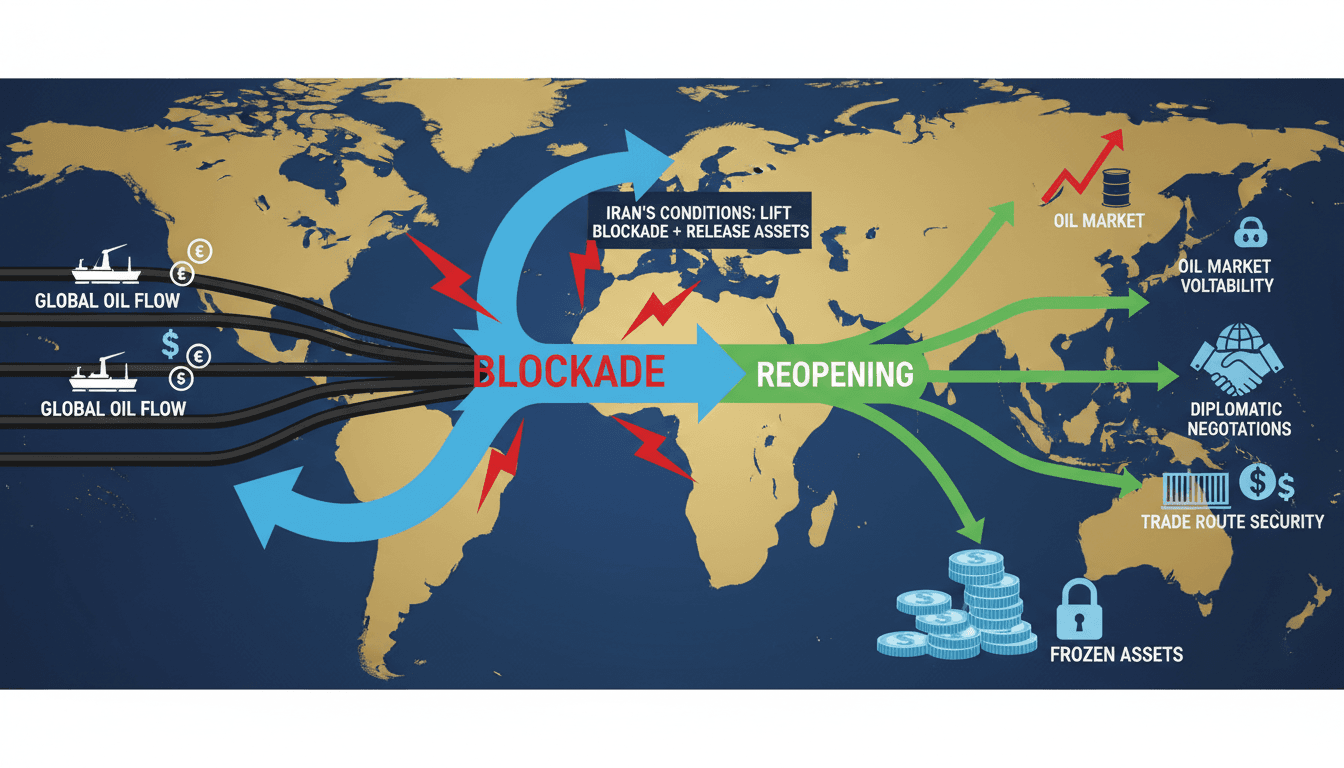
- Araqchi conveyed conditions for reopening the Strait of Hormuz, including lifting the U.S. naval blockade and releasing frozen Iranian assets.
- No immediate responses from the U.S. or Iranian governments have been reported, leaving the situation in a state of uncertainty.
The context you actually need
- The Strait of Hormuz is a vital passage for oil, with around 20% of global oil flow transiting through it daily.
- Iran has faced sanctions and military pressures, leading to a series of blockades and heightened tensions in the region.
- Negotiations for alternative routes have been ongoing, but Iranian officials have made it clear that these discussions are separate from the Strait's reopening.
What's really happening
The recent meeting between Iranian Foreign Minister Abbas Araqchi and U.S. Special Envoy Steve Witkoff highlights the ongoing geopolitical tensions surrounding the Strait of Hormuz, a crucial artery for global oil transport. Iran's conditions for reopening the strait reflect its strategic leverage in the region, particularly as it navigates a complex web of sanctions and military pressures from the U.S. and its allies.
The conditions laid out by Araqchi—lifting the naval blockade, releasing frozen assets, and halting hostilities—are not merely requests but represent Iran's broader strategy to regain economic stability and assert its influence in the region. The U.S. naval blockade has been a significant factor in Iran's economic struggles, contributing to inflation and limiting its ability to engage in international trade. By demanding its removal, Iran is signaling its unwillingness to compromise without tangible benefits.
Moreover, the cessation of conflict across "resistance" fronts indicates Iran's desire for a broader regional de-escalation, which could involve its proxy groups in Iraq, Syria, and Yemen. This reflects Iran's dual approach of seeking diplomatic engagement while maintaining its military posture in the region. The Iranian leadership is likely aware that the U.S. is under pressure to stabilize oil prices, especially given the global economic recovery post-pandemic. Thus, Iran's conditions may be seen as a strategic play to extract concessions from the U.S. while also appealing to its domestic audience, which is weary of economic hardship.
The implications of this meeting extend beyond immediate diplomatic relations. Market analysts are already predicting potential volatility in energy prices as the situation unfolds. If the U.S. responds favorably to Iran's conditions, it could lead to a significant shift in oil supply dynamics, impacting prices globally. Conversely, if negotiations stall, the risk of renewed hostilities in the region could further disrupt oil flows, exacerbating supply chain issues and increasing costs for consumers and businesses alike.
Who feels it first (and how)
- Oil traders: They will experience immediate price fluctuations based on the perceived stability of the Strait.
- Shipping companies: Increased costs and potential delays in transit could affect logistics and operational planning.
- Consumers in Dubai: Elevated fuel prices and shipping costs may lead to higher prices for imported goods.
- Regional businesses: Companies reliant on stable oil prices for operations may face increased costs and uncertainty.
What to watch next
- U.S. response to Iran's conditions: How the U.S. government reacts could set the tone for future negotiations and market stability.
- Energy price fluctuations: Watch for changes in oil prices as market analysts assess the likelihood of the blockade being lifted.
- Regional diplomatic developments: Keep an eye on discussions between Iran and Oman regarding alternative shipping routes, which may influence broader negotiations.
Iran's conditions for reopening the Strait of Hormuz have been officially communicated.
Energy prices will experience volatility as the situation develops.
The U.S. government's next steps and their potential impact on regional stability remain uncertain.
Frequently Asked Questions
- Why it matters?
- The Strait of Hormuz is a critical chokepoint for approximately 20% of global oil consumption, making its stability essential for energy prices and international trade.
- What happened (in 30 seconds)?
- Iran's Foreign Minister Abbas Araqchi met U.S. Special Envoy Steve Witkoff on September 22, 2026, during the UN General Assembly. Araqchi conveyed conditions for reopening the Strait of Hormuz, including lifting the U.S. naval blockade and releasing frozen Iranian assets. No immediate responses from the U.S. or Iranian governments have been reported, leaving the situation in a state of uncertainty.
- What's really happening?
- The recent meeting between Iranian Foreign Minister Abbas Araqchi and U.S. Special Envoy Steve Witkoff highlights the ongoing geopolitical tensions surrounding the Strait of Hormuz, a crucial artery for global oil transport. Iran's conditions for reopening the strait reflect its strategic leverage in the region, particularly as it navigates a complex web of sanctions and military pressures from the U.S. and its allies. The conditions laid out by Araqchi—lifting the naval blockade, releasing fro
- Who feels it first (and how)?
- Oil traders: They will experience immediate price fluctuations based on the perceived stability of the Strait. Shipping companies: Increased costs and potential delays in transit could affect logistics and operational planning. Consumers in Dubai: Elevated fuel prices and shipping costs may lead to higher prices for imported goods. Regional businesses: Companies reliant on stable oil prices for operations may face increased costs and uncertainty.
- What to watch next?
- U.S. response to Iran's conditions: How the U.S. government reacts could set the tone for future negotiations and market stability. Energy price fluctuations: Watch for changes in oil prices as market analysts assess the likelihood of the blockade being lifted. Regional diplomatic developments: Keep an eye on discussions between Iran and Oman regarding alternative shipping routes, which may influence broader negotiations.
Regional coverage and analysis focused on politics, diplomacy, and business across the Middle East.
"Al-Monitor is known for analytical reporting on Middle East politics and policy developments."
— A47 Editor
Iran submits conditions for reopening of Hormuz to U.S. representative, state media says
Iran's Foreign Minister Abbas Araqchi met with U.S. Special Envoy Steve Witkoff during the UN General Assembly, where Iran conveyed its conditions for reopening the strategic Strait of Hormuz. These conditions include the immediate lifting of the nav...
Macro commentary, policy analysis, growth/inflation themes, and global outlooks.
"Contextual macro coverage that complements day-to-day market headlines."
— A47 Editor
Iran lays out conditions for reopening Strait of Hormuz, Iranian media says
Iran has outlined specific conditions for the reopening of the Strait of Hormuz, emphasizing that any negotiations are contingent upon the United States meeting these demands. This announcement reflects ongoing tensions between the two nations and hi...
RT is a Russian state-funded network covering global events from a Russian perspective.
"RT is widely criticized for promoting pro-Kremlin narratives and is considered by many to be a state propaganda outlet."
— A47 Editor
Iran offers to reopen Strait of Hormuz – media
Iran has proposed to reopen the Strait of Hormuz within seven days, a significant development amid ongoing tensions in the region. This proposal comes as Iran seeks to navigate complex geopolitical dynamics, particularly in light of recent warnings r...
UAE-based English-language newspaper covering regional politics, economics, and global affairs.
"The National reflects Emirati policy perspectives while maintaining international editorial standards."
— A47 Editor
Iran offers to reopen Strait of Hormuz 'within seven days'
Iran has announced its willingness to reopen the Strait of Hormuz within seven days, a critical maritime corridor for global oil shipments, amid ongoing tensions in the region. This offer comes as the United States has increased its military presence...