
Guterres Calls for Global Interdependence in Final UN Address
Why it matters
The call for interdependence highlights the urgent need for cooperative solutions to global crises, impacting international business and governance.
What happened (in 30 seconds)
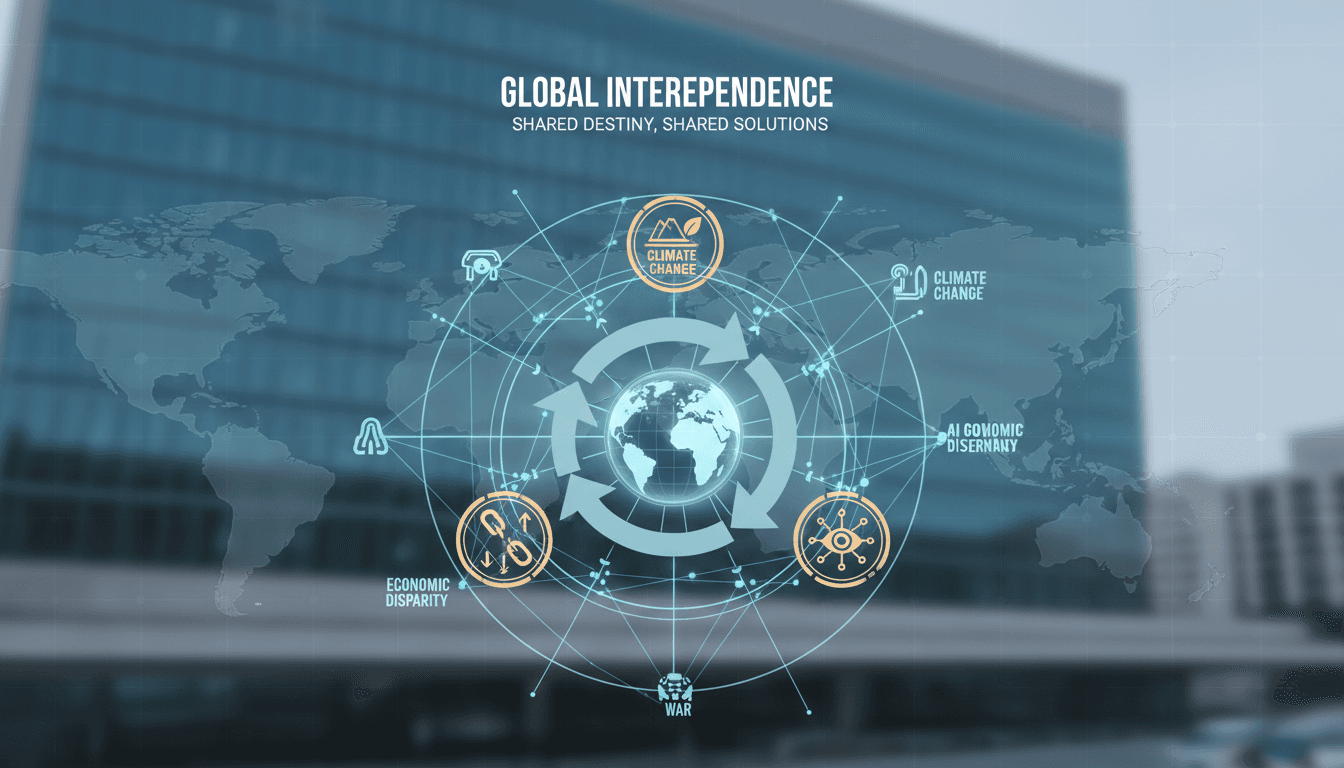
- Guterres delivered his final address at the UN General Assembly, advocating for a networked world based on interdependence.
- He identified critical global challenges including wars, climate change, inequality, and AI, urging multilateral cooperation.
- The speech received a standing ovation, contrasting sharply with US President Trump's unilateral approach.
The context you actually need
- Global conflicts are escalating, with ongoing crises in Ukraine, Gaza, and other regions, stressing the need for diplomatic solutions.
- Climate change and inequality are worsening, creating a pressing demand for collaborative international frameworks.
- AI advancements lack regulation, raising concerns about governance and ethical implications in a rapidly evolving technological landscape.
What's really happening
António Guterres' farewell address at the UN General Assembly on September 22, 2026, serves as a pivotal moment in international relations, emphasizing the necessity of interdependence in a world increasingly marked by fragmentation. Guterres articulated that the "fault lines in our world are widening," a metaphor that captures the growing divides caused by geopolitical tensions, economic disparities, and environmental crises. His call for a "networked multipolarity" suggests a shift away from traditional power dynamics, where nations operate in isolation or rivalry, towards a model where collaboration is paramount.
The address comes at a time when the UN faces significant challenges, including unpaid contributions from member states and calls for reform of the Security Council to better reflect contemporary global realities. Guterres' emphasis on multilateralism is not merely rhetorical; it reflects a strategic necessity as nations confront existential threats that no single country can address alone. The interconnected nature of today's challenges—ranging from climate change to the implications of artificial intelligence—demands a unified response.
Guterres outlined four critical tests of power: war and peace, wealth concentration and inequality, climate chaos, and the governance of artificial intelligence. Each of these areas is interlinked, suggesting that failure in one domain can exacerbate issues in another. For instance, climate change can lead to resource scarcity, which in turn can fuel conflicts, while unchecked AI advancements may deepen inequalities if not regulated effectively.
The speech's reception, marked by prolonged applause, indicates a strong endorsement of Guterres' vision for a cooperative global framework. However, the contrasting response from leaders like Donald Trump, who emphasized American strength and criticized "globalist" agendas, highlights the ongoing tension between unilateralism and multilateralism. This divergence in perspectives could shape future diplomatic engagements and influence international policies.
As the world navigates these complexities, the implications for businesses and governments are profound. Companies may need to adapt to new regulatory environments that prioritize sustainability and ethical AI use, while governments might find themselves compelled to engage in more collaborative international efforts to address shared challenges.
Who feels it first (and how)
- Global corporations: They may face new regulations and expectations for sustainability and ethical practices.
- Governments: Increased pressure to cooperate on international issues like climate change and AI governance.
- Nonprofits and NGOs: Heightened demand for advocacy and solutions addressing inequality and conflict resolution.
- Tech companies: Urgent need for compliance with emerging AI regulations and ethical standards.
What to watch next
- UN Security Council reform discussions: These will indicate how global governance may evolve to address 21st-century challenges.
- International agreements on AI regulation: Watch for frameworks that could shape the tech landscape and impact business operations.
- Climate action initiatives: Increased collaboration on climate policies may signal shifts in investment and operational strategies across sectors.
Guterres' address emphasized the need for interdependence and multilateral cooperation.
Increased focus on international regulatory frameworks for AI and climate change.
The immediate impact on global markets and diplomatic relations following the address.
Frequently Asked Questions
- Why it matters?
- The call for interdependence highlights the urgent need for cooperative solutions to global crises, impacting international business and governance.
- What happened (in 30 seconds)?
- Guterres delivered his final address at the UN General Assembly, advocating for a networked world based on interdependence. He identified critical global challenges including wars, climate change, inequality, and AI, urging multilateral cooperation. The speech received a standing ovation, contrasting sharply with US President Trump's unilateral approach.
- What's really happening?
- António Guterres' farewell address at the UN General Assembly on September 22, 2026, serves as a pivotal moment in international relations, emphasizing the necessity of interdependence in a world increasingly marked by fragmentation. Guterres articulated that the "fault lines in our world are widening," a metaphor that captures the growing divides caused by geopolitical tensions, economic disparities, and environmental crises. His call for a "networked multipolarity" suggests a shift away from t
- Who feels it first (and how)?
- Global corporations: They may face new regulations and expectations for sustainability and ethical practices. Governments: Increased pressure to cooperate on international issues like climate change and AI governance. Nonprofits and NGOs: Heightened demand for advocacy and solutions addressing inequality and conflict resolution. Tech companies: Urgent need for compliance with emerging AI regulations and ethical standards.
- What to watch next?
- UN Security Council reform discussions: These will indicate how global governance may evolve to address 21st-century challenges. International agreements on AI regulation: Watch for frameworks that could shape the tech landscape and impact business operations. Climate action initiatives: Increased collaboration on climate policies may signal shifts in investment and operational strategies across sectors.
24/7 international news from a French perspective in multiple languages.
"France 24 is viewed as a globally focused outlet with balanced coverage and a European perspective."
— A47 Editor
Guterres pleads for 'world built on interdependence' in final General Assembly address
UN Secretary-General Antonio Guterres delivered his final address at the General Assembly, advocating for a world built on interdependence amidst pressing global challenges such as climate change, conflict, inequality, and the rise of artificial inte...
Top international stories selected by The Guardian editors.
"The Guardian is known for its progressive editorial stance and in-depth analysis."
— A47 Editor
‘It’s my duty to tell the truth’: UN chief on the climate crisis, capitalism and reasons to be hopeful
António Guterres, the UN Secretary-General, emphasized the urgency of addressing the climate crisis during his tenure, which concludes on December 31. He has been vocal about the detrimental impact of fossil fuel companies and has called for a transi...
International stories from NPR’s global desk.
"NPR is an American public media organization known for thoughtful reporting and a slightly left-leaning editorial tone."
— A47 Editor
What to know as world leaders converge at the United Nations this week
World leaders are gathering at the United Nations for the U.N. General Assembly, with António Guterres attending his final session as Secretary-General amid ongoing conflicts in Ukraine and the Middle East. The assembly is marked by deep divisions wi...