
Swiss glaciers report nearly 20 percent ice volume loss from 2021 to 2026
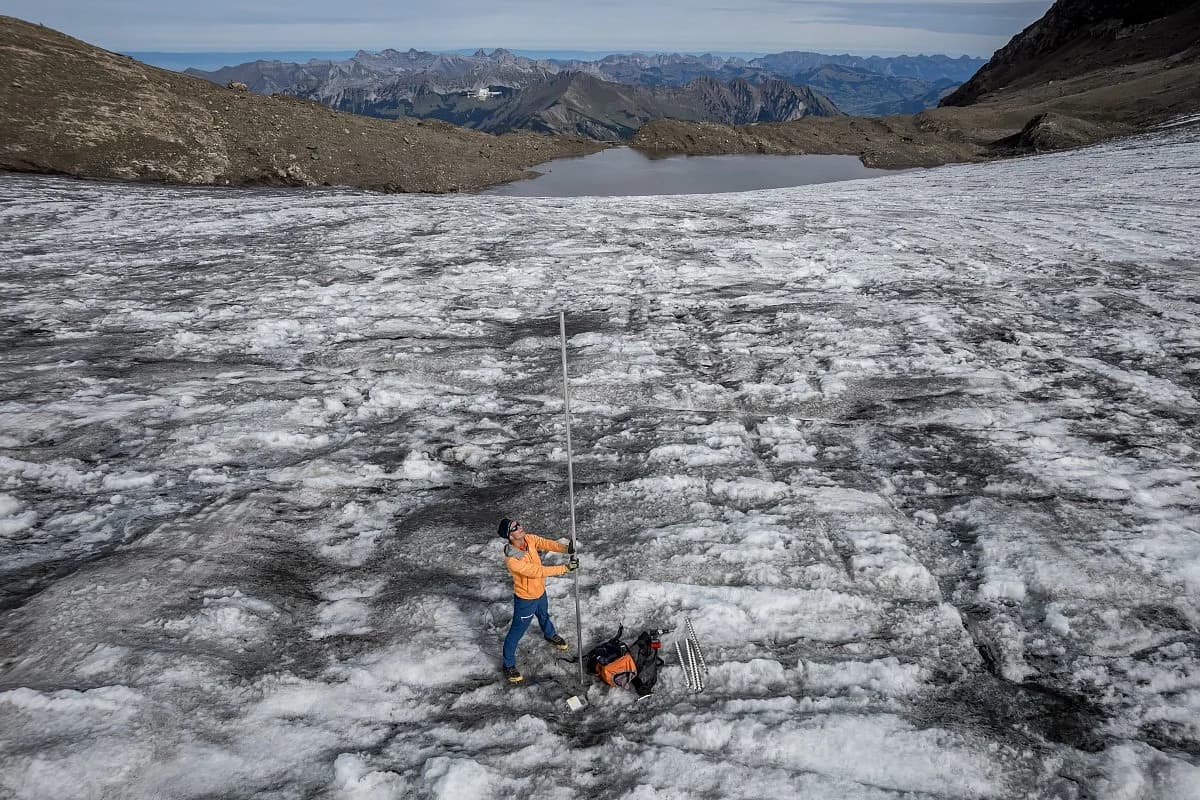
The accelerated melting of Swiss glaciers could impact global water resources and tourism, affecting economies far beyond the Alps.
Why it matters
The rapid loss of glacier mass in Switzerland signals a critical shift in climate dynamics, with potential repercussions for water supply and tourism industries worldwide.
What happened (in 30 seconds)
- Swiss glaciers lost nearly 20% of their ice volume between 2021 and 2026, with a staggering 5.5% loss recorded in just the 2025/2026 hydrological year.
- Record summer heatwaves and low winter snowfall have driven this accelerated retreat, affecting around 1,300 glaciers, including major ones like the Rhone and Aletsch.
- Researchers warn of severe implications for water resources, with over 2.2 trillion liters of meltwater lost in just three months of 2026.
The context you actually need
- Glacier shrinkage has been ongoing for decades, with a 27% loss in the last decade alone, highlighting the urgent need for climate action.
- The 2022 record melt set a troubling precedent, with subsequent years showing consistently high losses amid rising temperatures.
- Smaller glaciers are disappearing entirely, which could destabilize local ecosystems and tourism-dependent economies.
What's really happening
The alarming rate of glacier melt in Switzerland is primarily driven by anthropogenic climate change, which has intensified since the 1990s. The Glacier Monitoring in Switzerland (GLAMOS) reported that the 2025/2026 hydrological year marked the second-highest annual melt on record, with a 5.5% volume loss. This is part of a broader trend where the average thickness of glaciers has decreased significantly, with some tongues losing up to 10 meters in a single year.
The summer of 2026 was particularly brutal, characterized by record heat from June to August, which eliminated protective snow cover early. This exposure accelerated the melting process, leading to unprecedented losses. The cumulative effect of these changes has resulted in nearly 20% of ice volume lost over five years, more than double any previous five-year period.
The implications of this rapid glacier retreat extend beyond the immediate environmental impact. Water resources are at risk, as glaciers serve as critical freshwater reservoirs. The loss of 2.2 trillion liters of meltwater during the summer of 2026 alone is equivalent to over four times the annual water consumption of Swiss households. This raises concerns about water availability not just in Switzerland but also in regions downstream that rely on glacial melt for their water supply.
Tourism, a significant economic driver in the Alpine region, faces challenges as unstable terrain and disappearing glaciers deter visitors. Communities that depend on winter sports and summer hiking are particularly vulnerable, as the landscape changes dramatically. The Swiss Academy of Sciences (SCNAT) and ETH Zurich are closely monitoring these developments, but no immediate policy responses have been announced.
The situation underscores the urgent need for global climate action and adaptation strategies. As glaciers continue to retreat, the interconnectedness of ecosystems and economies becomes increasingly apparent, necessitating a coordinated response to mitigate the impacts of climate change.
Who feels it first (and how)
- Local communities: Residents in Alpine regions dependent on tourism and agriculture face economic instability.
- Water resource managers: Professionals tasked with managing water supplies must adapt to changing availability and quality.
- Tourism operators: Businesses reliant on winter sports and summer hiking may see reduced visitor numbers and revenue.
- Environmental scientists: Researchers studying climate change impacts will need to reassess models and predictions based on new data.
What to watch next
- Future temperature trends: Monitoring summer heatwaves and their correlation with glacier melt will be crucial for predicting further losses.
- Water resource policies: Watch for potential changes in water management strategies in Switzerland and neighboring countries as they adapt to reduced glacial melt.
- Tourism industry responses: Observe how tourism operators adapt their offerings in response to changing landscapes and visitor expectations.
Swiss glaciers have lost nearly 20% of their ice volume from 2021 to 2026.
Continued glacier retreat will impact water resources and tourism in the Alpine region.
The long-term effects on ecosystems and downstream water supplies remain uncertain.
Frequently Asked Questions
- Why it matters?
- The rapid loss of glacier mass in Switzerland signals a critical shift in climate dynamics, with potential repercussions for water supply and tourism industries worldwide.
- What happened (in 30 seconds)?
- Swiss glaciers lost nearly 20% of their ice volume between 2021 and 2026, with a staggering 5.5% loss recorded in just the 2025/2026 hydrological year. Record summer heatwaves and low winter snowfall have driven this accelerated retreat, affecting around 1,300 glaciers, including major ones like the Rhone and Aletsch. Researchers warn of severe implications for water resources, with over 2.2 trillion liters of meltwater lost in just three months of 2026.
- What's really happening?
- The alarming rate of glacier melt in Switzerland is primarily driven by anthropogenic climate change, which has intensified since the 1990s. The Glacier Monitoring in Switzerland (GLAMOS) reported that the 2025/2026 hydrological year marked the second-highest annual melt on record, with a 5.5% volume loss. This is part of a broader trend where the average thickness of glaciers has decreased significantly, with some tongues losing up to 10 meters in a single year. The summer of 2026 was particul
- Who feels it first (and how)?
- Local communities: Residents in Alpine regions dependent on tourism and agriculture face economic instability. Water resource managers: Professionals tasked with managing water supplies must adapt to changing availability and quality. Tourism operators: Businesses reliant on winter sports and summer hiking may see reduced visitor numbers and revenue. Environmental scientists: Researchers studying climate change impacts will need to reassess models and predictions based on new data.
- What to watch next?
- Future temperature trends: Monitoring summer heatwaves and their correlation with glacier melt will be crucial for predicting further losses. Water resource policies: Watch for potential changes in water management strategies in Switzerland and neighboring countries as they adapt to reduced glacial melt. Tourism industry responses: Observe how tourism operators adapt their offerings in response to changing landscapes and visitor expectations.
Reports on climate change, environmental science, sustainability, and nature.
"BBC News is widely regarded as a reputable international news organization, known for its impartial tone and public service mandate."
— A47 Editor
Swiss glaciers suffer 'disastrous' year of ice loss, threatening water supplies
Swiss glaciers have experienced a catastrophic year of ice loss, with scientists warning that this rapid melting is a direct consequence of climate change, threatening vital water supplies for the region.
International coverage of politics, culture, and current affairs.
"BBC News is widely regarded as a reputable international news organization, known for its impartial tone and public service mandate."
— A47 Editor
Swiss glaciers suffer 'disastrous' year of ice loss, threatening water supplies
Swiss glaciers have experienced a catastrophic year of ice loss, with scientists warning that this rapid melting is a direct consequence of climate change, threatening vital water supplies for the region.
UAE-based newspaper covering Gulf politics, society, and international developments.
"Gulf News is one of the UAE’s most prominent English-language publications."
— A47 Editor
'Catastrophic': Swiss glaciers lose fifth of mass in five years
Swiss glaciers have experienced a significant loss, shedding one-fifth of their mass over the past five years, a situation described as 'catastrophic' by experts. This alarming trend highlights the ongoing impacts of climate change on glacial environ...
A curated Gulf News feed featuring major stories across news, business, opinion, and lifestyle.
"Gulf News is a major UAE newspaper whose featured stories feed reflects a broad editorial mix shaped for a Gulf audience."
— A47 Editor
'Catastrophic': Swiss glaciers lose fifth of mass in five years
Swiss glaciers have experienced a significant loss, shedding one-fifth of their mass over the past five years, a situation described as 'catastrophic' by experts. This alarming trend highlights the ongoing impacts of climate change on glacial environ...
International stories from NPR’s global desk.
"NPR is an American public media organization known for thoughtful reporting and a slightly left-leaning editorial tone."
— A47 Editor
Swiss glaciers suffer another year of record ice loss
Switzerland's glaciers are experiencing unprecedented ice loss, with over 5% of their mass disappearing this year alone, raising alarms about the future of water supplies and ecosystems across Europe.