
US Expands Sanctions to Iran's Automotive and Rail Sectors
Why it matters
These sanctions are designed to further isolate Iran economically, impacting global supply chains and trade dynamics.
What happened (in 30 seconds)
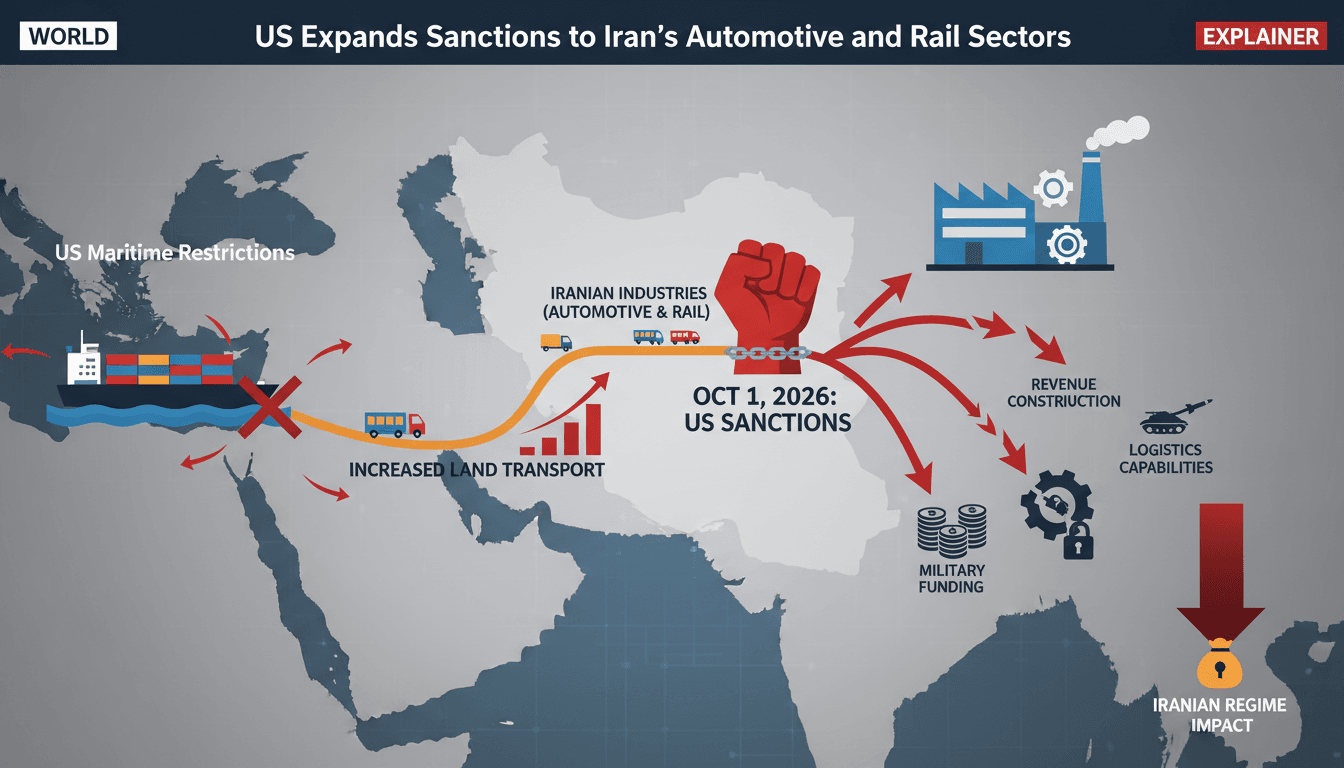
- On October 1, 2026, the U.S. expanded sanctions to include Iran's automotive and rail sectors.
- Iran Khodro and Saipa, which dominate over 90% of Iran's passenger vehicle market, were specifically targeted.
- Foreign suppliers in the UAE, Indonesia, and Turkey are also affected, complicating regional trade relationships.
The context you actually need
- Operation Economic Outcast was launched on August 24, 2026, to restrict Iranian funding for military activities.
- Previous sanctions had already targeted Iran's maritime and airline sectors, indicating a shift in U.S. strategy.
- Iran's reliance on land transport has increased due to U.S. maritime restrictions, making these sectors critical for logistics.
What's really happening
The U.S. Department of the Treasury's recent sanctions under Executive Order 13902 mark a significant escalation in the economic pressure on Iran. By targeting the automotive and rail sectors, the U.S. aims to disrupt the logistics and revenue streams that support Iran's military ambitions, particularly those linked to the Islamic Revolutionary Guard Corps (IRGC).
Iran Khodro and Saipa, the two largest automakers in Iran, are responsible for over 90% of the domestic passenger vehicle market. Their designation under these sanctions means that any foreign entity supplying parts or services to them could also face penalties. This is particularly relevant for suppliers based in the UAE, Indonesia, and Turkey, who may now have to navigate increased compliance risks and potential disruptions in their supply chains.
The sanctions are a response to Iran's strategic pivot towards land-based transport networks for moving petroleum, chemicals, and other goods, following U.S. maritime restrictions in the Strait of Hormuz. This shift has made the automotive and rail sectors vital for Iran's economy, and by targeting them, the U.S. seeks to further limit the Iranian regime's revenue sources.
Statements from Treasury Secretary Scott Bessent emphasize the goal of draining the regime's financial resources, which are often funneled into military programs. The U.S. has also indicated plans to establish an independent multilateral body to monitor compliance with these sanctions, suggesting a long-term commitment to this strategy.
The implications of these sanctions extend beyond Iran. International firms involved in the automotive and rail supply chains will face heightened scrutiny, and the potential for further designations looms large. This could lead to a ripple effect, constraining Iran's industrial revenue and logistics capacity, which in turn may impact global markets that rely on Iranian goods.
Who feels it first (and how)
- Automotive suppliers in the UAE, Indonesia, and Turkey will face immediate compliance challenges.
- International firms involved in the automotive and rail sectors may experience increased scrutiny and operational disruptions.
- Iranian consumers could see a decline in vehicle availability and increased prices due to supply chain constraints.
What to watch next
- Compliance measures: Monitor how foreign suppliers adjust their operations in response to the sanctions. This will indicate the sanctions' effectiveness and the potential for further designations.
- Iran's economic indicators: Watch for shifts in Iran's industrial output and revenue from the automotive and rail sectors, as these will reflect the sanctions' impact.
- International diplomatic responses: Keep an eye on how other nations react to these sanctions, particularly those with economic ties to Iran, as this could influence future trade dynamics.
The U.S. has expanded sanctions to target Iran's automotive and rail sectors.
Increased compliance risks for international firms and potential disruptions in regional supply chains.
The long-term effectiveness of these sanctions in curbing Iran's military funding and activities.
Frequently Asked Questions
- Why it matters?
- These sanctions are designed to further isolate Iran economically, impacting global supply chains and trade dynamics.
- What happened (in 30 seconds)?
- On October 1, 2026, the U.S. expanded sanctions to include Iran's automotive and rail sectors. Iran Khodro and Saipa, which dominate over 90% of Iran's passenger vehicle market, were specifically targeted. Foreign suppliers in the UAE, Indonesia, and Turkey are also affected, complicating regional trade relationships.
- What's really happening?
- The U.S. Department of the Treasury's recent sanctions under Executive Order 13902 mark a significant escalation in the economic pressure on Iran. By targeting the automotive and rail sectors, the U.S. aims to disrupt the logistics and revenue streams that support Iran's military ambitions, particularly those linked to the Islamic Revolutionary Guard Corps (IRGC). Iran Khodro and Saipa, the two largest automakers in Iran, are responsible for over 90% of the domestic passenger vehicle market. T
- Who feels it first (and how)?
- Automotive suppliers in the UAE, Indonesia, and Turkey will face immediate compliance challenges. International firms involved in the automotive and rail sectors may experience increased scrutiny and operational disruptions. Iranian consumers could see a decline in vehicle availability and increased prices due to supply chain constraints.
- What to watch next?
- Compliance measures: Monitor how foreign suppliers adjust their operations in response to the sanctions. This will indicate the sanctions' effectiveness and the potential for further designations. Iran's economic indicators: Watch for shifts in Iran's industrial output and revenue from the automotive and rail sectors, as these will reflect the sanctions' impact. International diplomatic responses: Keep an eye on how other nations react to these sanctions, particularly those with economic tie
UAE-based English-language newspaper covering regional politics, economics, and global affairs.
"The National reflects Emirati policy perspectives while maintaining international editorial standards."
— A47 Editor
US sanctions Iranian car makers and railway operators as pressure shifts from sea to land
The United States has imposed new sanctions on Iranian car manufacturers and railway operators, marking a significant shift in its strategy to exert pressure on Iran, moving from maritime to land-based targets. This action is part of a broader campai...
Oil, metals, and agriculture: supply/demand headlines, OPEC chatter, inventories, and price action.
"Solid tape for energy and metals traders tracking macro and micro catalysts."
— A47 Editor
US sanctions target Iran’s auto, rail sectors as blockade chokes ship lanes
The United States has imposed new sanctions targeting Iran's auto and rail sectors, further tightening the economic blockade that has already disrupted shipping lanes. This escalation is part of a broader strategy to exert pressure on Iran amid ongoi...
Regional coverage and analysis focused on politics, diplomacy, and business across the Middle East.
"Al-Monitor is known for analytical reporting on Middle East politics and policy developments."
— A47 Editor
US sanctions target Iran's auto, rail sectors as blockade chokes ship lanes
The Trump administration has expanded its sanctions against Iran, specifically targeting the country's auto and rail sectors, as part of its broader economic campaign to isolate Tehran. This move is part of the Treasury Department's