
U.S. Imposes New Sanctions on Iran's Automotive and Rail Industries
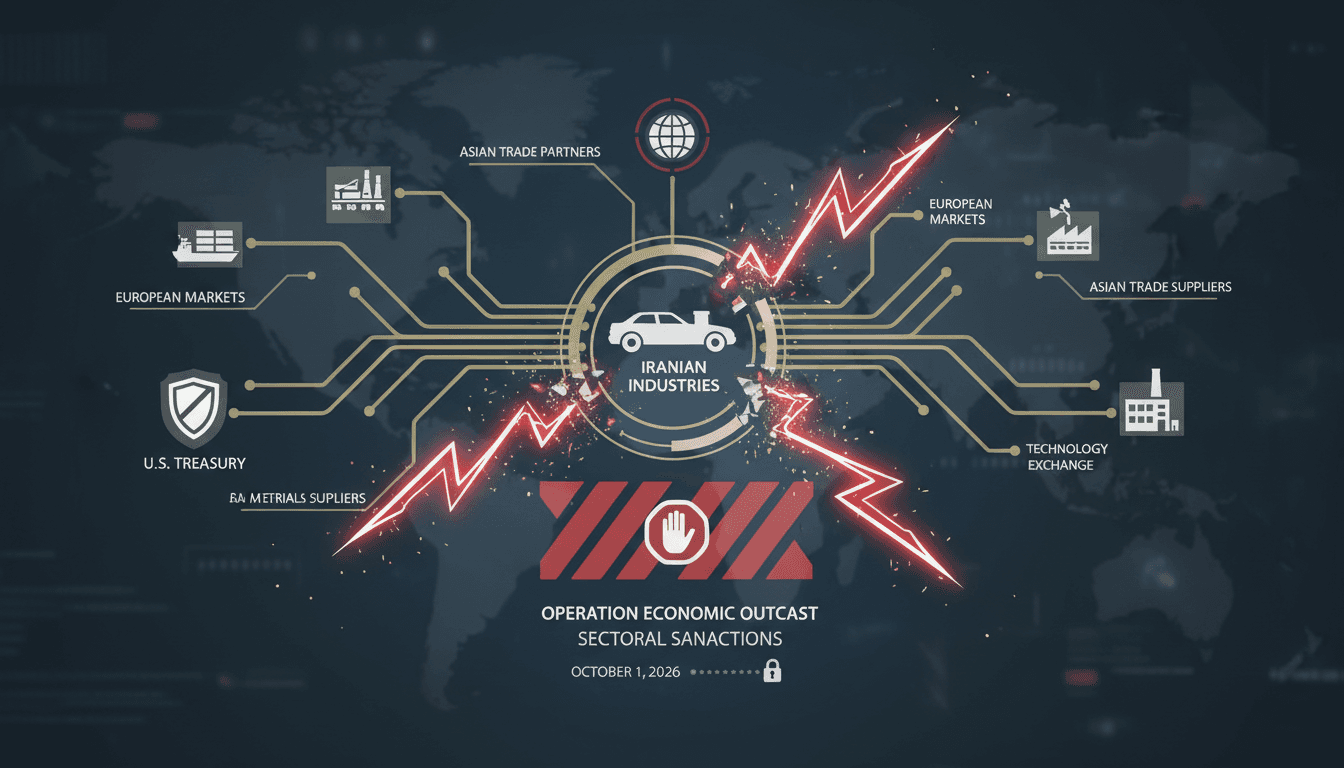
Why it matters
These sanctions are part of a broader strategy to economically isolate Iran, impacting global supply chains and trade networks.
What happened (in 30 seconds)
- On October 1, 2026, the U.S. Treasury imposed new sanctions targeting Iran's automotive and rail sectors.
- Major Iranian companies like Iran Khodro and SAIPA, which control over 90% of the domestic auto market, were designated.
- Foreign facilitators in multiple countries, including China and the UAE, are also affected, increasing scrutiny on international trade networks.
The context you actually need
- Operation Economic Outcast was launched in August 2026 to intensify sanctions against Iran amid escalating U.S.-Iran tensions.
- Previous sanctions targeted military procurement and aviation, aiming to cut off Iran's revenue streams and logistical support.
- The A7 Network, linked to Russia, was designated as a transnational criminal organization for facilitating significant transactions related to Iranian oil sales.
What's really happening
The U.S. Department of the Treasury's recent sanctions are a strategic escalation in the ongoing economic pressure against Iran, particularly its automotive and rail sectors. By targeting major players like Iran Khodro and SAIPA, which dominate the domestic auto market, the U.S. aims to cripple Iran's industrial capabilities and revenue generation. These companies account for over 90% of Iran's automotive production, making them critical to the country's economy.
The sanctions also extend to foreign entities that support these industries, including suppliers in China, Hong Kong, the UAE, Turkey, Indonesia, and Germany. This broadens the scope of the sanctions, creating a ripple effect that could disrupt international trade networks. The U.S. is signaling that it will not only target Iranian entities but also those who facilitate their operations, thereby increasing compliance risks for businesses engaged in trade with Iran.
The A7 Network's designation as a transnational criminal organization highlights the U.S. focus on shadow banking systems that enable sanctions evasion. This network has reportedly facilitated over $17 billion in transactions linked to Iranian oil sales, underscoring the financial channels that the U.S. seeks to sever. The sanctions are designed to create a chokehold on Iran's economy, making it increasingly difficult for the Iranian government to sustain its operations amid ongoing conflict with the U.S.
As the Iranian rial continues to weaken, reaching record lows, the economic impact of these sanctions is becoming more pronounced. The Iranian government has yet to issue a detailed public response, but the implications for its economy are significant. Increased scrutiny on third-country trade networks is likely, with warnings of secondary sanctions exposure for foreign entities that continue to engage with Iranian businesses.
Who feels it first (and how)
- Automotive manufacturers in Iran, particularly those reliant on parts from foreign suppliers.
- Logistics companies in the UAE and other countries that facilitate trade with Iran.
- Financial institutions involved in transactions related to Iranian entities, facing heightened compliance risks.
- Consumers in Iran, who may experience shortages and increased prices for vehicles and rail services.
What to watch next
- Compliance audits: Increased scrutiny on businesses involved in trade with Iran could lead to more rigorous compliance audits and potential penalties.
- Currency fluctuations: Continued weakening of the Iranian rial may impact regional economic stability and trade dynamics.
- International responses: Watch for reactions from other countries regarding their trade relationships with Iran and potential shifts in alliances.
The U.S. sanctions are active and target key sectors of the Iranian economy.
Increased compliance risks for businesses engaged in trade with Iran and potential disruptions in supply chains.
The long-term effectiveness of these sanctions in achieving U.S. policy goals regarding Iran.
Frequently Asked Questions
- Why it matters?
- These sanctions are part of a broader strategy to economically isolate Iran, impacting global supply chains and trade networks.
- What happened (in 30 seconds)?
- On October 1, 2026, the U.S. Treasury imposed new sanctions targeting Iran's automotive and rail sectors. Major Iranian companies like Iran Khodro and SAIPA, which control over 90% of the domestic auto market, were designated. Foreign facilitators in multiple countries, including China and the UAE, are also affected, increasing scrutiny on international trade networks.
- What's really happening?
- The U.S. Department of the Treasury's recent sanctions are a strategic escalation in the ongoing economic pressure against Iran, particularly its automotive and rail sectors. By targeting major players like Iran Khodro and SAIPA, which dominate the domestic auto market, the U.S. aims to cripple Iran's industrial capabilities and revenue generation. These companies account for over 90% of Iran's automotive production, making them critical to the country's economy. The sanctions also extend to fo
- Who feels it first (and how)?
- Automotive manufacturers in Iran, particularly those reliant on parts from foreign suppliers. Logistics companies in the UAE and other countries that facilitate trade with Iran. Financial institutions involved in transactions related to Iranian entities, facing heightened compliance risks. Consumers in Iran, who may experience shortages and increased prices for vehicles and rail services.
- What to watch next?
- Compliance audits: Increased scrutiny on businesses involved in trade with Iran could lead to more rigorous compliance audits and potential penalties. Currency fluctuations: Continued weakening of the Iranian rial may impact regional economic stability and trade dynamics. International responses: Watch for reactions from other countries regarding their trade relationships with Iran and potential shifts in alliances.
Global business headlines with AI angles.
"General business outlet that frequently covers AI."
— A47 Editor
The U.S. Is Targeting Tehran's Remaining Financial Lifelines With New Sanctions
The U.S. Treasury Department has imposed new sanctions targeting Tehran's automotive and rail industries, aiming to cut off Iran's remaining financial lifelines. This action reflects ongoing efforts to exert economic pressure on Iran amid a backdrop ...
Oil, metals, and agriculture: supply/demand headlines, OPEC chatter, inventories, and price action.
"Solid tape for energy and metals traders tracking macro and micro catalysts."
— A47 Editor
US sanctions target Iran’s auto, rail sectors as blockade chokes ship lanes
The United States has imposed new sanctions targeting Iran's auto and rail sectors, further tightening the economic blockade that has already disrupted shipping lanes. This escalation is part of a broader strategy to exert pressure on Iran amid ongoi...
Regional coverage and analysis focused on politics, diplomacy, and business across the Middle East.
"Al-Monitor is known for analytical reporting on Middle East politics and policy developments."
— A47 Editor
US sanctions target Iran's auto, rail sectors as blockade chokes ship lanes
The Trump administration has expanded its sanctions against Iran, specifically targeting the country's auto and rail sectors, as part of its broader economic campaign to isolate Tehran. This move is part of the Treasury Department's