
Strait of Hormuz Vessel Transits Hit Two-Month Low Amid Surge in Tanker Attacks
Why it matters
The Strait of Hormuz is a critical chokepoint for global oil and LNG supplies, handling about 20% of the world's energy needs.
What happened (in 30 seconds)
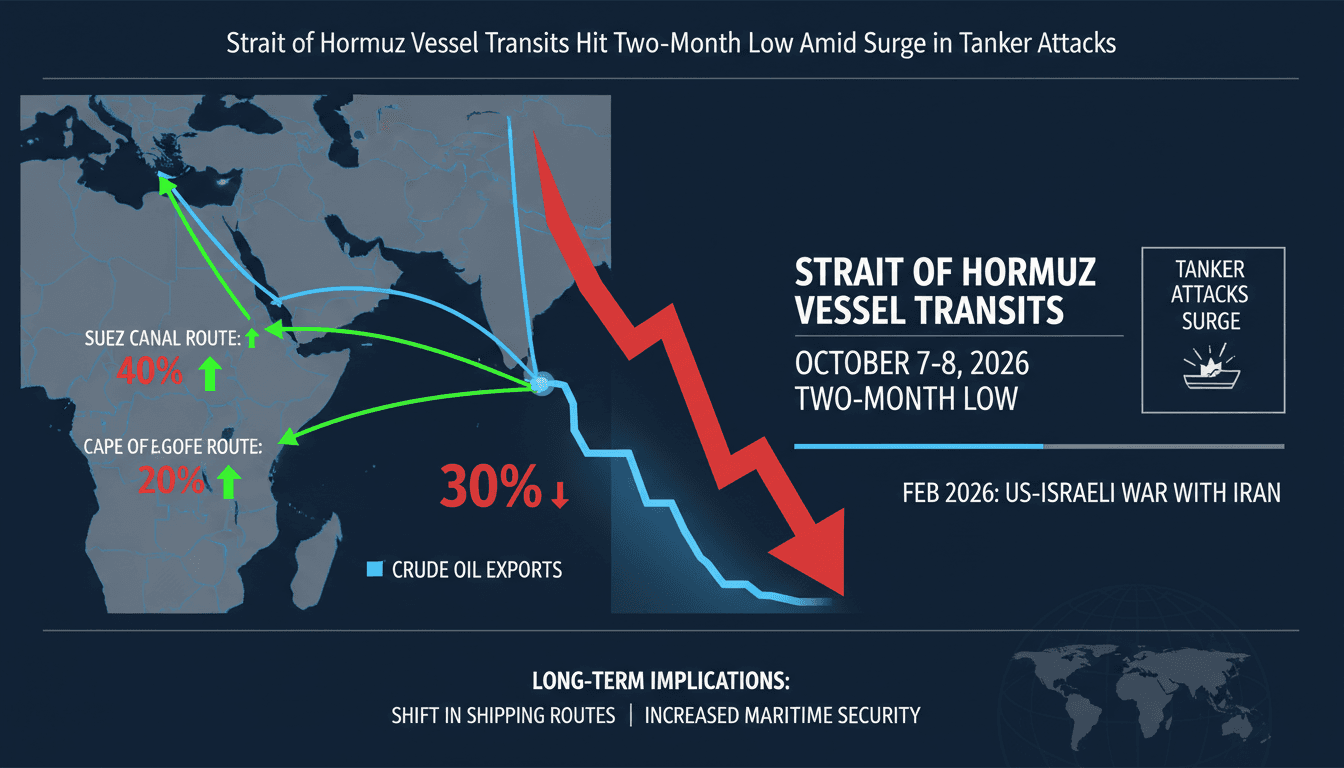
- Transits dropped: Only seven commodity vessels transited the Strait of Hormuz on October 7-8, 2026, the lowest since July 23.
- Crude oil volumes fell: Shipments decreased by 27% week-over-week to 10.1 million barrels per day, returning to September averages.
- Alternative routes surged: Exports via the Gulf of Oman and Red Sea rose sharply, maintaining overall Middle East crude exports near pre-war levels.
The context you actually need
- Ongoing conflict: The US-Israeli war with Iran, which began on February 28, 2026, has led to increased maritime security risks and attacks on vessels.
- Historical transit levels: Pre-war, daily transits averaged around 125 large commercial vessels, crucial for global energy supply.
- Market adjustments: Despite the decline in Hormuz transits, Gulf oil exporters have successfully increased shipments through alternative routes.
What's really happening
The recent decline in vessel transits through the Strait of Hormuz is a direct consequence of escalating maritime security risks linked to the ongoing US-Israeli war with Iran. On October 7-8, only seven commodity vessels were recorded transiting the strait, marking the lowest daily total since late July. This drop follows a peak in tanker attacks, including projectile strikes that have raised alarm among shipping operators and insurers.
The data from Kpler and LSEG indicates that crude oil volumes fell by 27% week-over-week to 10.1 million barrels per day. This figure is significant as it reflects a return to September averages but remains at only 74% of pre-war levels. The decline is primarily attributed to reduced ship-to-ship transfers in the Gulf of Oman, which are essential for maintaining oil supply chains.
In response to the heightened risks, Gulf oil exporters have pivoted to alternative routes, with exports from the Gulf of Oman and Red Sea coasts rising to 6.7 million barrels per day—more than double pre-war levels. This strategic shift has allowed overall Middle East crude exports to remain stable, effectively compensating for the disruptions in the Strait of Hormuz.
The implications of these developments are profound. The Strait of Hormuz is a vital artery for global energy supplies, and any significant disruption can lead to increased shipping costs and insurance premiums. As maritime security risks escalate, shipping operators may face higher operational costs, which could be passed on to consumers and businesses reliant on oil and gas.
Moreover, the ongoing conflict and the associated risks may lead to a reevaluation of shipping routes and logistics strategies among companies operating in the region. The reliance on alternative routes, while currently effective, may not be sustainable in the long term if security concerns persist.
Who feels it first (and how)
- Shipping companies: Increased operational costs due to higher insurance premiums and rerouting.
- Oil exporters: Adjustments in logistics and potential revenue impacts from fluctuating shipping volumes.
- Consumers: Possible increases in fuel prices as shipping costs rise.
- Regional economies: Countries dependent on oil exports may experience economic strain if disruptions continue.
What to watch next
- Shipping insurance rates: Monitor changes in maritime insurance premiums as risks escalate, which could affect overall shipping costs.
- Alternative route viability: Watch for developments in Gulf of Oman and Red Sea shipping routes to assess their long-term sustainability.
- Geopolitical developments: Keep an eye on the US-Israeli-Iran conflict, as shifts in military engagement could further impact maritime security.
Vessel transits through the Strait of Hormuz have reached a two-month low due to increased tanker attacks.
Shipping costs will rise as insurance premiums increase and rerouting becomes necessary.
The long-term viability of alternative shipping routes in the Gulf of Oman and Red Sea remains uncertain.
Frequently Asked Questions
- Why it matters?
- The Strait of Hormuz is a critical chokepoint for global oil and LNG supplies, handling about 20% of the world's energy needs.
- What happened (in 30 seconds)?
- Transits dropped: Only seven commodity vessels transited the Strait of Hormuz on October 7-8, 2026, the lowest since July 23. Crude oil volumes fell: Shipments decreased by 27% week-over-week to 10.1 million barrels per day, returning to September averages. Alternative routes surged: Exports via the Gulf of Oman and Red Sea rose sharply, maintaining overall Middle East crude exports near pre-war levels.
- What's really happening?
- The recent decline in vessel transits through the Strait of Hormuz is a direct consequence of escalating maritime security risks linked to the ongoing US-Israeli war with Iran. On October 7-8, only seven commodity vessels were recorded transiting the strait, marking the lowest daily total since late July. This drop follows a peak in tanker attacks, including projectile strikes that have raised alarm among shipping operators and insurers. The data from Kpler and LSEG indicates that crude oil vol
- Who feels it first (and how)?
- Shipping companies: Increased operational costs due to higher insurance premiums and rerouting. Oil exporters: Adjustments in logistics and potential revenue impacts from fluctuating shipping volumes. Consumers: Possible increases in fuel prices as shipping costs rise. Regional economies: Countries dependent on oil exports may experience economic strain if disruptions continue.
- What to watch next?
- Shipping insurance rates: Monitor changes in maritime insurance premiums as risks escalate, which could affect overall shipping costs. Alternative route viability: Watch for developments in Gulf of Oman and Red Sea shipping routes to assess their long-term sustainability. Geopolitical developments: Keep an eye on the US-Israeli-Iran conflict, as shifts in military engagement could further impact maritime security.
International news coverage curated for readers in the UAE and Gulf region.
"Emirates 24|7 world coverage presents global developments through a UAE-facing and Gulf-relevant editorial lens."
— A47 Editor
Hormuz transits at lowest in over two months after attacks
The number of vessels transiting the Strait of Hormuz has dropped to its lowest level in over two months, with only seven ships reported on Tuesday, following a series of attacks on tankers that have escalated tensions in the region. Shipping data fr...
UAE-based English-language newspaper covering regional politics, economics, and global affairs.
"The National reflects Emirati policy perspectives while maintaining international editorial standards."
— A47 Editor
Hormuz traffic hits lowest level in two months as tanker attacks surge
Traffic through the Strait of Hormuz has reached its lowest level in two months, coinciding with a surge in tanker attacks and heightened military tensions in the region. This decline reflects a significant drop in maritime activity, with only a few ...
English-language digital publication covering business, politics, technology, and current affairs.
"The Arabian Post mixes original and syndicated-style coverage with a broad regional and global business-news orientation."
— A47 Editor
Hormuz tanker attacks accelerate as oil flows recover
Iranian pressure on commercial shipping in the Strait of Hormuz has intensified, with recent attacks on oil tankers raising significant concerns over maritime safety as oil flows recover towards pre-war levels. Reports indicate a surge in incidents, ...