
Hazard Pay for Tanker Captains Reaches $100,000 Monthly Amid Iranian Attacks
Why it matters
The Strait of Hormuz is a critical chokepoint for global oil supplies, and heightened risks are driving up shipping costs.
What happened (in 30 seconds)
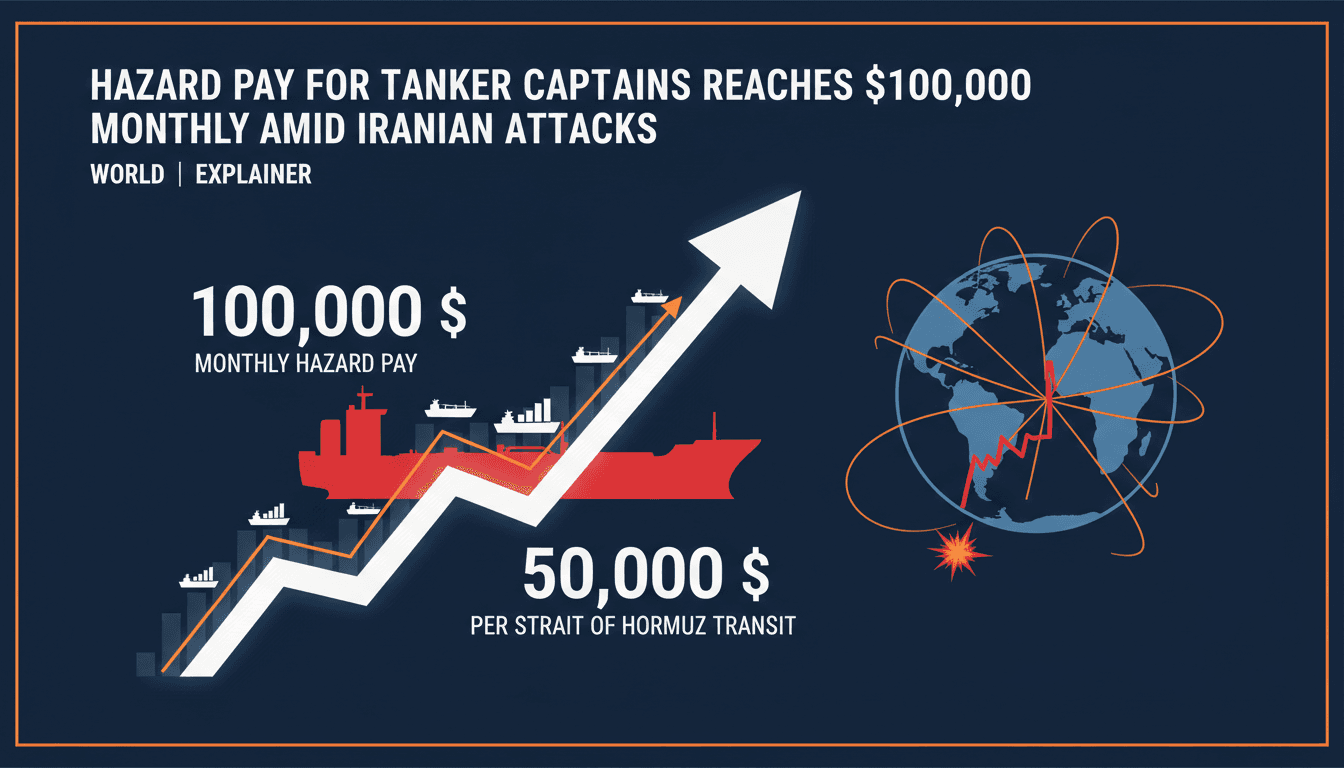
- Tanker captains are now earning $100,000 monthly plus $50,000 per transit through the Strait of Hormuz due to increased Iranian attacks.
- Ordinary crew members are receiving four to six times their standard wages during transits, reflecting the heightened danger.
- Freight rates have surged to record levels, reaching $1.3 million per day, significantly impacting global oil prices.
The context you actually need
- The U.S.-Iran conflict, ongoing since February 2026, has led to a significant increase in attacks on commercial vessels in the Strait of Hormuz.
- Prior to the conflict, transit volumes through the strait had already declined by about one-third, with numerous vessels attacked and seafarers killed.
- Gulf oil producers are under pressure to maintain exports, which account for approximately 20% of global oil supplies, prompting shipowners to offer substantial hazard pay.
What's really happening
The ongoing U.S.-Iran conflict has escalated maritime tensions in the Strait of Hormuz, a vital artery for global oil transport. Since the war began in February 2026, Iranian forces have intensified their attacks on commercial shipping, leading to a dramatic increase in hazard pay for tanker crews. Shipowners are now offering captains a base salary of $100,000 per month—up from a typical $15,000—along with a $50,000 bonus for each transit through the strait. Ordinary seafarers, who usually earn around $1,500 monthly, are now receiving double pay in the southern Red Sea and Gulf of Oman, with their earnings escalating to four to six times their normal rates during actual transits.
This surge in compensation is a direct response to the heightened risks posed by missile and drone threats from Iranian forces. Since September 20, 2026, there have been at least 14 reported incidents of attacks on vessels, prompting shipowners to adapt their operations. Many are now using dedicated shuttle tankers for repeated runs, allowing crews to accumulate elevated pay while navigating dangerous waters. Security measures have also been enhanced, including nighttime transits with GPS disabled and U.S. Navy air cover near the Omani coast.
The financial implications are significant. Freight rates for tanker transits through the Strait of Hormuz have skyrocketed to a record $1.3 million per day, compared to pre-crisis rates of $20,000 to $50,000. This increase is not just a reflection of the immediate risks but also a broader market response to the instability in the region. Shipowners report that despite the rising costs, they are enjoying abundant margins, indicating a robust demand for oil transport even amid conflict.
However, this situation raises concerns about the coercion of crews, as unions like the Forward Seamen’s Union of India have voiced apprehensions regarding the pressures faced by seafarers. The market is also witnessing shifts, with reduced transit volumes and an increased reliance on alternative routes or shuttle operations to mitigate risks.
Who feels it first (and how)
- Tanker captains and crews: Directly impacted by increased hazard pay and risks during transits.
- Shipowners and operators: Facing higher operational costs but benefiting from increased freight rates.
- Gulf oil producers: Under pressure to maintain exports amid rising shipping costs and security concerns.
- Consumers and businesses: Likely to experience higher prices for oil and goods due to increased shipping costs.
What to watch next
- Freight rate fluctuations: Monitor how ongoing tensions affect shipping costs and oil prices globally.
- Security developments: Keep an eye on any changes in military engagement in the region that could impact shipping safety.
- Alternative shipping routes: Watch for shifts in shipping patterns as companies seek to avoid the Strait of Hormuz.
Hazard pay for tanker crews has significantly increased due to heightened risks.
Freight rates will remain elevated as long as the conflict persists.
The long-term impact on global oil supply and prices if the conflict escalates further.
Frequently Asked Questions
- Why it matters?
- The Strait of Hormuz is a critical chokepoint for global oil supplies, and heightened risks are driving up shipping costs.
- What happened (in 30 seconds)?
- Tanker captains are now earning $100,000 monthly plus $50,000 per transit through the Strait of Hormuz due to increased Iranian attacks. Ordinary crew members are receiving four to six times their standard wages during transits, reflecting the heightened danger. Freight rates have surged to record levels, reaching $1.3 million per day, significantly impacting global oil prices.
- What's really happening?
- The ongoing U.S.-Iran conflict has escalated maritime tensions in the Strait of Hormuz, a vital artery for global oil transport. Since the war began in February 2026, Iranian forces have intensified their attacks on commercial shipping, leading to a dramatic increase in hazard pay for tanker crews. Shipowners are now offering captains a base salary of $100,000 per month—up from a typical $15,000—along with a $50,000 bonus for each transit through the strait. Ordinary seafarers, who usually earn
- Who feels it first (and how)?
- Tanker captains and crews: Directly impacted by increased hazard pay and risks during transits. Shipowners and operators: Facing higher operational costs but benefiting from increased freight rates. Gulf oil producers: Under pressure to maintain exports amid rising shipping costs and security concerns. Consumers and businesses: Likely to experience higher prices for oil and goods due to increased shipping costs.
- What to watch next?
- Freight rate fluctuations: Monitor how ongoing tensions affect shipping costs and oil prices globally. Security developments: Keep an eye on any changes in military engagement in the region that could impact shipping safety. Alternative shipping routes: Watch for shifts in shipping patterns as companies seek to avoid the Strait of Hormuz.
Editor-curated FT homepage stories spanning markets, business, world, and opinion.
"The Financial Times is a globally respected business publication with a centrist/center-left tone and strong markets focus."
— A47 Editor
Ships’ captains paid $100,000 a month to transit Strait of Hormuz
Ships' captains are reportedly being paid $100,000 a month to navigate the perilous Strait of Hormuz, a vital waterway for global oil transport, amid escalating Iranian attacks that have heightened risks for maritime transit. This surge in compensati...
Global business headlines with AI angles.
"General business outlet that frequently covers AI."
— A47 Editor
Sailors Are Reportedly Being Offered $25,000 For Gulf Oil Runs as Hormuz Strait Continues to be a Battle Zone
Sailors are reportedly being offered $25,000 for oil runs through the Gulf as the Strait of Hormuz remains a dangerous area due to ongoing military tensions and missile threats. Despite a recovery in oil flows from wartime lows, crews face significan...
Global political, business, and cultural coverage from WSJ international desks.
"The Wall Street Journal offers extensive international reporting with a reputation for financial insight and a center-right editorial stance."
— A47 Editor
Shippers Are Offering Sailors Up to $25,000 a Trip to Sneak Oil Out of the Gulf
Shippers are reportedly offering sailors up to $25,000 per trip to transport oil out of the Gulf amid increasing risks associated with navigating the Strait of Hormuz, where Iranian threats have escalated. This risky shuttle operation has emerged as ...